
Table of Contents
- What Does a Dental Hygienist Do
- Preventing Gum Disease and Periodontal Disease
- Removing Plaque and Tartar: Why Professional Cleaning Matters
- How Often Should You See a Dental Hygienist
- What to Expect During a Dental Hygienist Appointment
- How Long Does a Hygienist Appointment Take
- Reducing Tooth Loss, Bad Breath, and Improving Your Smile
- Frequently Asked Questions
Last Updated: October 16, 2026
What Does a Dental Hygienist Do
A dental hygienist is a qualified healthcare professional who specialises in preventive oral care and works alongside dentists to maintain and improve your dental health. Hygienists perform professional cleanings, assess gum health, take X-rays, and educate patients on oral hygiene. They’re trained to identify early signs of gum disease, tooth decay, and other issues that may require further treatment from a dentist.
At Orangefield Dental Care, our hygienists spend time understanding your individual needs. They remove plaque and tartar that regular brushing cannot eliminate, polish your teeth, and apply fluoride treatments when appropriate. Beyond the clinical work, hygienists are educators: they explain what they find during your examination and give practical advice for maintaining your teeth and gums between visits.
The role extends beyond cleaning. Hygienists take detailed notes on your oral health status, which dentists use to plan treatment. They also screen for oral cancer and can spot problems like tooth sensitivity or early-stage gum disease before they become serious. This preventive focus is why regular hygienist visits form the foundation of long-term oral health.
Many patients assume a hygienist appointment is just a quick polish. In reality, a thorough assessment includes detailed charting of your gum health, bite assessment, and personalised advice tailored to your specific risk factors.
Preventing Gum Disease and Periodontal Disease
Gum disease starts silently. Plaque accumulates along the gumline where your toothbrush struggles to reach, then hardens into tartar, which irritates your gums and causes inflammation. A dental hygienist removes this buildup before it progresses to periodontal disease, where infection spreads deeper and can damage the bone supporting your teeth.
Regular professional cleaning by a dental hygienist is your most effective defence against gum disease. Daily brushing and flossing cannot remove tartar or reach all the bacteria beneath the gumline, so hygienists use specialised instruments to clean areas you cannot access at home. For patients with existing gum disease, visits every three months instead of six can halt progression and allow gums to heal.
Bleeding gums are a warning sign of inflammation and early gum disease. Many people assume bleeding is normal, but it isn’t. A hygienist will assess the severity and work with you on a plan to reduce bleeding through improved home care and professional treatment. Caught early, gum disease is reversible.
The connection between gum health and overall health is well established. Untreated gum disease increases your risk of heart disease, stroke, and diabetes complications. By preventing or managing gum disease through regular hygienist visits, you’re protecting more than just your teeth.
Ignoring bleeding gums or persistent bad breath can lead to advanced periodontal disease, where bone loss becomes irreversible. At that stage, tooth loss becomes likely and treatment becomes far more complex and costly.
Removing Plaque and Tartar: Why Professional Cleaning Matters
Plaque forms continuously on your teeth, it’s a sticky film of bacteria that develops within hours of eating. Brushing and flossing remove most plaque, but some always remains in hard-to-reach spots. Over days, plaque mineralises into tartar (also called calculus), a hard deposit that bonds to your teeth and cannot be removed by brushing alone.
A dental hygienist uses ultrasonic scalers and hand instruments to break away tartar from your teeth and below the gumline. This process, called scaling, is painless for most patients, though some experience mild sensitivity.
The depth of cleaning depends on your gum health. For patients with healthy gums, a standard cleaning focuses on above and slightly below the gumline. Patients with gum disease may need a deep clean (scaling and root planing), which reaches deeper pockets where bacteria and tartar accumulate.
Professional cleaning also reveals stain patterns. Some stains come from food and drink, tea, coffee, red wine, and tobacco, and respond well to polishing. Others are intrinsic, meaning they’re inside the tooth structure and require different approaches. A hygienist can discuss which stains are treatable and what options exist, such as whitening treatments.
How Often Should You See a Dental Hygienist
There is no single correct recall interval. The familiar six-month rhythm is a useful default, not a clinical rule. Your recommended frequency should reflect your gum health, medical history, home-care habits, and lifestyle risk factors. A hygienist and dentist will usually set an interval after assessing these together, and review it at each visit.
For most adults with healthy gums, no bleeding on probing, and good plaque control, a recall interval of six to twelve months is common. Some patients with excellent oral hygiene and no history of gum disease may be maintained annually, though this should be confirmed by your clinician rather than assumed.
Several factors typically shorten the interval to three or four months:
- A history of periodontal disease. Once gum disease has caused bone loss, the goal shifts from prevention to maintenance. More frequent visits allow the hygienist to disrupt bacterial biofilm before it re-establishes in deepened pockets and to monitor whether healing is holding.
- Smoking and vaping. Smoking reduces blood flow to the gums, masks the bleeding that would otherwise signal inflammation, and impairs healing. Smokers often need closer monitoring because the usual warning signs are blunted.
- Diabetes. Both type 1 and type 2 diabetes are associated with poorer gum health, and gum inflammation can in turn make blood glucose harder to control. Patients with diabetes often benefit from more frequent professional cleaning and closer collaboration between their dental and medical teams.
- Orthodontic treatment. Fixed braces and aligner attachments create plaque traps around brackets and along the gumline. Hygienists frequently recommend shorter intervals during active orthodontic treatment to prevent decalcification and gum inflammation.
- Dry mouth. Medications such as antidepressants, antihistamines, and some blood pressure drugs, as well as certain medical conditions, reduce saliva flow. Saliva buffers acid and washes away food debris, so a dry mouth raises caries and gum risk and may warrant more frequent visits.
- Pregnancy. Hormonal changes increase gum sensitivity and the risk of pregnancy gingivitis. A hygienist can advise on timing and frequency during pregnancy, and many practices encourage a visit in the second trimester.
- Previous implant or restorative work. Implants and crowns need monitoring for peri-implant disease and margin leakage, which may justify a tighter recall.
Conversely, some patients with stable gum health, no bleeding, and excellent interdental cleaning may extend intervals, but this should be a clinical decision rather than a cost-saving assumption. Extending intervals without assessment risks missing early changes that are far easier to manage when caught promptly.
Your recall interval is a clinical recommendation, not a fixed subscription. If your circumstances change, a new medication, a pregnancy, a diagnosis of diabetes, or starting orthodontic treatment, tell your hygienist so the interval can be reviewed. At each appointment, the hygienist records pocket depths, bleeding scores, and plaque levels; these measurements, not the calendar alone, should drive the next recall date.
Treat your recall interval as a personalised clinical recommendation. Ask your hygienist what findings drive your suggested frequency, and flag any change in health, medication, or lifestyle that might justify bringing the next appointment forward.
What to Expect During a Dental Hygienist Appointment
Your appointment begins with a review of your medical and dental history. The hygienist asks about any new symptoms, sensitivity, bleeding, or pain, and updates your records, flagging issues that might not be obvious during examination.
Next comes the clinical assessment. The hygienist examines your teeth and gums visually, then uses a probe to measure the depth of the spaces between your gums and teeth (periodontal pockets). Deeper pockets indicate gum disease.
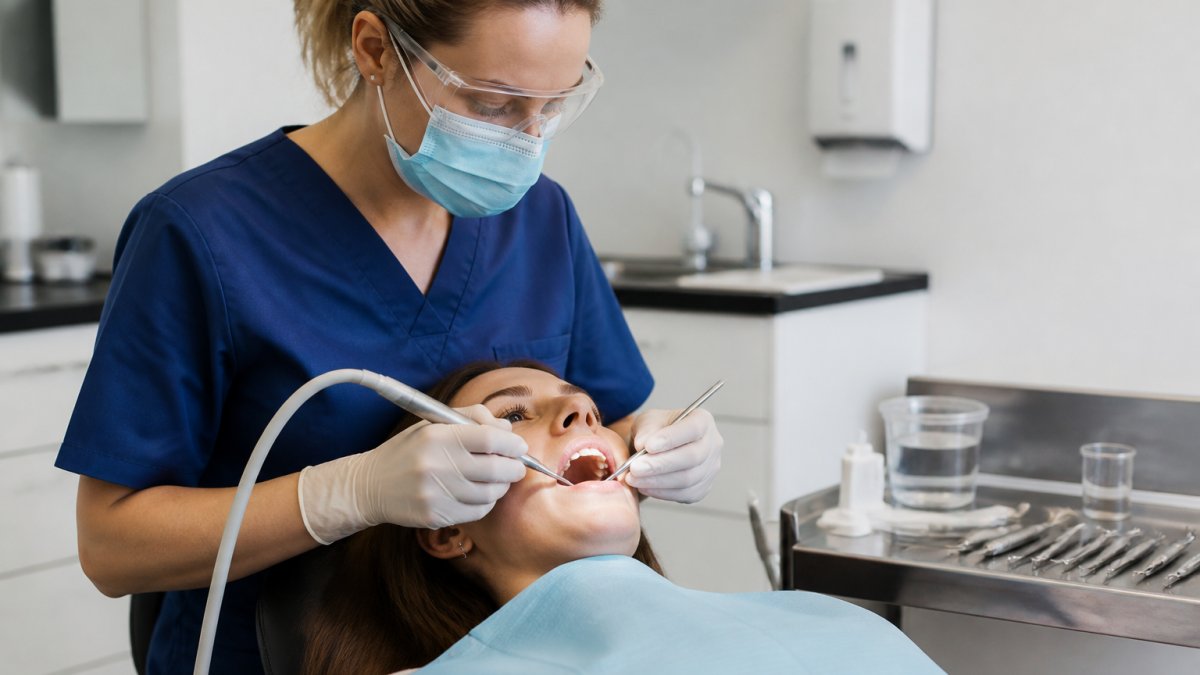
The professional cleaning follows. Using an ultrasonic scaler, the hygienist removes tartar from your teeth and just below the gumline. You’ll hear a high-pitched humming sound and feel vibration; it’s not painful, though some sensitivity is normal.
Once cleaning is complete, the hygienist applies fluoride treatment. This strengthens enamel and helps prevent decay. Some patients receive a fluoride gel in a tray; others get a topical application. The whole process takes roughly 45 to 60 minutes.
Throughout the appointment, the hygienist educates: showing you areas where home care could improve, demonstrating proper brushing and flossing technique, and discussing diet or habits affecting your teeth. They document findings in detail for your dentist to review.
How Long Does a Hygienist Appointment Take
A standard hygienist appointment typically lasts 45 to 60 minutes, allowing time for assessment, cleaning, fluoride application, and patient education without rushing. First appointments often run longer, sometimes 75 minutes, because they include a more detailed history and baseline measurements.
If you have gum disease requiring a deep clean, expect 60 to 90 minutes. Scaling and root planing takes longer than a standard cleaning because the hygienist works below the gumline and must be thorough. Some practices split this into two appointments, each lasting about an hour.
Maintenance appointments for patients with treated gum disease also tend toward the longer end, 60 to 75 minutes, because the hygienist monitors healing and ensures the disease hasn’t returned.
Plan accordingly. Orangefield Dental Care offers flexible evening appointments to accommodate your schedule, but allowing sufficient time ensures you receive thorough care without feeling rushed.
Reducing Tooth Loss, Bad Breath, and Improving Your Smile
These three outcomes are often grouped together because they share a common driver: the bacterial biofilm that accumulates on teeth and below the gumline. Understanding the mechanism behind each helps explain what professional cleaning can and cannot do.
Tooth loss. The leading cause of tooth loss in adults is periodontal disease, not decay. It destroys the periodontal ligament and alveolar bone that anchor teeth, and lost bone does not regenerate spontaneously. A hygienist cannot reverse existing bone loss, but regular professional cleaning removes the biofilm that drives further destruction and helps stabilise the condition.
Bad breath. Halitosis most commonly originates in the mouth, particularly the tongue surface and periodontal pockets where anaerobic bacteria produce volatile sulphur compounds. Professional cleaning removes tartar and biofilm from areas a toothbrush cannot reach, reducing the bacterial reservoir.
Smile appearance. Professional cleaning removes extrinsic stains from tea, coffee, red wine, and tobacco, and polishes the tooth surface so it reflects light more evenly. This is a genuine improvement, but it is not whitening: stain removal restores the tooth’s natural appearance without changing the intrinsic colour of the dentine beneath the enamel.
What professional cleaning cannot replace is daily home care. Brushing twice daily with a fluoride toothpaste and cleaning between teeth with interdental brushes or floss removes the biofilm that forms between visits.
If you notice a loose tooth, a persistent bad taste, or gums that bleed regularly despite good home care, do not wait for your next routine appointment. These can signal active periodontal disease that needs assessment sooner rather than later.
Frequently Asked Questions
What is the difference between a dentist and a dental hygienist?
A dental hygienist specialises in preventive oral care, focusing on plaque and tartar removal, gum health, and patient education about home care. A dentist diagnoses and treats dental disease, performs fillings, extractions, and other restorative procedures. Both work together to maintain your long-term oral health. Your hygienist appointment typically focuses on cleaning and prevention, whilst your dentist checks for cavities, decay, and other conditions requiring treatment.
Can a dental hygienist help prevent gum disease?
Yes. Dental hygienists remove plaque and tartar buildup that leads to gum disease and periodontal disease. Regular professional cleaning, combined with good home care (brushing and interdental cleaning), significantly reduces your risk of developing bleeding gums and tooth loss. Early intervention by a hygienist can stop gum disease before it progresses to a more serious condition affecting your teeth and bone.
How long does it take for a hygienist to clean your teeth?
A typical hygienist appointment lasts for a duration that depends on how much plaque and tartar buildup you have and whether you need a standard clean or a deeper clean. Your first appointment may take longer as the hygienist gathers your full dental history and performs a thorough examination. Subsequent visits are often shorter if your oral hygiene is well maintained.
Does a hygienist appointment hurt?
Professional cleaning should not be painful, though you may feel slight pressure or vibration from the instruments. Some patients experience mild sensitivity, especially if they have sensitive teeth or significant tartar buildup. Let your hygienist know if you feel uncomfortable, they can adjust their technique and may recommend numbing gel. Most people find the experience manageable and worthwhile for the benefits to their gum health and fresh breath.