
Table of Contents
- Can You Whiten Dental Crowns Effectively? The Short Answer
- Why Do Dental Crowns Turn Yellow?
- Can You Whiten Porcelain Crowns? Why Traditional Whitening Fails
- How to Remove Stains from Dental Crowns Safely
- Dental Crown Replacement for Colour Mismatch
- How to Coordinate Whitening Natural Teeth with Existing Crowns
- When Crown Discolouration May Signal a Dental Problem
- Conclusion: Safe Next Steps for a Brighter Smile
- Frequently Asked Questions
Last Updated: October 5, 2026
Can You Whiten Dental Crowns Effectively? The Short Answer
No. You cannot whiten dental crowns the way you whiten natural teeth. This guide from Orangefield Dental Care explains why, and what actually works instead.
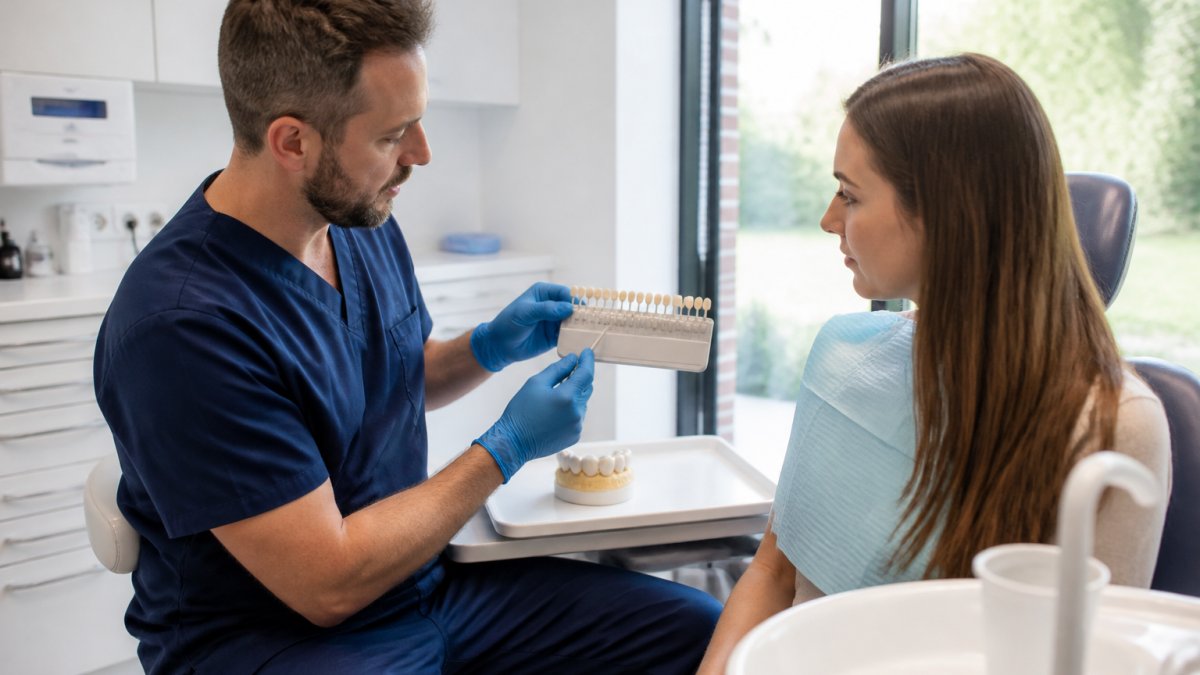
Crowns are made from porcelain, ceramic, composite, or metal-based materials. These materials hold a fixed colour set at the lab. Whitening gel cannot change that colour.
That is frustrating news. It also saves you money on whitening strips that will do nothing.
What you can do is remove surface stains, replace a crown whose shade no longer matches, or plan whitening around your crowns.
Why Do Dental Crowns Turn Yellow?
Crowns do not yellow the way natural teeth do. Instead, they pick up stains on the surface, or the surrounding teeth change colour around them.
Natural teeth darken over time. Enamel thins, and the dentine underneath shows through. Crowns stay the same shade they were made in.
Surface staining is the other cause. Things that stain natural teeth also stain crowns:
- Tea, coffee, and red wine
- Smoking and vaping
- Curry, tomato sauce, and dark berries
- Poor oral hygiene, which lets plaque build up at the crown margin
Composite crowns stain more easily than porcelain. Porcelain holds its surface better. Metal-based crowns with a porcelain layer can also show a dark line at the gum if the gum recedes.
Can You Whiten Porcelain Crowns? Why Traditional Whitening Fails
Traditional whitening does not work on porcelain crowns. The peroxide in whitening gel reacts with the organic pigments inside natural tooth structure.
This is the part most guides get wrong. They suggest whitening strips or gel as a first step. That advice wastes your time and money.
Here is why the chemistry fails, material by material:
- Porcelain and ceramic are fired at high temperatures in a lab. The colour is locked in during fabrication. The surface is non-porous and glass-like, so peroxide cannot penetrate it. A porcelain crown will not lighten, no matter how long you leave the gel on.
- Composite is a resin. It can pick up surface stains, but the base shade stays fixed. Composite is also more porous than porcelain, so it stains faster and holds stain deeper. Some surface stain can be polished away, but the underlying resin shade will not change.
- Metal-based crowns have no whitening response at all. If the crown has a porcelain layer over metal, the porcelain behaves as above. If the gum recedes, the metal edge can show as a dark line, and no whitening product will change that.
There is one more problem. If you whiten your natural teeth while wearing a crown, your teeth get lighter and the crown does not. The colour gap gets wider, not smaller.
Intrinsic versus extrinsic discolouration
Before you decide on any treatment, it helps to know which type of discolouration you are dealing with.
- Extrinsic staining sits on the surface. It comes from tea, coffee, red wine, smoking, curry, tomato sauce, and dark berries. It can often be reduced by professional cleaning and polishing. It does not change the crown’s manufactured shade.
- Intrinsic discolouration is built into the material or the tooth underneath. It cannot be removed by cleaning. If a crown looks darker than it used to and cleaning does not help, the change is likely intrinsic, or it is coming from the tooth beneath the crown.
A common pattern is a patient who has had a crown for several years and notices it no longer matches. Often the crown has not changed at all. The natural teeth around it have darkened, or the gum has receded and exposed the margin. That is a shade mismatch, not a stain, and it needs a different solution.
Whitening gel changes the colour of natural tooth structure, not crown material. If a crown looks discoloured, the first step is to identify whether the problem is surface stain, a shade mismatch, or something happening beneath the crown.
How to Remove Stains from Dental Crowns Safely
You can remove surface stains from a crown. You cannot change its base shade. That distinction matters.
Professional Cleaning for Surface Stains
A dental cleaning is the safest way to lift surface stains from crowns. A hygienist uses scaling and polishing to remove plaque, tartar, and stain film without touching the crown’s colour.
This works well when the crown itself has not changed, but has picked up a film from tea, coffee, or smoking. Many patients find the crown looks brighter afterwards.
Regular visits keep this under control. We recommend a check-up and clean at intervals your dentist sets for you.
What to Avoid: DIY Abrasives and Unverified Products
Do not use abrasive home remedies on crowns. Baking soda paste, charcoal powder, and whitening strips sold online can scratch the surface.
Scratches make things worse. A roughened crown picks up stain faster, and the damage cannot be polished out at home. Acids are just as risky. Lemon juice and vinegar erode the crown margin and the cement line, which can loosen the crown.
Unverified whitening kits bought online may contain peroxide levels that irritate gums, or abrasives that scratch porcelain. Damage to a crown often means replacement, not repair.
Dental Crown Replacement for Colour Mismatch
Replacement is the only way to change a crown’s colour. A new crown is made in the shade you and your dentist choose. But replacement is not always the right answer, and it is worth working through a simple decision tree before you commit.
Is replacement the right step for you?
Ask these questions in order:
- Is the discolouration on the surface only? If a professional clean and polish improves it, you do not need a new crown. Book a hygiene appointment first.
- Is the crown still well fitted and comfortable? If it fits well, the margin is sealed, and there is no pain, replacement is a cosmetic choice, not a clinical necessity. Some patients choose to accept a slight shade difference, especially for back teeth.
- Is the mismatch obvious when you smile? Front teeth show shade differences far more than molars. If the crown is visible in your smile line, replacement is more likely to be worth it.
- Are you planning to whiten your natural teeth? If so, whiten first, let the shade settle, then match the new crown to the final result. Replacing a crown before whitening usually recreates the same mismatch.
- Are there signs of a problem at the margin? A dark line, a loose crown, or decay beneath it means replacement may be needed for clinical reasons, not just appearance.
What the replacement process involves
The process is straightforward, but the detail matters:
- Your dentist assesses the crown, the margin, and the teeth around it, sometimes with a radiograph to check the tooth underneath.
- A shade is selected under proper lighting, matched to your natural teeth or your whitening goal. This is usually done before any preparation, while the tooth is still in its natural state.
- The old crown is removed and the tooth is prepared. In some cases, the underlying tooth needs a new core build-up before the new crown is fitted.
- An impression or digital scan is taken and sent to the lab.
- A temporary crown is fitted while the new one is made.
- The new crown is tried in, checked for fit, bite, and shade, then cemented.
Shade matching is the step most patients underestimate. Lighting in the surgery, the colour of your natural teeth, and the material you choose all affect the final result. A good shade match is not just about picking a number from a guide. It is about matching the translucency and surface texture of the neighbouring teeth so the crown blends in.
Factors that affect the outcome and cost
Cost depends on several things:
- The material you choose. Porcelain and ceramic cost more than composite or metal-based options, but they generally match natural teeth better and resist staining longer.
- The tooth involved. Molars take more force and may need a stronger material. Front teeth need better aesthetics.
- Whether the underlying tooth needs additional work, such as a core build-up or root treatment.
- The lab work involved. Some cases need custom shading or multiple try-ins.
We do not quote figures here because pricing varies by case and by practice. Ask your dentist for a written estimate before treatment starts, and check whether the practice offers a payment plan if the cost is a concern.
Replacing a crown is a clinical procedure, not a cosmetic add-on. It involves removing the existing crown, which can weaken the tooth underneath if done repeatedly. Do not replace a crown solely for a minor shade difference without discussing the risks and benefits with your dentist.
General information on dental crowns and replacement
How to Coordinate Whitening Natural Teeth with Existing Crowns
Plan whitening and crowns in the right order. That single decision prevents most colour mismatches.
The sequence we follow:
- Whiten natural teeth first, and wait for the shade to settle
- Then match any new crown to the final whitened shade
- For existing crowns that still fit well, accept the slight difference or plan replacement
- For crowns at the front of the mouth, shade accuracy matters most
If you already have crowns and want to whiten, your dentist can show you what the end result will look like. A shade guide against your natural teeth and your crown makes the gap obvious before you commit.
Take a photo of your teeth in daylight before whitening. It gives you and your dentist a clear before-and-after reference, and it shows how much your crowns will stand out once your natural teeth lighten.
When Crown Discolouration May Signal a Dental Problem
A colour change is not always cosmetic. Sometimes it points to something that needs treatment.
Watch for these signs:
- A dark line at the gum edge, which can mean the crown margin is exposed or leaking
- Grey or black shadowing under a porcelain crown, which may mean decay beneath it
- A loose crown, or one that moves when you bite
- Pain, tenderness, or a bad taste around the crown
Any of these need a dentist’s assessment. Do not try to whiten or polish over them. A leaking crown lets bacteria in, and that can damage the tooth underneath.
If you notice any of these signs, book an appointment rather than waiting for your next routine visit.
Conclusion: Safe Next Steps for a Brighter Smile
The honest answer is that whitening will not change a crown’s colour, but a brighter smile is still within reach. Cleaning, replacement, and good sequencing all help.
At Orangefield Dental Care, we offer cosmetic treatments, general and family dentistry, and flexible evening appointments for working patients. Our team can assess your crowns, discuss replacement options, and plan whitening around your existing dental work.
Book an appointment with Orangefield Dental Care and get a clear plan for a brighter, better-matched smile.
Frequently Asked Questions
Can you make crowns whiter?
Whitening products cannot change the colour of a dental crown because crowns are made from materials like porcelain, ceramic, or composite that do not respond to bleaching agents. The only way to make a crown whiter is to have it replaced with a new one in a lighter shade. A dental professional can discuss whether replacement is suitable for your situation.
Why do crowns turn yellow?
Crowns turn yellow for several reasons. Surface stains from food, drink, and tobacco build up over time, particularly on composite crowns. The material itself can also discolour with age. In some cases, a crown may appear yellow because the natural teeth around it have been whitened, making the crown’s fixed shade look darker by comparison.
Is there a teeth whitening product that works on crowns?
No over-the-counter whitening strip, gel, or toothpaste can change the shade of a dental crown. These products contain bleaching agents designed to penetrate natural tooth enamel, which crowns do not have. Using whitening products on crowns may only remove surface stains, not lighten the crown material itself.
What can I do if my crown no longer matches my natural teeth?
If your crown no longer matches your natural teeth, you have a few options. A professional dental cleaning can remove surface stains. If the colour difference is significant, your dentist may recommend replacing the crown with one matched to your current tooth shade. Whitening your natural teeth first and then replacing the crown is another approach to ensure a consistent colour.