
Table of Contents
- Understanding sensitive teeth and oral hygiene
- How to brush sensitive teeth without causing pain
- Selecting the best toothpaste for sensitive teeth
- Flossing with sensitive teeth: A step-by-step approach
- Your daily routine for managing sensitive teeth
- When to see a dentist for sensitive teeth
- Common mistakes to avoid
- Frequently Asked Questions
Last Updated: October 10, 2026
Understanding sensitive teeth and oral hygiene
Sensitive teeth occur when the protective enamel on your teeth wears down or your gum line recedes, exposing the underlying dentine, a common oral hygiene sensitive teeth concern. This exposes tiny tubes in the dentine that connect to the nerve, causing pain when you eat, drink, or brush. Managing oral hygiene sensitive teeth effectively means protecting what remains while cleaning thoroughly without aggravating the problem.
The challenge: you need good oral hygiene to prevent decay and gum disease, but aggressive brushing or wrong products worsen sensitivity. With the right approach, you can maintain clean, healthy teeth while minimising pain.
Most people assume they must choose between clean teeth and comfort. That’s not true. A structured routine using the right techniques and products makes all the difference.
The real issue with sensitive teeth isn’t that you can’t brush, it’s that you need to brush differently. Gentle, consistent care beats aggressive occasional cleaning every time.
How to brush sensitive teeth without causing pain
Brushing is essential, but technique matters enormously with sensitive teeth. The goal is removing plaque and food debris without triggering pain or causing further enamel wear.
Use a soft-bristled toothbrush. Hard or medium bristles scrub away enamel and irritate sensitive gums; soft bristles clean just as effectively with proper technique.
Choosing a soft-bristled toothbrush
Look for brushes labelled “soft” or “sensitive.” Electric toothbrushes with pressure sensors are helpful, they stop if you brush too hard. Replace every three months or when bristles fray.
The correct brushing technique
Hold your toothbrush at a 45-degree angle to your gum line and use small, gentle circular motions, not back-and-forth scrubbing, which causes enamel wear and gum recession. Brush for two minutes; let the brush do the work rather than pressing harder.
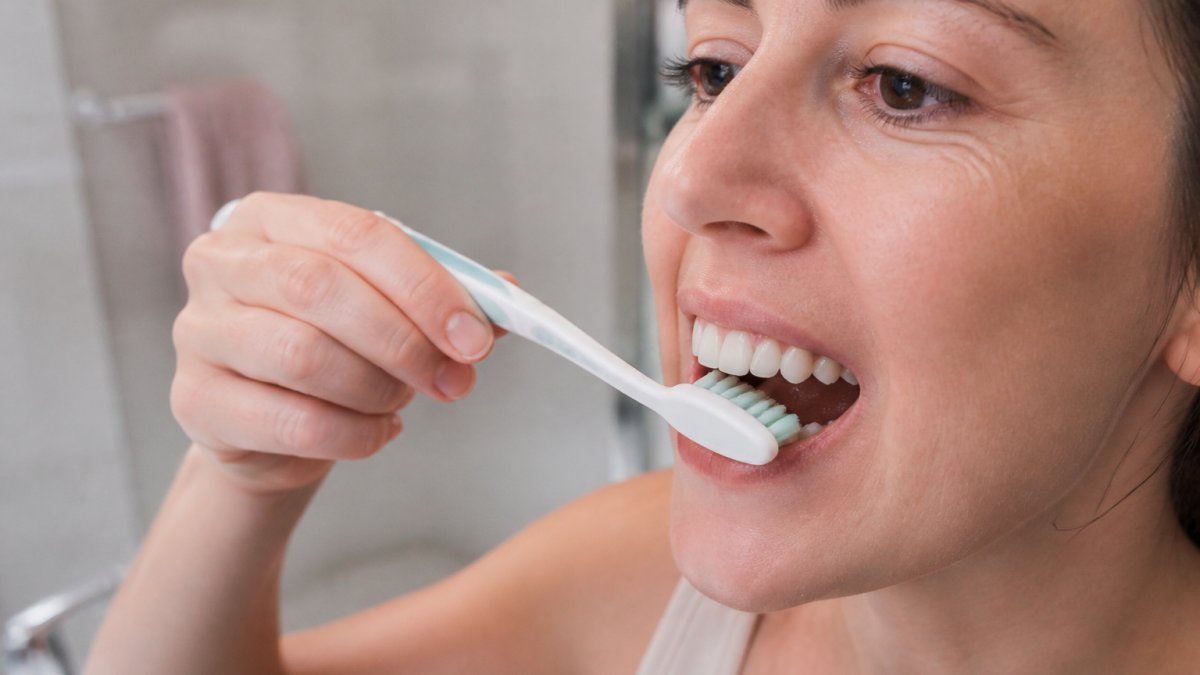
Pay special attention to the gum line where plaque builds up and recession starts. Avoid brushing immediately after acidic foods or drinks, wait 30 minutes, as acid softens enamel. Rinse with water first, then brush gently.
Brushing too hard is the single most common mistake. It doesn’t clean better, it damages enamel and pushes gums back. If your toothbrush bristles are splayed or frayed after a few weeks, you’re pressing too hard.
Selecting the best toothpaste for sensitive teeth
The best toothpaste for sensitive teeth contains desensitising ingredients that block sensation or physically occlude exposed dentine tubules leading to the nerve.
Active ingredients and how they work
Potassium nitrate (5%) depolarises nerve fibres to interrupt pain signals; requires consistent use over days to weeks. Strontium chloride (10%) forms a protective layer blocking tubules; many report faster relief. Arginine (8%) with calcium carbonate occludes tubules and is gentler on gums.
Fluoride (1450 ppm) strengthens enamel and prevents decay. Choose low-abrasivity formulas (RDA below 70); high-abrasivity ones cause further enamel wear.
How to use sensitive toothpaste effectively
Use a pea-sized amount. Leave it on your teeth for at least one minute before rinsing to allow active ingredients to work. Some formulas require 3-5 minutes on sensitive spots; check packaging for instructions.
Use sensitive toothpaste twice daily consistently; don’t switch brands frequently. Most ingredients need 3-7 days for noticeable relief and 2-4 weeks for full benefit. After brushing, spit out but don’t rinse immediately, leave a thin residue to extend contact time.
When to escalate beyond toothpaste
If sensitivity persists after 4 weeks of correct home care, see a dentist. Persistent sensitivity can indicate a cracked tooth, decay, gum disease, bruxism, or a failed filling. Your dentist can recommend professional treatments like fluoride gel, gum grafting, or bonded resin, options toothpaste cannot provide.
| Ingredient | Mechanism | Expected Timeline | Best For |
|---|---|---|---|
| Potassium nitrate | Blocks nerve signal | 3-7 days to notice; 2-4 weeks for full effect | General sensitivity, long-term maintenance |
| Strontium chloride | Occludes tubules | 1-3 days to notice; 2-3 weeks for full effect | Faster relief seekers |
| Arginine + calcium | Occludes tubules, gum-friendly | 3-7 days; 2-4 weeks for full effect | Sensitive gums alongside tooth sensitivity |
| Fluoride | Strengthens enamel | Ongoing; prevents worsening | All sensitive toothpastes |
If sensitivity is severe, sudden, or localised to one tooth, do not rely on toothpaste alone. Book a dental appointment promptly. Severe sensitivity can indicate decay, a crack, or infection that requires professional diagnosis and treatment.
Flossing with sensitive teeth: A step-by-step approach
Flossing is essential but can be uncomfortable with sensitive teeth. Use 45cm of floss, wind most around your middle fingers, and gently guide it between teeth with a sawing motion, never snap it onto gums. Curve around each tooth in a C shape and slide gently beneath the gum line. Feel slight resistance, not pain.
Interdental cleaning options
Interdental brushes are gentler than floss for many and easier with dexterity issues. Water flossers are effective and comfortable but cost more. Interdental sticks work for larger gaps; choose soft rubber over hard plastic.
The best interdental cleaning tool is the one you’ll actually use consistently. If floss hurts, try an interdental brush or water flosser. Consistency matters more than which tool you choose.
Your daily routine for managing sensitive teeth
Structure matters when you have sensitive teeth. A consistent routine prevents pain and keeps your teeth clean.
Morning routine
Start with a soft drink of water. This wakes up your mouth and helps rinse away bacteria that built up overnight.
Brush gently with your soft-bristled toothbrush and sensitive-teeth toothpaste. Use small circular motions at a 45-degree angle to your gum line. Brush for two minutes. Don’t rush.
Rinse thoroughly with water. Some people benefit from a fluoride rinse after brushing, it adds extra protection.
After meals and acidic foods
Rinse your mouth with water after eating, especially after acidic foods like citrus, tomatoes, or fizzy drinks. This neutralises acid and removes food debris.
Wait 30 minutes before brushing. If you brush immediately, you risk removing softened enamel. During this waiting period, chew sugar-free gum if you want, it stimulates saliva, which naturally protects your teeth.
When you do brush, use the same gentle circular technique. Don’t skip this step just because you rinsed earlier.
Evening routine
Floss or use an interdental cleaning tool. Take your time and be gentle. This removes plaque that brushing alone can’t reach.
Brush with your soft-bristled toothbrush and sensitive-teeth toothpaste using the same technique as your morning routine. Spend two full minutes.
Consider leaving a small amount of sensitive-teeth toothpaste on your teeth overnight. Some formulas are designed for this, they provide extra protection while you sleep. Check your toothpaste packaging to see if this is recommended.
When to see a dentist for sensitive teeth
Home care is crucial, but some situations need professional attention. Use this guide to determine when to see a dentist.
Routine sensitivity vs. red flags
Routine sensitivity is triggered by specific stimuli, mild to moderate, present in multiple teeth, improving after 2-4 weeks of home care, and without swelling, bleeding, or visible damage. Manage at home with gentle brushing, sensitive toothpaste, and avoiding acidic foods.
Red flags requiring appointment within 1-2 weeks:
- Sensitivity persisting after 4 weeks of correct home care
- Sharp, localised pain in one tooth (may indicate decay, crack, or failed filling)
- Visible damage (notch at gum line, dark spot, obvious wear)
- Sensitivity lasting more than a week after recent dental work
- Sensitivity with swelling or bleeding gums (suggests gum disease or recession)
Red flags requiring urgent care (same day):
- Severe, throbbing pain in one tooth (may indicate abscess or infection)
- Sensitivity with facial swelling or fever (suggests infection)
- Sudden sensitivity after years of normal teeth (may indicate gum recession, erosion, or decay)
- Sensitivity worsening rapidly over days
What a dentist can do
If home care is not enough, your dentist has several professional options:
Fluoride gel or varnish application. A high-concentration fluoride treatment applied directly to sensitive areas strengthens enamel and can provide relief that toothpaste cannot. This is often used for widespread sensitivity or after professional cleaning.
Gum graft or soft-tissue graft. If gum recession is severe and exposing significant root surface, a graft can restore gum coverage and eliminate sensitivity at the source. This is a surgical procedure reserved for advanced recession.
Bonded resin. A tooth-coloured resin can be bonded to exposed root surfaces to seal the tubules and protect the tooth. This is less invasive than grafting and often provides immediate relief.
Root canal treatment. If sensitivity is caused by deep decay, a crack extending to the nerve, or an abscess, a root canal may be necessary. This is a last resort when other treatments cannot address the underlying problem.
Treatment of underlying gum disease. If sensitivity is caused by gum disease, professional cleaning (scale and polish) and, if needed, deeper cleaning (root planing) can halt recession and allow gums to heal.
When to book a routine appointment vs. urgent care
Book within 1-2 weeks if:
- Sensitivity persists after 4 weeks of home care
- You have sharp pain in one tooth
- You notice visible damage or wear
- Sensitivity started after recent dental work and has not improved
- Your gums are swollen or bleeding
Contact your dentist urgently (same day) if:
- You have severe, throbbing pain
- You have facial swelling or fever
- Sensitivity appeared suddenly after years of normal teeth
- Sensitivity is worsening rapidly
Most sensitivity can be managed at home with the right routine and products. But if sensitivity persists despite consistent home care, is severe, localised to one tooth, or accompanied by swelling or visible damage, professional assessment is essential. Your dentist can identify the underlying cause and recommend treatments that toothpaste alone cannot provide.
Common mistakes to avoid
Brushing too hard is the most common mistake. Many people think aggressive brushing cleans better. It doesn’t, it damages enamel and causes gum recession, making sensitivity worse.
Using whitening toothpaste regularly can increase sensitivity. These formulas are more abrasive to remove stains. If you want whiter teeth, ask your dentist about professional whitening instead.
Ignoring acidic foods and drinks is another mistake. Acid softens enamel every time you consume it. Sipping acidic drinks throughout the day exposes your teeth constantly. Drink them quickly rather than sipping, and rinse afterwards.
Not replacing your toothbrush regularly means you’re brushing with worn, frayed bristles that don’t clean well and can irritate gums. Replace every three months.
| Mistake | Why It Happens | What To Do Instead |
|---|---|---|
| Brushing too hard | Thinking harder = cleaner | Use gentle circular motions with soft bristles |
| Brushing immediately after acid | Wanting to clean right away | Wait 30 minutes before brushing |
| Using whitening toothpaste | Wanting whiter teeth | Ask your dentist about professional options |
| Skipping interdental cleaning | Thinking brushing is enough | Floss or use interdental brushes daily |
| Ignoring persistent pain | Hoping it will pass | See a dentist if sensitivity lasts weeks |
Sensitive teeth don’t mean you have to sacrifice oral hygiene. With a gentle brushing technique, the right toothpaste, and consistent interdental cleaning, you can keep your teeth clean and healthy while managing discomfort.
Frequently Asked Questions
How should I brush my teeth if they are sensitive?
Use a soft-bristled toothbrush and gentle, small circular motions rather than vigorous back-and-forth strokes. Angle the brush at 45 degrees toward your gum line. Avoid applying pressure; let the brush do the work. Brush for two minutes, twice daily. Sensitive teeth benefit from a gentle approach that removes plaque without irritating exposed dentine or receding gums.
What toothpaste is best for sensitive teeth?
Look for toothpaste specifically formulated for sensitive teeth, which typically contains potassium nitrate or strontium compounds to block sensation reaching the nerve. Fluoride toothpaste is also important for protecting tooth enamel and exposed tooth roots. Avoid highly abrasive or whitening toothpastes, which can worsen sensitivity. Check the packaging for sensitivity-specific formulations and consult your dentist for recommendations tailored to your needs.
Can brushing too hard make tooth sensitivity worse?
Yes. Aggressive back-and-forth brushing can erode tooth enamel and cause gum recession, both of which expose dentine and worsen sensitivity. It can also irritate already-inflamed gums. Gentle brushing with a soft-bristled toothbrush is essential for managing sensitive teeth and preventing further damage. If you find yourself pressing hard out of habit, practise using minimal pressure and let the brush bristles do the cleaning.
When should I see a dentist about sensitive teeth?
See a dentist if sensitivity persists despite using sensitivity toothpaste and following a gentle oral hygiene routine, if pain is severe or affects only one tooth, or if sensitivity develops suddenly. A dentist can identify underlying causes such as enamel erosion, gum recession, or dental decay. They may recommend professional treatments like fluoride gel or gum grafting if needed. Regular dental check-ups also help catch problems early.