
Table of Contents
- How Professional Teeth Whitening Works
- Professional vs. At-Home Whitening Kits
- How Long Does Professional Teeth Whitening Last?
- Understanding Teeth Whitening Side Effects
- Safety and Risk Profile of Professional Treatment
- Cost Considerations and What to Expect
- Maintenance Routines to Extend Your Results
- Frequently Asked Questions
Last Updated: September 17, 2026
How Professional Teeth Whitening Works
Professional teeth whitening is a cosmetic dental treatment that uses stronger bleaching agents than over-the-counter products to lighten tooth discoloration. The procedure works by applying hydrogen peroxide or carbamide peroxide directly to the tooth surface, where these agents break down stains at a molecular level.
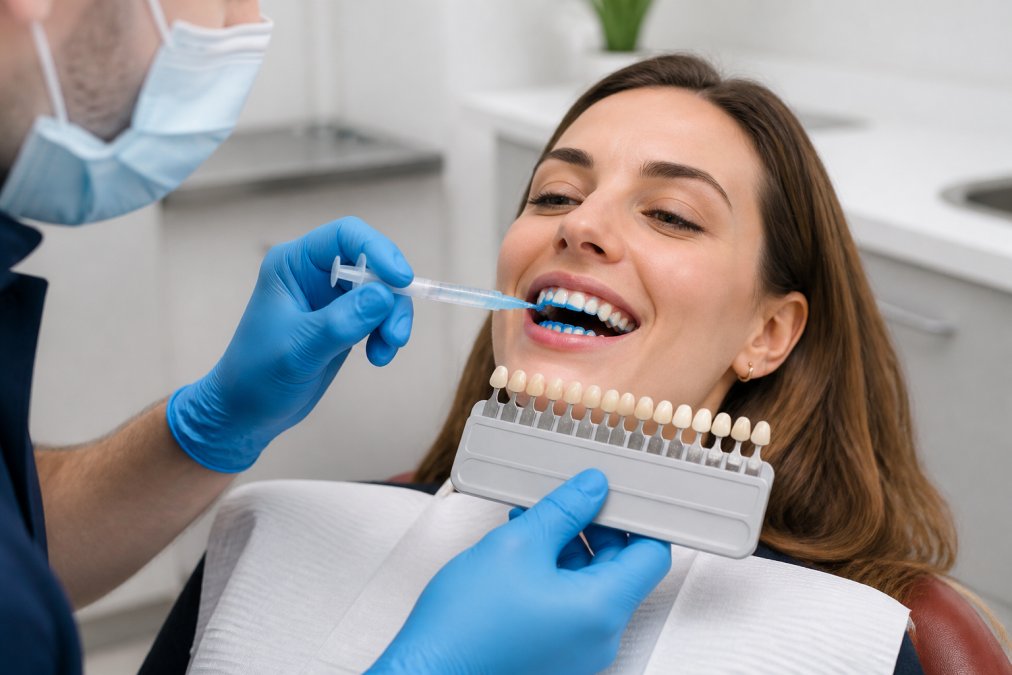
During an in-office treatment, your dentist first applies a protective barrier to your gums. They then apply the whitening gel evenly across the visible surfaces of your teeth. Many dentists use an LED light to activate the gel, though the light itself isn’t what whitens your teeth, the bleaching agent does the work. The gel typically stays on for 15-30 minutes, and the process may be repeated several times in a single appointment.
Your dentist supervises the entire treatment. This matters because they can control the concentration of bleaching agents and monitor your teeth and gums for sensitivity. At Orangefield Dental Care, we ensure the treatment is tailored to your specific needs and dental history.
The key difference from at-home kits is concentration and control. Professional treatments use stronger formulations, often 25-40% hydrogen peroxide compared to 3-10% in store-bought kits. Your dentist also uses custom-fitted trays that fit your teeth precisely, ensuring even coverage and reducing gum irritation.
Professional vs. At-Home Whitening Kits
Professional whitening and at-home kits both use bleaching agents, but they differ significantly in strength, results, and safety considerations.
Professional treatment advantages:
- Stronger bleaching agents deliver faster results
- Dentist supervision reduces risk of gum damage
- Custom-fitted trays ensure even application
- Results typically visible after one appointment
- Better for sensitive teeth due to professional monitoring
At-home kit advantages:
- Lower upfront cost
- Can be done on your schedule
- Gradual approach may suit some users
- No appointment needed
The main trade-off is speed versus convenience. Professional treatments work faster because dentists can use higher concentrations safely. At-home kits require consistent use over weeks to see noticeable results, and uneven application is common. Over-the-counter whitening strips and trays often slip during use, leading to patchy results.
Many people also underestimate how much sensitivity at-home kits can cause. Without professional guidance, users sometimes overuse products or apply them incorrectly, damaging enamel or irritating gums. Professional teeth whitening, by contrast, includes safeguards built into the process.
How Long Does Professional Teeth Whitening Last?
Professional teeth whitening results typically last between 6-12 months, though this varies based on your habits and lifestyle. Some people see results fade after 6 months. Others maintain their brighter smile for a full year or longer.
The longevity depends on what stains your teeth. Extrinsic stains (surface discoloration from food, drinks, or tobacco) respond well to whitening and fade more slowly after treatment. Intrinsic stains (discoloration inside the tooth structure) are harder to lighten and may require touch-ups sooner.
Your daily habits matter most. Drinking coffee, red wine, or dark sodas regularly will shorten how long results last. Smoking accelerates stain return significantly. People who avoid these habits and maintain good oral hygiene see results last closer to 12 months.
Many dentists recommend touch-up treatments every 6-12 months to maintain your brighter shade. These maintenance appointments are shorter and less expensive than the initial treatment, making it easier to keep your results consistent over time.
Understanding Teeth Whitening Side Effects
The most common side effect of professional teeth whitening is tooth sensitivity. This occurs because the bleaching agents temporarily open pores in your enamel, exposing the dentin beneath. Sensitivity usually appears during or shortly after treatment and fades within a few days to a week.
Gum irritation is another possible side effect, particularly if the whitening gel contacts soft tissue. Professional application minimizes this risk because your dentist applies a protective barrier to your gums before treatment. At-home kits carry higher risk because users may accidentally apply gel to gum tissue.
Some people experience temporary white spots on their teeth after whitening. These spots typically fade as your teeth rehydrate over the following hours. If they persist, your dentist can address them.
Bleaching agents do not weaken enamel when used properly under professional supervision. However, overuse or improper application can damage enamel over time. This is why professional teeth whitening is safer than repeated at-home treatments, your dentist controls the strength and duration of exposure.
Safety and Risk Profile of Professional Treatment
Professional teeth whitening is considered safe when performed by a qualified dentist. The risks are minimal compared to many dental procedures, and serious complications are rare. Your dentist assesses your suitability for treatment before beginning by checking for cavities, existing restorations, gum disease, and enamel erosion. If you have untreated decay or significant gum problems, whitening may be postponed until those issues are resolved. This pre-treatment evaluation is one reason dentist-supervised whitening is safer than over-the-counter approaches.
Contraindications and special considerations:
Certain conditions require caution or may make you ineligible for treatment. If you have exposed root surfaces (from gum recession), severe enamel erosion, or advanced tooth wear, whitening may not be appropriate because bleaching agents can penetrate exposed dentin and cause prolonged sensitivity or damage. Pregnant women are typically advised to postpone whitening until after delivery, though the evidence for direct risk is limited; many dentists prefer to avoid unnecessary cosmetic procedures during pregnancy as a precaution.
People with existing tooth sensitivity should discuss their concerns with their dentist before treatment. If you have a history of severe sensitivity, your dentist may recommend pre-treatment with a desensitising agent or may adjust the gel strength and application time to minimise discomfort.
How whitening affects existing dental restorations:
This is a critical point often overlooked: professional teeth whitening does not work on artificial restorations like crowns, veneers, composite fillings, or implants. These materials do not respond to bleaching agents because they are not living tooth structure. When you whiten your natural teeth, any existing restorations will remain their original shade, potentially creating a visible mismatch.
If you have a crown or veneer on a front tooth, whitening your natural teeth may make the restoration look noticeably darker or yellower by comparison. This is especially problematic if the restoration was matched to your tooth shade before whitening. Your dentist will discuss this before treatment to manage expectations.
Managing restorations before and after whitening:
If you are considering whitening and have existing crowns or veneers, discuss timing with your dentist. Some practitioners recommend whitening first, then replacing or updating restorations to match your new shade. Others suggest replacing restorations first if they are old or discoloured, then whitening around them. The best approach depends on the condition and location of your restorations.
Composite fillings (tooth-coloured fillings) also do not whiten. If you have visible composite fillings on front teeth, whitening may highlight the contrast between your brightened natural tooth and the unchanged filling material. Your dentist can replace composite fillings after whitening to match your new shade, though this adds cost and requires additional treatment.
For implants, the crown attached to the implant cannot be whitened. If you have an implant on a front tooth and whiten your natural teeth, the implant crown may appear darker. Discuss this with your dentist before whitening so you understand the visual outcome and can plan any future restoration updates.
General safety profile:
When performed by a qualified dentist on suitable candidates, professional whitening carries minimal risk. Temporary sensitivity and mild gum irritation are the most common side effects and typically resolve within days. Bleaching agents do not weaken enamel when used properly under professional supervision.
Cost Considerations and What to Expect
Professional teeth whitening costs vary depending on the dentist’s experience, location, and the specific technique used. Some practices charge per tooth or per arch (upper/lower), whilst others offer a flat fee for full-mouth treatment. Initial consultations are often free or included in the treatment cost.
What’s typically included:
- Pre-treatment shade assessment and tooth sensitivity evaluation
- Protective barriers for gums and lips
- Professional-grade whitening gel application (usually 25-40% hydrogen peroxide)
- One or more gel applications during the appointment
- Post-treatment sensitivity management advice
- Sometimes a custom tray for future touch-ups
What’s often charged separately:
- Take-home maintenance trays (£50-£150)
- Sensitivity toothpaste or desensitising gel (£15-£40)
- Touch-up appointments (£100-£250, typically cheaper than the initial treatment)
Maintenance Routines to Extend Your Results
After professional teeth whitening, your teeth are more porous and susceptible to staining for the first 24-48 hours. This window is critical for protecting your results.
Immediately after treatment:
- Avoid dark beverages like coffee, tea, red wine, and cola
- Skip acidic foods that soften enamel temporarily
- Don’t smoke or use tobacco products
- Eat only white or light-coloured foods if possible
- Rinse your mouth with water after meals
Long-term maintenance:
- Brush twice daily with a whitening toothpaste
- Floss daily to prevent plaque buildup
- Rinse with water after consuming staining foods or drinks
- Use a straw when drinking dark beverages to minimise contact with teeth
- Attend regular dental check-ups to catch problems early
Frequently Asked Questions
Does professional teeth whitening actually make a difference compared to over-the-counter products?
Yes. Professional whitening uses higher concentrations of bleaching agents (typically hydrogen peroxide or carbamide peroxide) than over-the-counter kits, delivering noticeably whiter results. A dentist-supervised treatment also includes custom-fitted trays or professional application that ensures even coverage and minimises gum irritation. Over-the-counter kits often produce subtle results over weeks, whereas professional treatment can lighten teeth by several shades.
How long do the results of professional teeth whitening last?
Results typically last between 6 months and 2 years, depending on your habits and diet. Consuming staining foods and drinks, such as coffee, red wine, and dark berries, shortens longevity. Smoking also accelerates discoloration. Regular maintenance routines, including touch-up treatments and good oral hygiene, help extend results. Your dentist can recommend a maintenance schedule tailored to your lifestyle.
What are the common side effects of professional teeth whitening?
The most common side effect is temporary tooth sensitivity, usually lasting a few days to a week after treatment. Some patients experience mild gum irritation if the whitening gel contacts soft tissue. These effects are generally manageable with fluoride treatments or sensitivity-reducing products recommended by your dentist. Serious complications are rare when treatment is dentist-supervised, as professional protocols include gum protection and enamel safeguards.
Is professional teeth whitening safer than at-home kits?
Professional whitening is generally safer because a dentist supervises the process, protects your gums, and monitors enamel health. Dentist-supervised treatment uses controlled concentrations of bleaching agents and ensures even application. At-home kits carry higher risks of uneven results, gum damage, and enamel erosion if used incorrectly or excessively. A dental professional can also identify contraindications, such as existing crown or veneer work, that may affect treatment suitability.