
Table of Contents
- What Is the Cost of Adult Braces in the UK?
- Invisalign Treatment Duration: What to Expect
- Invisalign vs Fixed Braces: Pros and Cons
- Hidden Costs: Beyond the Initial Treatment Fee
- Is Invisalign Worth the Investment for Your Smile?
- Who Makes a Good Candidate for Clear Aligners?
- Conclusion
- Frequently Asked Questions
Last Updated: September 3, 2026
What Is the Cost of Adult Braces in the UK?
When considering teeth straightening, cost is often the first question. Adult braces in the UK span a wide range depending on the type of treatment you choose. Traditional fixed braces typically cost between £1,500 and £3,500, while clear aligners like Invisalign generally fall between £2,000 and £5,000 for the full course of treatment. Private dental practices set their own fees, so prices vary significantly by location and provider experience.
The total cost depends on several factors: the complexity of your bite, how long treatment takes, and whether your dentist charges a flat fee or breaks costs into monthly instalments. Some practices offer payment plans that spread the expense across 12, 18, or 24 months, which can make treatment more accessible. However, these payment arrangements often come with interest charges, so the total amount you pay may exceed the upfront price.
It’s worth understanding that the NHS rarely funds orthodontic treatment for adults. NHS braces are primarily available to children and young people under 18 with significant orthodontic need, assessed by strict clinical criteria (the NHS). Adults seeking treatment almost always pay privately. This distinction is important because it means you’re comparing private-sector pricing, where competition and expertise drive variation.
The question isn’t just what braces cost, it’s whether the investment delivers value for your specific situation. That depends on your smile goals, treatment timeline, and how much you value the discreet appearance and convenience that clear aligners offer compared to fixed alternatives.
Invisalign Treatment Duration: What to Expect
Invisalign treatment typically takes between 12 and 24 months, though some cases resolve faster and others require longer (peer-reviewed research). The exact timeline depends on how much your teeth need to move, the complexity of your bite correction, and how consistently you wear your aligners.
Most patients wear their aligners for 20 to 22 hours per day, removing them only for eating and cleaning (peer-reviewed research). This high compliance is essential, if you wear them fewer hours daily, treatment extends significantly. Your dentist will provide a detailed treatment plan showing your expected timeline before you start, based on digital scans and bite analysis.
Unlike fixed braces, which are adjusted monthly by your dentist, Invisalign works through a series of custom-made aligners. You typically change to a new aligner every one to two weeks, and you’ll attend check-up appointments every six to eight weeks. These appointments are usually shorter than traditional brace adjustments because there’s no physical adjustment needed, your dentist simply checks your progress and provides your next set of aligners.
Real-world timelines often extend beyond initial estimates. Minor complications, slower-than-expected tooth movement, or inconsistent wear can add weeks or months to treatment. Planning for the possibility of a longer timeline helps manage expectations. Many patients find the gradual nature of Invisalign reassuring compared to the dramatic tightening of fixed braces, though it requires genuine patience.
Invisalign vs Fixed Braces: Pros and Cons
Clear aligners and fixed braces solve the same problem through entirely different mechanisms, and each approach has genuine strengths and meaningful limitations.
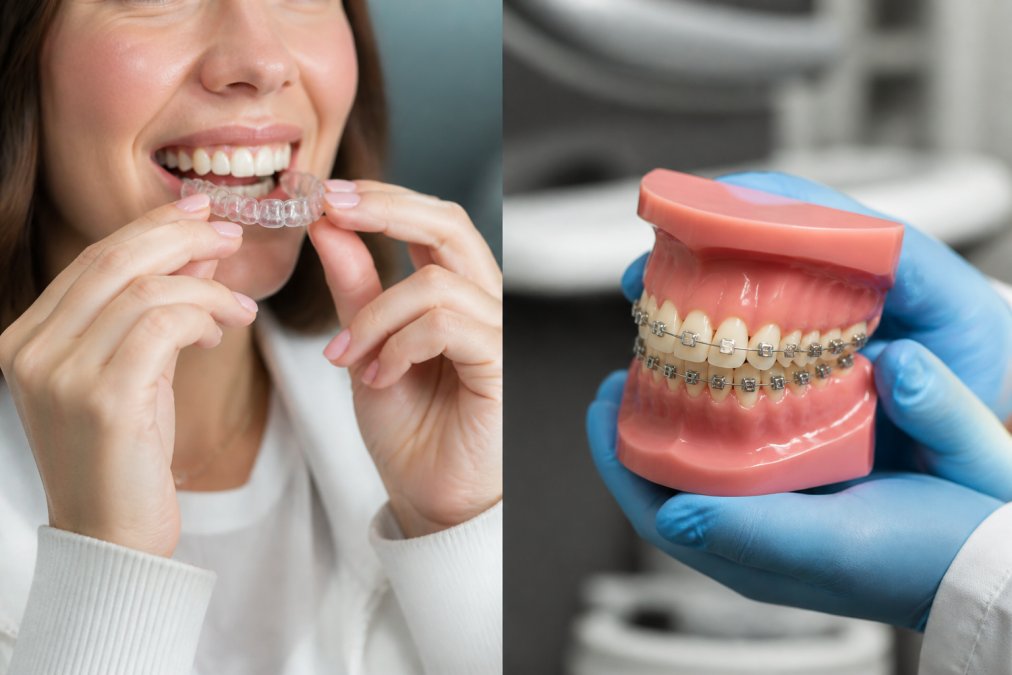
Invisalign: Strengths and Drawbacks
Clear aligners are removable, which means you can eat without restriction and clean your teeth normally. There’s no risk of food trapped behind brackets, and oral hygiene is straightforward. Many patients find the aesthetic appeal significant, aligners are nearly invisible, which matters if you’re self-conscious about visible braces during professional or social situations.
The trade-off is discipline. Invisalign only works if you wear it consistently. Remove your aligners for meals, snacks, and drinks (except water), and you’re looking at realistic daily wear of 20-22 hours. Miss that target regularly, and treatment stalls. Fixed braces, by contrast, work regardless of your habits, they’re always active.
Invisalign also costs more than many fixed brace options and isn’t suitable for severe bite problems. Dentists reserve it for mild to moderate crowding and spacing issues. Complex cases involving significant vertical bite problems or severe rotations may require fixed braces for better control.
Fixed Braces: Strengths and Drawbacks
Traditional metal or ceramic braces are more powerful. They handle complex orthodontic problems that clear aligners cannot, and they work continuously without relying on patient compliance. You cannot forget to wear them or remove them at inconvenient moments.
The disadvantages are visible. Brackets and wires are noticeable, which bothers many adults. Food gets trapped behind brackets, making cleaning more difficult and increasing cavity risk if oral hygiene slips. Adjustments can cause temporary discomfort, and the tightening sensation lasts several days after each appointment.
Fixed braces also restrict diet, hard, sticky, and crunchy foods can damage brackets. This limitation frustrates some patients, particularly those accustomed to eating freely.
| Aspect | Invisalign | Fixed Braces |
|---|---|---|
| Appearance | Nearly invisible | Visible brackets and wires |
| Cleaning teeth | Normal brushing and flossing | Requires special tools and care |
| Diet restrictions | None (aligners removed) | Hard, sticky, crunchy foods avoided |
| Compliance required | High (20-22 hours daily) | None (always working) |
| Treatment complexity | Mild to moderate cases only | All cases, including complex |
| Comfort | Gradual pressure, minimal soreness | Tightening sensation after adjustments |
| Cost | Generally higher | Typically lower |
Hidden Costs: Beyond the Initial Treatment Fee
The price quoted for Invisalign or fixed braces is rarely the complete financial picture. Several costs emerge during and after treatment that patients often don’t anticipate.
Retainers are non-negotiable after treatment ends. Without retention, teeth drift back toward their original positions, a frustrating waste of time and money. Some practices include retainers in the initial quote; many charge separately, typically £200 to £600. You’ll likely need both a fixed retainer (bonded to the back of your teeth) and removable retainers to wear at night, and replacements cost money when they break or wear out.
Emergency appointments happen. If a bracket breaks, an aligner cracks, or a wire comes loose, you’ll need to see your dentist outside your regular schedule. Practices charge for these visits, often £50 to £150 per appointment. Over two years of treatment, even one or two emergencies add up.
Tooth whitening after treatment is common. Braces leave slight discolouration marks where brackets were bonded, and many patients want their newly straightened teeth to be brighter. Professional whitening costs £300 to £800, depending on the method.
Some practices charge for records, digital scans, X-rays, and treatment plans, if you switch dentists mid-treatment or want copies for your records. Expect £100 to £300 for a complete set.
Dental cleaning and maintenance during treatment may incur extra costs. Teeth with braces require professional cleaning more frequently than usual, and some practices charge for these additional hygiene appointments.
Insurance rarely covers orthodontics for adults. If you have dental insurance, check your policy, most exclude or severely limit orthodontic benefits for patients over 18. Private pay is the norm, which means the full cost comes from your pocket.
Financing arrangements often include interest charges that can add 10-20% to the total cost. A £3,000 treatment financed over 24 months at typical rates might cost £3,400 or more. Always ask about the total amount you’ll pay, not just the monthly figure.
Is Invisalign Worth the Investment for Your Smile?
Whether clear aligners justify their cost depends on what you value and what your teeth actually need. This isn’t a universal answer, the worth calculation is personal.
For mild crowding or spacing, Invisalign delivers real value. You get a discreet treatment option that doesn’t disrupt your eating or cleaning routine, and the cost difference versus fixed braces may feel justified by the convenience. If you’re in a professional environment where visible braces would affect your confidence, the aesthetic advantage alone might make it worth the premium.
For complex bite problems, Invisalign is often not an option. Fixed braces are more effective, and you’re not choosing between two similar solutions, you’re choosing between a tool that works and one that won’t. In that scenario, cost becomes less relevant because there’s only one viable path.
The compliance factor is critical. Invisalign costs more and requires discipline. If you know you’ll struggle to wear aligners 20+ hours daily, or if you frequently eat on the go without access to a place to store them safely, fixed braces might frustrate you less despite their visibility. A treatment that actually works is worth more than a theoretically better option you won’t use correctly.
Consider also your timeline. If you need teeth straightened quickly for a specific event or deadline, fixed braces typically work faster. Invisalign’s gradual approach suits patients comfortable with a longer process.
Ask your dentist for a detailed cost breakdown before committing. Request the total cost including retainers, any expected follow-up appointments, and whether the quote assumes consistent compliance. This clarity helps you compare true costs, not just headline figures.
The real value question is whether straighter teeth improve your quality of life enough to justify the expense and inconvenience of treatment. For many adults, the answer is yes, confidence in your smile affects how you interact with others and how you feel about yourself. For others, the cost and commitment feel excessive for a cosmetic change. Both answers are reasonable.
Who Makes a Good Candidate for Clear Aligners?
Not every smile is suitable for Invisalign. Your dentist assesses candidacy based on the type and severity of your orthodontic problem, your age, and your ability to commit to consistent wear.
Clear aligners work best for mild to moderate crowding, spacing, and simple bite corrections. If your teeth overlap significantly, your bite is severely misaligned, or you have complex rotations, fixed braces are more appropriate. Invisalign’s limitations stem from physics, aligners apply gentle, gradual pressure, which is ideal for straightforward movements but insufficient for complex three-dimensional corrections.
Age matters less than you might think. Adults of any age can wear Invisalign provided they have healthy gums and bone support. Teenagers can wear clear aligners, though some orthodontists prefer fixed braces for younger patients because compliance is easier to monitor and enforce.
Compliance is the real gating factor. You must be willing to wear aligners 20-22 hours daily without fail. If you frequently forget, lose them, or find the discipline burdensome, treatment won’t progress as planned. Honest self-assessment here saves money and frustration, if you suspect you’ll struggle with consistency, discuss fixed braces as an alternative.
Oral hygiene matters. Because aligners are removable, you must clean your teeth thoroughly before reinserting them. Poor dental habits during treatment can lead to decay, gum disease, or discolouration. If you’re not committed to brushing and flossing diligently, discuss this concern with your dentist.
Gum health is a prerequisite. If you have active gum disease, it must be treated before orthodontics begin. Straightening teeth on unhealthy gums risks worsening the underlying problem.
At Orangefield Dental Care, we assess each patient individually during a consultation. We examine your bite, take digital scans, and discuss your goals and lifestyle. This conversation determines whether clear aligners suit you or whether fixed braces are the better choice. The goal is matching the treatment to your situation, not fitting you into a predetermined option.
Conclusion
Is Invisalign worth the cost? The answer depends on your specific orthodontic needs, your commitment to wearing aligners consistently, and how much you value the aesthetic and convenience benefits. For mild to moderate crowding or spacing, clear aligners offer genuine advantages over fixed braces, discreet appearance, easier cleaning, and no dietary restrictions. However, they cost more and require discipline. For complex bite problems, fixed braces are often the only effective option, making cost comparison irrelevant.
The hidden costs, retainers, emergency visits, whitening, and financing charges, can add significantly to the headline price. Budget for these extras and ask your dentist for a complete cost breakdown before starting treatment.
At Orangefield Dental Care, we provide comprehensive consultations that include digital bite analysis, treatment planning, and detailed pricing so you can make an informed decision. Our flexible evening appointments and pain-free approach make the process comfortable, and we’re here to help you understand whether clear aligners or fixed braces suit your smile goals. Book an appointment to discuss your orthodontic options with our experienced team.
Frequently Asked Questions
How does the cost of Invisalign compare to traditional fixed braces?
Invisalign and fixed braces typically fall within similar price ranges, though final costs depend on treatment complexity, duration, and your provider. Invisalign offers aesthetic advantages and easier oral hygiene, while fixed braces may be more effective for severe malocclusion or crowding. Insurance coverage varies between the two. Contact your dental provider for a personalised quote and to understand what your specific treatment plan would cost.
What is the 30-minute rule for Invisalign aligners?
The 30-minute rule refers to the recommendation that you remove your aligners for eating, drinking (except water), and cleaning your teeth. Aligners should be worn for at least 20-22 hours daily for optimal results. Leaving them out for longer periods or removing them too frequently can slow progress and extend your overall treatment duration, affecting the value of your investment.
Is Invisalign worth getting at age 40 or older?
Invisalign works effectively for adults of any age, provided your gum health and bone density are adequate. Many patients over 40 choose clear aligners for aesthetic reasons and the discretion they offer in professional settings. Your dentist will assess your suitability during a consultation, considering factors like existing dental work, bite correction needs, and your commitment to wearing aligners consistently.
What are the main downsides to Invisalign treatment?
Common limitations include the need for strict compliance (aligners must be worn 20-22 hours daily), potential difficulty with severe bite corrections, the cost of replacement aligners if lost or damaged, ongoing retainer costs after treatment, and possible temporary speech changes. Some patients also experience minor discomfort during the adjustment to new aligners. These factors should be weighed against the aesthetic and hygiene benefits when deciding if Invisalign is worth the investment for your situation.