
Table of Contents
- Is Fluoride Treatment Safe for Kids? The Short Answer
- How Fluoride Strengthens Enamel and Prevents Decay
- Is Fluoride Toothpaste Safe for Kids?
- Fluoride Varnish for Children: What Happens at the Appointment
- Fluoride Treatment Side Effects in Children
- How Often Should Children Have Fluoride Treatment?
- Matching Treatment to Your Child’s Cavity Risk
- Questions to Ask Before Your Child’s Treatment
- Frequently Asked Questions
Last Updated: October 19, 2026
Is Fluoride Treatment Safe for Kids? The Short Answer
Yes. Fluoride treatment is safe for children when it is applied in the right amount for the child’s age and weight.
The main risk parents should know about is dental fluorosis. This shows as faint white marks on permanent teeth. The NHS guide to fluoride sets out why fluoride matters and where it comes from.
Below, we walk through what happens at the appointment, how much toothpaste each age needs, and what to do if your child swallows too much.
How Fluoride Strengthens Enamel and Prevents Decay
Tooth enamel loses minerals every day when acids from food and drink attack it. Fluoride helps put those minerals back, a process called enamel remineralization. It also makes enamel harder for acid to dissolve.
That matters most for primary teeth. First teeth have thinner enamel than adult teeth, so decay can reach the inner tooth faster. A small cavity in a toddler can become an infection before a parent notices.
Fluoride does two jobs: it repairs early mineral loss and makes enamel more resistant to the next acid attack. Both reduce cavity risk.
Is Fluoride Toothpaste Safe for Kids?
Yes. Fluoride toothpaste is safe for kids when you use the correct amount and supervise brushing. The risk comes from swallowing, not from brushing.
A common mistake is letting a child use a “safe to swallow” training paste for too long. Those products usually contain no fluoride, so they do nothing for cavity prevention. Once teeth appear, most dentists recommend a tiny smear of fluoride toothpaste. Transitioning away from fluoride-free toothpaste ensures that developing enamel receives the essential mineral support required to resist decay.
How Much Toothpaste by Age
The amount is the single biggest safety factor. Use this as your guide:
| Age | Amount | Supervision |
|---|---|---|
| Under 3 years | Smear, no bigger than a grain of rice | Brush for them |
| 3 to 6 years | Pea-sized amount | Brush, then let them spit |
| 6 years and over | Pea-sized to small ribbon | Check they spit, not swallow |
Keep the tube out of reach between brushes. Children who eat toothpaste from the tube are the group most likely to take in too much fluoride.
Fluoride Varnish for Children: What Happens at the Appointment
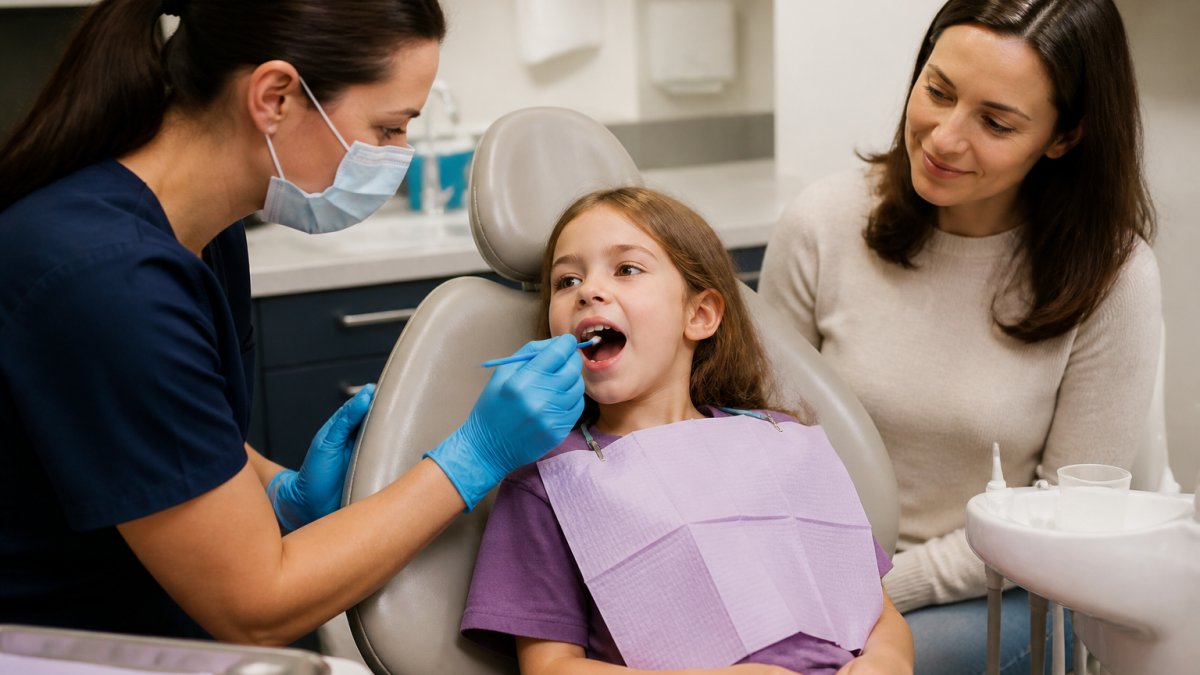
Fluoride varnish for children is quick, but the visit still has a sequence, and knowing it in advance is the best way to stop a nervous child from becoming a frightened one. A dentist or hygienist paints a concentrated fluoride product onto the teeth with a small brush.
Before the appointment
- Tell the surgery if your child is anxious. Extra time can be booked, and a first visit can be arranged as a look-only appointment so the chair and the lights are familiar before anything is applied.
- Feed them beforehand. A light meal or snack before the visit is sensible, because the aftercare rules mean no hard food for the rest of the day.
- Bring their usual toothpaste. The clinician may want to check the fluoride concentration and the amount your child is actually using at home.
- Mention any medical conditions or medicines. This is routine, but it matters if your child has had a reaction to a dental product before.
During the appointment
Here is the sequence most practices follow:
- Quick check. The clinician looks at the teeth and notes any early decay, existing fillings or white-spot lesions. This is what sets the recall interval later.
- Clean and dry. Plaque is brushed off and the teeth are kept dry with gauze. Varnish bonds better to a clean, dry surface.
- Apply. A thin coat goes on the chewing surfaces and the exposed sides. The clinician works in sections, usually starting at the back so the child gets used to the taste.
- Set. It hardens in seconds on contact with saliva. Your child can close their mouth straight away and does not need to rinse.
The whole visit is usually a few minutes. Most children tolerate it well because nothing is drilled and no needle is used. The taste is often described as fruity or slightly bitter, and the coating can feel a little rough on the tongue, both are normal and pass.
Ask the clinician to show your child the brush and let them touch it before application. A ten-second introduction prevents most of the squirming.
What the clinician is choosing between
Varnish is not the only professional product, and the choice is not arbitrary. Most practices use a varnish because it is painted on, sets fast and is well tolerated by young children. Some children, particularly older children with a high cavity risk, may be offered a gel in a tray or a foam, which covers more surface but needs the child to keep still for longer and to avoid swallowing. If your child has had varnish before and disliked the texture, say so; a different product or a different application technique may suit them better.
Immediately afterwards
The coating stays on the teeth for hours and slowly releases fluoride. Your child can go straight back to normal activity, but the aftercare rules in the next section apply for the rest of the day. If the appointment is at the end of the school day, plan a soft tea rather than a packed lunch with crunchy snacks.
If your child is nervous, tell the surgery when you book.
Fluoride Treatment Side Effects in Children
Serious side effects are rare. The most common ones are mild and short-lived:
- A temporary white or yellow tint on the teeth from the varnish, which brushes off
- A slightly odd taste for a few hours
- Mild nausea if a child swallows varnish, which is uncommon
The bigger long-term concern is dental fluorosis, and that comes from repeated over-ingestion, not from varnish applied by a professional. Fluoride treatment side effects in children are therefore mostly about what happens after the appointment.
What to Do After Fluoride Varnish
Follow the varnish aftercare rules closely. They protect the coating while it works.
- No brushing for the rest of the day. Brush again the next morning.
- Soft food only for the rest of the day. Skip crunchy, sticky or very hot food.
- No fizzy drinks or fruit juice until the next day.
- Do not pick at the coating. It may feel slightly rough, which is normal.
Brushing too soon after varnish removes the coating before it has done its job. Wait until the next morning, even if your child begs to brush.
If a Child Swallows Too Much Fluoride
Swallowing a small amount of varnish is not usually a problem. Swallowing a large amount of fluoride toothpaste or supplements is different. Symptoms include stomach pain, nausea and vomiting.
The toxic dose depends on body weight, measured in mg of fluoride per kg. This is why child-proof storage of toothpaste and supplements matters so much.
If you think your child has swallowed a large amount:
- Remove the product from them.
- Note roughly how much they took.
- Call NHS 111 or your dentist straight away for advice.
- If they are drowsy or vomiting badly, call 999.
Do not wait for symptoms to appear before seeking advice.
How Often Should Children Have Fluoride Treatment?
How often should children have fluoride treatment? For most children, a varnish every six months at their routine check-up is enough. Children with higher cavity risk may be offered it more often, sometimes every three to four months.
Your dentist sets the treatment frequency based on what they see in the mouth, not a fixed rule for every child. That is why the check-up comes first and the varnish comes second.
Matching Treatment to Your Child’s Cavity Risk
Not every child needs the same plan. We group children by cavity risk, because a low-risk child and a high-risk child should not get identical advice.
- Low risk: no decay, good brushing, no fizzy drinks. Routine varnish at check-ups and a pea-sized toothpaste amount.
- Moderate risk: one or two filled teeth, or snacking often. Varnish more regularly, plus a brushing review.
- High risk: early decay, special needs, or a diet high in sugar. Closer monitoring and a written prevention plan.
Ask your dentist which risk group your child is in and why. It makes the treatment frequency easy to understand and easy to follow.
Questions to Ask Before Your Child’s Treatment
A few questions turn a vague worry into a clear plan. Ask these at your next visit:
- How much fluoride does my child actually need at their age?
- Is a varnish the right choice, or would a supplement or rinse be better?
- How often should we come back for the next application?
- What should we do at home if we miss a brushing?
- What are the signs of too much fluoride we should watch for?
Professional varnish differs from toothpaste, rinses and supplements because a trained clinician controls the dose and places it directly on the teeth. That control is what makes it safe. For parents who want reassurance, the British Society of Paediatric Dentistry publishes guidance for families, and the General Dental Council explains what to expect from a regulated dental professional.
At Orangefield Dental Care, we offer family dentistry with flexible opening times, including evenings, so you can bring the whole family without taking a day off. If your child is nervous, tell us when you book and we will plan the visit around them.
Frequently Asked Questions
At what age can a child have fluoride treatment?
Fluoride varnish is generally applied once a child’s first teeth appear, and many dental teams offer it from around the age of two. Toothpaste use starts earlier: from the first tooth, using only a smear of family toothpaste containing at least 1,000ppm fluoride. Your dentist will confirm what is suitable for your child based on their age, their teeth and their cavity risk, so ask at your next check-up rather than relying on a single age rule.
What should a child avoid after fluoride varnish?
After varnish is applied, most dentists ask children to avoid eating hard or sticky foods and hot drinks for the rest of the day, and to skip brushing that evening. This gives the varnish time to set and release fluoride onto the enamel. Soft food and cool drinks are usually fine. Follow the specific instructions your dental team gives you, because timings can vary between practices and products.
What are the possible side effects of fluoride treatment in children?
The most common side effect of fluoride varnish is a temporary white or yellowish coating on the teeth, which wears off. Some children notice mild nausea if they swallow varnish, and rare reactions include a rash around the mouth. The bigger long-term concern is dental fluorosis, which causes faint white marks on developing teeth and is linked to swallowing too much fluoride over time, not to a single professional application. Keeping toothpaste amounts age-appropriate and supervising brushing reduces that risk.
How much fluoride is in toothpaste, and how much should my child use?
Children’s and family toothpastes in the UK typically contain between 1,000ppm and 1,450ppm fluoride, with higher-strength versions available on prescription for children at higher cavity risk. Under three years, use a smear of toothpaste; from three to six years, use a pea-sized amount. Children should spit after brushing rather than rinse, because rinsing washes away the fluoride that protects enamel. Always supervise brushing until your child can do it reliably alone.
Can I get fluoride treatment for my child at home?
You can support fluoride protection at home with age-appropriate fluoride toothpaste and, where your water supply is not fluoridated, your dentist may discuss fluoride supplements. Fluoride varnish and high-strength gels are professional treatments applied in a dental surgery, not something to buy and apply yourself. If you are unsure whether your child needs more than toothpaste, ask your dental team to assess their cavity risk at a routine appointment.
Worry about fluoride usually comes from not knowing the dose. Once you know the amount by age, the aftercare rules and when to call for help, the decision gets simple. Orangefield Dental Care can check your child’s teeth, apply varnish where it is needed, and give you a clear plan for home. We offer family appointments, evening slots and emergency care if something goes wrong. Book an appointment with Orangefield Dental Care and get a straight answer on what your child actually needs.