
Last Updated: October 24, 2026
Quick Summary
Invisalign vs metal braces price differs significantly, with metal braces generally costing less upfront, though Invisalign’s higher fee reflects removability and aesthetics. Total cost depends on case complexity, treatment duration, and what’s included, mild cases cost less than moderate or complex cases, and comparing the full course including retention matters more than the advertised starting price.
- Metal braces typically cost less than Invisalign but require adjustment visits every 4 to 8 weeks over 18 to 36 months.
- Invisalign treatment usually takes 6 to 18 months for mild to moderate cases, faster than braces, but requires 20 to 22 hours daily wear for compliance.
- Ask providers to itemise consultation, appliance fee, refinements, retention, and exclusions separately, a single total price is not comparable across practices.
- Third-party finance can lower monthly payments but raises total cost through interest; compare total repayable, not monthly figures.
- Hidden costs like replacement aligners, broken brackets, refinement stages, and retainer replacement often push the final bill above the advertised price.
Table of Contents
- Invisalign vs Metal Braces: Cost Overview
- Invisalign Cost in the UK: What You’ll Pay
- Metal Braces Cost in the UK: Breaking Down the Expense
- What Affects Your Braces Price: Case Complexity and Beyond
- Invisalign Treatment Time vs Metal Braces Duration
- Payment Plans and Financing for Braces
- Comfort, Appearance, and Hidden Costs to Consider
- Getting Your Personalised Braces Consultation
- Frequently Asked Questions
Invisalign vs Metal Braces: Cost Overview
Choosing between Invisalign and metal braces means weighing more than the upfront price, and understanding invisalign vs metal braces price differences helps you decide what fits your budget and lifestyle.
The price gap between clear aligners and traditional braces can be significant, but it’s rarely the deciding factor once you know what each option covers, some patients find metal braces’ lower cost makes sense, others find Invisalign’s flexibility justifies the premium.
Invisalign Cost in the UK: What You’ll Pay
Invisalign pricing depends on how many aligners you’ll need, how long treatment takes, and whether refinements are required. Find detailed Invisalign pricing and payment plan options to understand costs specific to your situation.
The total includes aligners, check-ups, and any refinements. Some providers bundle these into one fee; others charge per component, so ask exactly what’s included and what costs extra.
Metal Braces Cost in the UK: Breaking Down the Expense
Traditional metal braces generally vary in cost with case complexity and treatment length. To understand how public and private pricing differs, please consult official sources.
Metal braces involve brackets, wires, and bands adjusted at each appointment, roughly every 4 to 8 weeks. The price typically covers these visits, though some providers charge separately for emergency repairs or broken brackets.
Treatment ranges from 18 months to 3 years for most cases; complex problems take longer, meaning more adjustments and higher total costs. Retention is usually included or costs very little extra.
What Affects Your Braces Price: Case Complexity and Beyond
Several factors push the final cost up or down regardless of treatment, explaining why two patients might pay different amounts for similar-looking teeth.
Mild cases
Mild crowding or minor spacing resolves faster and costs less, fewer aligners or adjustment visits are needed, and treatment often completes in 6 to 12 months, so providers can offer more competitive pricing.
Whether mild misalignment needs treatment depends on your goals: if you want a straighter smile and better oral hygiene, even mild cases benefit; if you’re happy with your bite and appearance, it may not be necessary.
Moderate cases
Most people fall here. Moderate crowding, spacing, or bite problems need more movement than mild cases but aren’t severely complex, typically taking 12 to 20 months, with costs reflecting the extra time and materials.
For moderate cases, the choice often comes down to lifestyle and budget when comparing invisalign vs metal braces price: metal braces usually cost less, but Invisalign’s removability and aesthetics justify the higher price for some patients.
Complex cases
Severe crowding, significant bite problems, or cases needing extraction take longer and cost more, 24 to 36 months or longer, with more planning, appointments, and sometimes extractions or jaw surgery raising the total.
Complex cases benefit most from a clear plan outlining what will happen, how long it takes, and the final cost. Some may not suit Invisalign alone; metal braces or a combination approach might be recommended.
Invisalign Treatment Time vs Metal Braces Duration
Invisalign typically works slightly faster for mild to moderate cases, often 6 to 18 months versus 18 to 24 for braces, though complex cases sometimes take similar time with either method.
Metal braces excel at severe crowding and complex bite problems, since your orthodontist controls the force at each adjustment. Explore the benefits of teeth straightening as an adult to see how duration fits your timeline.
Compliance matters too: Invisalign requires 20 to 22 hours of daily wear, and frequent removal slows treatment, while metal braces work continuously regardless of patient habits.
Payment Plans and Financing for Braces
Headline prices rarely reflect what you actually pay monthly. The gap between the advertised starting price and your real out-of-pocket total comes down to what the quote includes, how the balance is financed, and whether an insurer or lender shares the cost.
What a quote should itemise before you compare financing
Ask every provider for a written breakdown that separates:
- Consultation and records, initial assessment, X-rays, intraoral scans, and photographs. Some practices bundle these into the treatment fee; others charge separately.
- The appliance fee, aligners or brackets and wires, including the number of aligner stages or adjustment visits the fee assumes.
- Refinements or additional stages, confirm whether a set number of refinement aligners or extra adjustment appointments are included, and what each additional stage costs.
A quote that lists only a single total is not comparable to one that itemises these lines. The itemised quote is the only basis on which a monthly payment figure means anything.
How UK payment plans typically work
Most private practices structure payment in one of three ways:
- Deposit plus monthly instalments, a deposit at the start (commonly 10-30% of the total) followed by equal monthly payments across the treatment months. A plan over 18 months with a 20% deposit leaves the remaining balance spread across monthly payments.
- Equal monthly payments with no deposit, the full fee divided across the treatment period, sometimes with a small administration fee.
- Third-party finance, a regulated credit agreement arranged through a lender the practice works with. These are typically interest-free over shorter terms (often 12 months) and interest-bearing over longer terms (often 24-60 months).
When you compare a practice’s in-house plan against third-party finance, compare the total amount repayable, not the monthly figure. A longer term lowers the monthly payment but can raise the total once interest is added.
Third-party dental finance is regulated consumer credit. Check that the lender is authorised by the Financial Conduct Authority (you can search the FCA register), that you receive a pre-contract credit information document setting out the APR and total repayable, and that you understand your cancellation rights. In-house instalment plans offered by the practice itself may not be regulated credit, ask which applies before signing.
Insurance and NHS routes that change the amount you pay
- Private dental insurance, some policies include orthodontic cover, often with an age limit or a waiting period before orthodontic claims can be made. Adult orthodontics is less commonly covered than treatment for children, and many policies cap the orthodontic benefit. Ask your insurer for the orthodontic benefit limit and whether Invisalign and fixed braces are treated the same way.
- NHS treatment, where a patient meets the clinical criteria for NHS orthodontics, treatment is provided under a banded NHS charge rather than a private fee. NHS orthodontic provision is subject to eligibility criteria and waiting lists, and not all cases qualify. If you are considering the NHS route, confirm eligibility with the provider rather than assuming the private price is your only option.
- Employer or cash-plan benefits, some dental cash plans reimburse a portion of orthodontic costs up to an annual or treatment cap. Check the small print for orthodontic exclusions and annual maximums.
A worked comparison you can copy
Take two illustrative quotes for the same moderate case:
| Cost line | Practice A (in-house plan) | Practice B (third-party finance) |
|---|---|---|
| Consultation and records | Included | £150 |
| Appliance and treatment fee | £3,200 | £3,000 |
| Refinements | 2 stages included | £250 per stage |
| Retainers | Included | £250 |
| Deposit | £640 (20%) | £0 |
| Monthly payment | £142 × 18 months | £95 × 36 months |
| Interest | £0 | £420 |
| Total repayable | £3,200 | £3,820 |
Practice B looks cheaper monthly but costs more in total once the deposit, add-ons, and interest are counted. This is the comparison that matters, not the advertised starting price.
Before you choose a plan, get an itemised quote, ask whether refinements and retainers are included, confirm the total amount repayable rather than the monthly payment, and check whether any insurer or NHS route applies to your case. Those four questions close most of the gap between the advertised price and what you actually pay.
Comfort, Appearance, and Hidden Costs to Consider
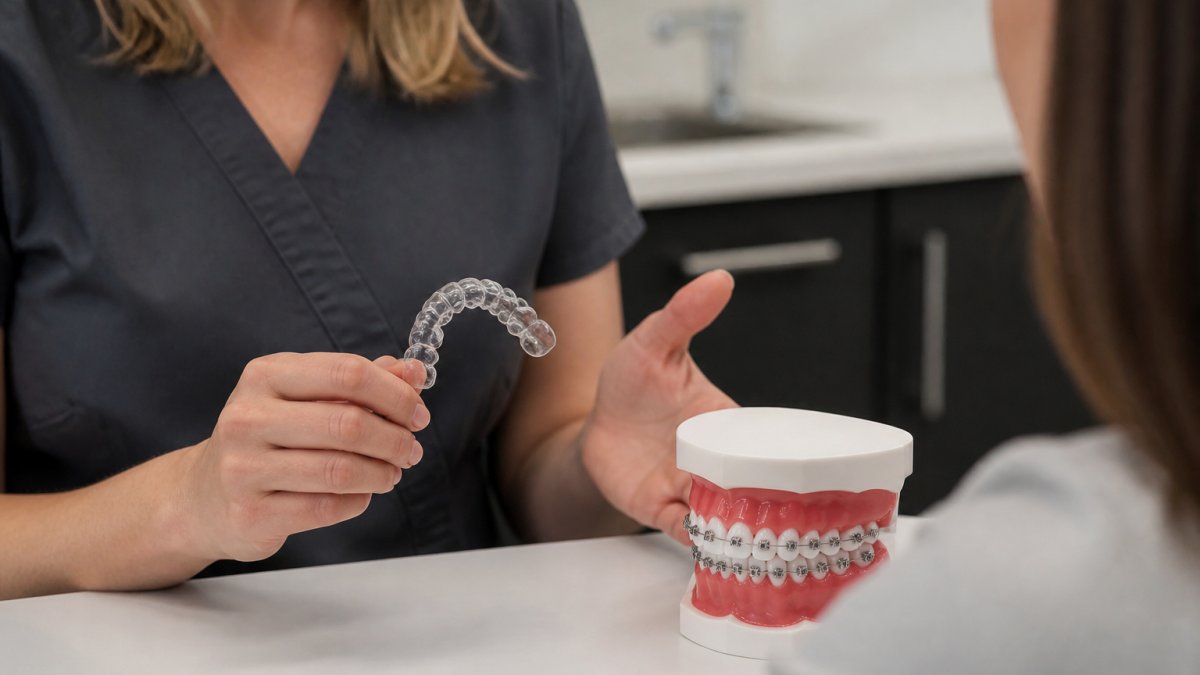
Comfort and appearance shape satisfaction, but the costs that decide whether a treatment stays within budget are the ones that appear after you have signed: replacements, repairs, refinements, and retention. This section separates the predictable from the unexpected so you can budget for the full course, not just the start.
Comfort and irritation: what to expect in practice
- Fixed braces apply continuous force through brackets and wires. Most patients report soreness for a few days after each adjustment, and irritation where brackets rub the inside of the cheek or lip. Orthodontic wax and salt-water rinses are the usual first-line measures. Eating requires care: hard, sticky, or crunchy foods can dislodge brackets, and each repair is a potential extra charge.
- Clear aligners have no sharp edges, but a new tray typically produces pressure and tenderness for the first day or two of each stage. The aligners must be removed to eat and drink anything other than water, and they must be cleaned regularly to avoid trapping plaque against the teeth. Patients who grind or clench may find aligners less comfortable overnight.
Appearance and visibility
Metal braces are visible at conversational distance; ceramic brackets reduce visibility but can stain. Clear aligners are near-invisible in most settings, the main reason many adults accept the higher fee. If appearance decides it, ask whether a quote is for metal, ceramic, or clear brackets, material changes both price and aesthetics.
Hidden and long-term costs: the lines competitors leave out
These are the costs that most often push a treatment over its advertised total. Ask your provider in writing whether each is included, and if not, what it costs.
- Replacement aligners for lost or damaged trays, a lost tray can delay treatment and may be charged per replacement stage. Patients who remove aligners frequently for work or sport are more exposed to this.
- Broken brackets and loose wires, repairs are sometimes included and sometimes charged per visit. Confirm the policy before treatment starts.
- Refinement stages, many plans include a set number of refinement aligners or extra adjustment visits; beyond that, each additional stage is a cost. Complex cases are more likely to need refinements.
Build a contingency for replacements, repairs, and retention.
How to compare the full cost, not the headline
When comparing quotes, compare the total cost of the full course including retention, not the starting price. Ask each provider how many refinement stages are included, what replacements and repairs cost, whether retainers are included, and which appointments are chargeable, that realistic total is the number worth comparing.
Getting Your Personalised Braces Consultation
At Orangefield Dental Care, we offer flexible evening appointments and explain every aspect of treatment, timeline, cost, and what’s included and isn’t, so you can decide without surprises, whether you choose Invisalign, metal braces, or another solution.
The right choice depends on your budget, lifestyle, and priorities. Metal braces typically cost less and work reliably for all case types; Invisalign costs more but offers removability and aesthetics many patients value.
Frequently Asked Questions
Does Invisalign cost more than metal braces?
Costs for orthodontic treatments vary based on case complexity, treatment duration, and your orthodontist’s location. The best way to understand your specific cost is to request a consultation where your orthodontist can assess your case and provide an itemised quote.
What factors affect the total price of orthodontic treatment?
Several factors influence braces pricing: the severity of your smile problems (mild, moderate, or complex cases cost differently), whether you need single-arch or full treatment, your age, the duration of treatment, the number of follow-up appointments and adjustments required, and whether refinements are needed after your main treatment ends. Insurance coverage and any financing options you choose can also affect your out-of-pocket cost. Your orthodontist will outline these factors during your consultation.
Can I pay for Invisalign or metal braces in instalments?
Yes, many orthodontic practices offer payment plans and financing options to spread the cost of braces over several months or years. Monthly payments make treatment more affordable for families managing multiple dental needs. Ask your orthodontist about available payment plan options, whether they offer in-house financing, or if they work with third-party finance providers. Some plans may have interest, so clarify terms before committing.
How long does Invisalign treatment take compared to metal braces?
Invisalign treatment typically takes 12 to 18 months for most cases, though mild cases may finish in 6 months and complex cases can take 24 months or longer. Metal braces usually require 18 to 24 months on average, with similar variation depending on case complexity. The actual treatment time depends on how severe your alignment problems are, how consistently you follow your orthodontist’s instructions (especially wearing aligners as prescribed), and whether refinements are needed after your main treatment.
Ready to explore your straightening options? Book a consultation with Orangefield Dental Care today. We’ll assess your case, explain your choices, and help you find a treatment plan that fits your needs and budget. With flexible evening appointments and a focus on patient comfort, we make orthodontic care accessible and stress-free.
