
Table of Contents
- Your Pre-Appointment Checklist: What to Do Before You Go
- What to Bring on the Day
- Updating Your Medical History and Medications
- How to Manage Dental Anxiety Before Your Visit
- Questions to Ask Your Dentist at Your Next Check-Up
- Your Oral Hygiene Routine Before the Visit
- What to Expect During the Examination and How to Discuss Symptoms
- Understanding Treatment Costs and Insurance Coverage
- Accessibility, Sensory Adjustments and Post-Pandemic Hygiene
- Conclusion
- Frequently Asked Questions
Last Updated: September 30, 2026
Your Pre-Appointment Checklist: What to Do Before You Go
Most people spend more time choosing what to wear to a dental appointment than preparing for it. That is a mistake. A little planning helps you get more from every visit, and it starts long before you sit in the chair.
What to Bring on the Day
Pack these items the night before so nothing gets forgotten in a morning rush:
- Your appointment time and address, saved on your phone
- A list of current medications, including doses
- Your medical history details, including recent surgeries or diagnoses
- Insurance or payment details, if you have them
- A list of questions you want answered
- Details of any dental anxiety you want the team to know about
Updating Your Medical History and Medications
Your medical history is not paperwork for its own sake. It shapes how your dental professional treats you.
Never stop taking a prescribed medication before a dental visit without speaking to your GP first. Changing doses on your own can cause serious harm, and your dental team can work around most medications safely.
How to Manage Dental Anxiety Before Your Visit
Dental anxiety is common, and it is nothing to be embarrassed about. A dental phobia is a recognised fear that can make even booking an appointment feel impossible. The good news: preparation genuinely helps.
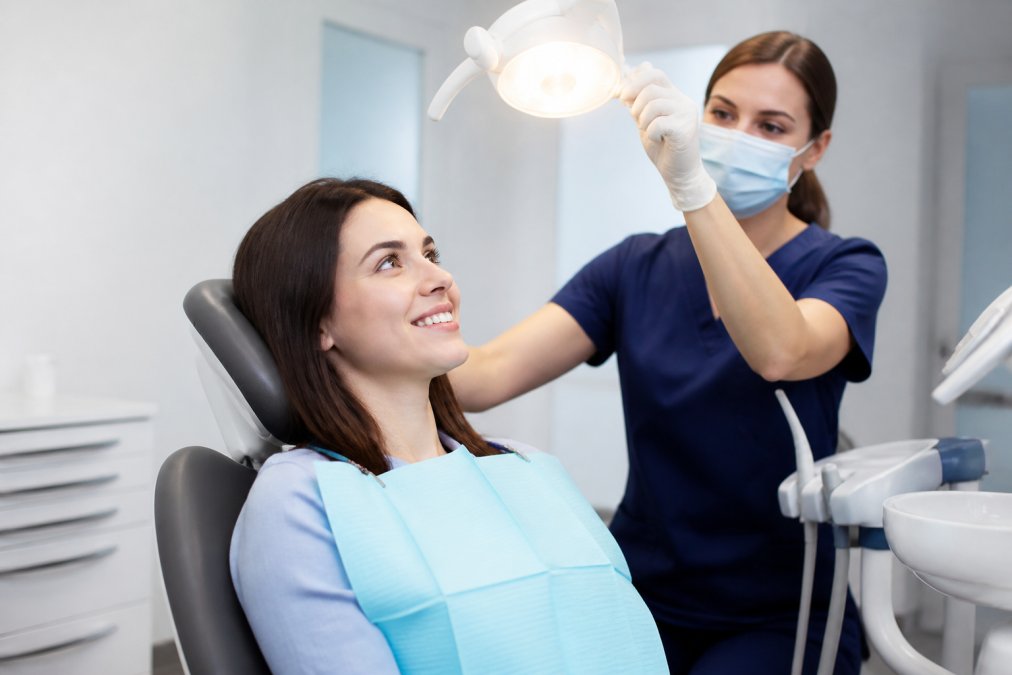
Practical Techniques for Nervous Patients
Try these before and during your appointment:
- Agree a stop signal with your dentist, such as raising your hand
- Book the first appointment of the day if waiting makes you anxious
- Bring headphones to soften the sound of instruments
- Practise slow breathing in the waiting room
- Write down your fears so you do not have to explain them out loud
- Bring someone you trust for support
At Orangefield Dental Care, we offer pain-free dentistry and take time with nervous patients. Evening appointments also help if you would rather not take time off work.
Questions to Ask Your Dentist at Your Next Check-Up
Good patient communication runs both ways. These questions get you useful answers:
- What is the current state of my oral health?
- Are there any early signs of gum disease or decay?
- Do I need any treatment, and what are my options?
- How often should I book a check-up?
- What can I do at home to improve things?
- Will this treatment be covered, and what will it cost?
Your Oral Hygiene Routine Before the Visit
There is no need to scrub harder before a check-up. In fact, brushing aggressively can irritate your gums and make them bleed, which muddies the picture your dentist sees.
What to Expect During the Examination and How to Discuss Symptoms
A routine check-up is a clinical examination of your whole oral cavity, not just your teeth. Your dental professional will typically:
- Ask about your medical history and any symptoms
- Look at your teeth, gums, tongue, and soft tissues
- Check your periodontal health with a small probe
- Use diagnostic tools such as X-rays where needed
- Discuss findings and agree a treatment plan with you
Understanding Treatment Costs and Insurance Coverage
Cost is the question most people avoid asking. Ask it anyway, and ask it before you are in the chair, not after treatment has started.
If you are an NHS patient
Most NHS dental treatment in England falls into one of three fixed charge bands, with a single charge covering everything clinically necessary within that band (the NHS). The band structure is set nationally and updated each year, so check the current figures on the NHS website or ask your practice before you attend. In broad terms:
- Band 1 covers a routine examination, diagnosis, preventive advice, and a scale and polish where clinically needed.
- Band 2 covers everything in Band 1 plus fillings, root canal treatment, and extractions.
- Band 3 covers everything in Bands 1 and 2 plus crowns, bridges, dentures, and laboratory-made appliances.
If you are a private patient
Private fees are set by the practice, not the state, so they vary widely. There is no single figure that fits everyone because the cost depends on what you actually need. What you can and should insist on is a written treatment plan and estimate before any treatment begins. A good estimate lists each item, the fee, and any likely additional costs.
Verify your cover before the appointment
If you have dental insurance or a cash plan, do this the week before your visit rather than on the day:
- Confirm whether your policy pays the practice directly or reimburses you afterwards.
- Check your annual maximum and how much of it you have already used.
- Find out your excess and any waiting period for new treatments.
- Ask whether larger treatments such as crowns or implants need pre-authorisation.
- Check whether the practice is on your insurer’s approved list.
- Keep your policy number and insurer’s contact details with your appointment notes.
Ask for the practice’s fee guide or price list when you book. Reading it before your appointment means you can ask informed questions about options and costs during the visit, rather than being surprised at the desk.
Payment options worth asking about
Many practices offer payment plans, membership schemes, or finance for larger treatment. If cost is a barrier, say so early. It is far easier for a practice to phase treatment or suggest a plan before work starts than to unpick a bill afterwards. For current fees at Orangefield Dental Care, contact the practice directly or check the website, you will get accurate figures for your situation rather than a guess.
Accessibility, Sensory Adjustments and Post-Pandemic Hygiene
Not every patient fits the same mould, and good practices adapt. This is the section most guides skip, so if you are neurodivergent, have sensory processing differences, or care for someone who does, the preparation below is for you.
Preparing for sensory needs
A dental appointment is a sensory minefield: bright overhead light, the whine of the scaler, latex gloves, cold instruments, the taste of fluoride, and the feeling of reclining with your mouth open. None of that is unavoidable, but it is manageable if you plan.
- Ask for a quieter slot. First or last appointment of the day usually means fewer patients, less noise, and a calmer waiting room.
- Request a familiarisation visit. Many practices will let you come in, meet the team, and sit in the chair without any treatment. This turns an unknown into a known.
- Bring your own sensory kit. Noise-cancelling headphones, sunglasses for the light, a weighted lap pad, or a favourite fidget can all help. Ask in advance whether you can wear them during treatment.
- Agree a stop signal. A raised hand, a squeeze of a stress ball, or a spoken word, anything that pauses treatment instantly without you having to explain yourself mid-procedure.
- Ask about unscented options. If strong smells are a trigger, check whether the practice can avoid heavily scented cleaning products or fluoride varnish flavours in your bay.
- Request a written plan. Some patients find it far easier to process what will happen in writing, in advance, than to be talked through it in the moment.
Mobility, communication and carer access
Accessibility also covers getting in the door and being understood once you are there. When you book, tell the practice if you:
- Use a wheelchair or mobility aid, so they can confirm step-free access and a suitable chair.
- Need a carer or interpreter present during treatment.
- Require information in large print, easy-read, or another language.
- Have a hearing impairment and need the dentist to face you when speaking or remove their mask briefly to be lip-read.
What to expect on hygiene
Hygiene standards in dental practices remain high following the pandemic. You can expect thorough cleaning between patients, hand hygiene before and after contact, single-use items where appropriate, and the use of protective equipment by the clinical team. If you want to know exactly what a practice does, for example, how it handles aerosol-generating procedures, ask.
If you have access needs, the single most useful thing you can do is say so when you book, not on the day. It gives the practice time to adjust the room, the schedule, and the team, and it turns a stressful visit into a manageable one.
Conclusion
Walking into a dental appointment unprepared is like sitting an exam without reading the questions. A short checklist, an honest medical history, and a written list of questions change the whole experience.
Frequently Asked Questions
What should I not do before a dental appointment?
Avoid brushing your teeth immediately before the appointment, as this can cause minor gum bleeding and mask your usual oral hygiene. Skip coffee, tea, or strong-smelling foods that may stain or affect your breath. Do not smoke on the day, as it can hide gum problems and slow healing. If you are taking blood-thinning medication, continue as prescribed but inform your dentist. Finally, do not skip meals unless told otherwise, as low blood sugar can make you feel faint during the visit.
How can I reduce anxiety before a dental check-up?
Try simple relaxation techniques such as deep breathing, visualising a calm place, or listening to music on headphones. Arrive early, use the bathroom, and take a moment to settle in the waiting room. Write down your concerns and share them with your dentist, who can explain each step and agree on a stop signal. Many practices offer evening appointments to fit around work, which can reduce stress. If anxiety is severe, ask about sedation options during your consultation.
What information should I bring to my dental appointment?
Bring a list of all medications, including doses and frequency, and note any allergies. Update your medical history with recent surgeries, diagnoses, or pregnancy. If you have dental insurance, bring your policy details or proof of exemption. Also bring any previous dental records or X-rays if you are a new patient. A written list of symptoms, questions, and concerns helps you make the most of the visit and ensures your dentist has a complete picture.
Is it okay to brush my teeth right before a dental appointment?
It is better to brush at least an hour before your appointment. Brushing right before can irritate your gums and cause slight bleeding, which may confuse the dentist during the examination. If you want fresh breath, use a mouthwash or chew sugar-free gum instead. Maintaining your regular oral hygiene routine, including flossing, is still important, but timing matters. Your dentist can still assess your periodontal health accurately if you avoid brushing immediately prior.