
Table of Contents
- Your Daily Routine for Cleaning Clear Aligners
- How to Remove Plaque from Aligners
- Can You Use Denture Tablets for Invisalign?
- Deep Cleaning: Soaking and Ultrasonic Cleaners
- How to Keep Aligners from Smelling
- Troubleshooting Cloudy or Stained Aligners
- Travel-Friendly Cleaning Kits and Material-Specific Care
- Frequently Asked Questions
Last Updated: September 28, 2026
Your Daily Routine for Cleaning Clear Aligners
Learning to clean clear aligners properly takes about two minutes, twice a day. That small habit protects your teeth, your gums, and the aligners themselves.
A simple daily routine prevents almost all of it.
Here is what that routine looks like.
Rinsing and Brushing Techniques That Work
Rinse your aligners every time you take them out. Saliva and food particles sit on the plastic, and if they dry there, they harden into plaque.
Then follow these steps:
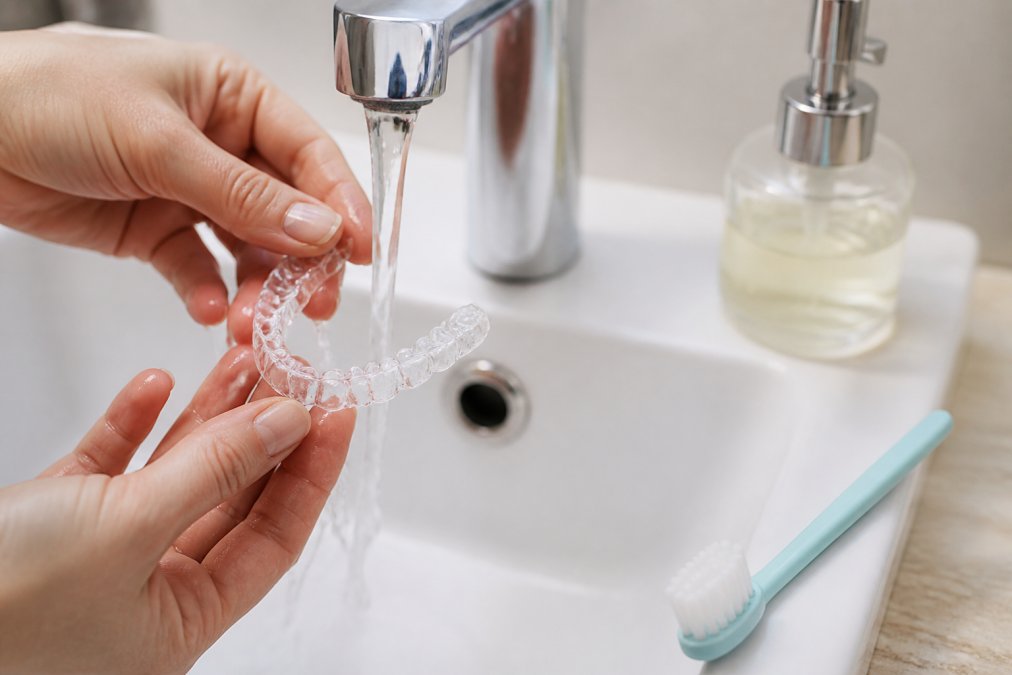
- Take the aligners out and rinse them under lukewarm water.
- Add a small amount of mild, unscented antibacterial soap to a soft-bristled toothbrush.
- Brush gently on all sides, inside and out.
- Rinse again until no soap remains.
- Dry with a clean tissue or let them air dry.
Brush your teeth before you put the aligners back in. Trapping food debris against your teeth is the fastest route to decay.
What to Avoid: Toothpaste, Hot Water, and Harsh Chemicals
Toothpaste is abrasive. It scratches the surface of the aligners, and those tiny scratches trap bacteria and cause discoloration over time. Use soap instead.
Hot water warps the plastic. Even warm water from a hot tap can distort a tray enough that it no longer fits. Always use lukewarm or cool water. Our friends at the Oral Health Foundation make the same point about caring for removable dental appliances.
Other things to skip:
- Mouthwash, which can stain or weaken the plastic
- Harsh household cleaners
- Boiling water for sterilisation
Never clean aligners with hot water or toothpaste. Heat warps the tray and abrasives scratch it, and a warped or scratched aligner will not fit or track your teeth correctly.
How to Remove Plaque from Aligners
Plaque on aligners is a mix of saliva proteins, bacteria, and food residue. It shows up as a white film or a rough, cloudy patch.
To remove plaque from aligners, soak them in a cleaning solution and then brush gently. Cleaning tablets and lukewarm water loosen the film, and a soft brush lifts it away.
A weekly deep clean keeps plaque from building up in the first place.
Can You Use Denture Tablets for Invisalign?
Yes. Denture tablets are a common and effective way to clean aligners, and many patients use them weekly for a deeper clean. But the detail that separates a safe soak from a damaged tray is in the chemistry and the timing, not the brand.
How denture tablets actually clean
Most tablets rely on the same core ingredients: sodium bicarbonate, citric acid, and a persulphate or percarbonate compound. When the tablet hits water, the bicarbonate and acid react to release carbon dioxide, that is the fizz. The bubbles lift debris off the plastic mechanically, while the peroxide or persulphate component breaks down the organic film left by saliva and bacteria.
How to use them safely
- Dissolve one tablet in lukewarm water, never hot.
- Soak the aligners for the time stated on the packet, usually around 15 to 30 minutes.
- Rinse thoroughly under running water before putting them back in, residual cleaning agents can irritate gums.
- Avoid soaking for hours, which can dull the plastic over time.
What to check on the label
Not every tablet is suitable. Look for products that are free from:
- Chlorine bleach, it can cloud clear plastic and leave a lingering taste.
- Strong perfumes or dyes, these can stain the aligner and are unnecessary for cleaning.
- Abrasive granules, some “whitening” tablets include them, and they scratch the surface.
How often is too often?
Daily brushing with mild soap handles the everyday film. A tablet soak once or twice a week is enough for most people. If you drink coffee, tea, or fizzy drinks while wearing your aligners, you may need to soak more often, but if you find yourself reaching for a tablet every day, that is usually a sign the daily routine is being skipped rather than a sign you need a stronger cleaner.
Denture and retainer tablets are safe for clear aligners when used in lukewarm water, for the stated time, and rinsed well afterwards. Check the label for bleach, dyes, and abrasives, and treat a weekly soak as a supplement to daily brushing, not a replacement.
Deep Cleaning: Soaking and Ultrasonic Cleaners
To clean clear aligners deeply, remember that a deep clean removes biofilm that daily brushing misses. Do this once a week, or more often if you drink coffee, tea, or fizzy drinks while wearing your aligners.
| Method | How Often | Best For | Watch Out For |
|---|---|---|---|
| Daily brush and rinse | Twice daily | Everyday maintenance | Use soap, not toothpaste |
| Soaking tablet | Weekly | Deep clean | Lukewarm water only |
| Ultrasonic cleaner | Weekly | Stubborn buildup | Follow unit instructions |
How to Keep Aligners from Smelling
Aligners smell when bacteria and saliva are left to sit on the plastic. The fix is consistency, not a stronger cleaner.
To keep aligners from smelling:
- Rinse them every time you remove them.
- Never store them dry in a closed case.
- Clean the case itself, as it harbours bacteria.
- Soak weekly to disinfect and sanitise.
- Avoid leaving aligners in a warm place, which encourages bacteria growth.
Troubleshooting Cloudy or Stained Aligners
Cloudy or stained aligners usually come from scratched plastic, dried saliva, or staining agents like coffee, tea, and red wine. The plastic itself can also yellow with age.
A few fixes to try:
- Soak in a cleaning tablet to lift surface stains.
- Brush gently with mild soap to remove film.
- Rinse immediately after drinking anything staining.
Travel-Friendly Cleaning Kits and Material-Specific Care
Keeping aligners clean away from home is where most routines fall apart. A small, packed kit removes the excuse, and understanding what the plastic can and cannot tolerate stops you damaging a tray while you are nowhere near your dental team.
What to pack in a travel kit
A kit that fits in a handbag or carry-on should contain:
- A soft-bristled travel toothbrush, kept separate from your normal one.
- A hard-shell aligner case, not a soft pouch, which lets trays press against each other and crack.
- Two or three cleaning tablets in a small zip bag.
- A 100 ml bottle for lukewarm water (airport-friendly if you are flying).
- A small mirror, useful in shared bathrooms.
Cleaning on the go
In a public restroom, the priority is speed and hygiene:
- Rinse the aligner under the tap before it dries, dried saliva is the hardest film to shift later.
- If you have no soap, a thorough rinse is better than nothing; brush properly when you get back.
- Never use the hand dryer. The air is hot and can warp the tray.
- Store the aligner wet in the case rather than leaving it on a counter or in a pocket.
Material-specific care: what the plastic tolerates
Clear aligners are made from a medical-grade polyurethane or co-polyester sheet, thermoformed to fit your teeth. That material is chosen for clarity and flexibility, not chemical resistance. Three things damage it:
- Heat above roughly 60°C, dishwasher cycles, hot taps, boiling water, and car dashboards all exceed this and cause the tray to lose its shape.
- Abrasive particles, toothpaste, whitening granules, and even some kitchen scourers scratch the surface, and scratched plastic traps bacteria and stains faster.
- Solvents and strong oxidisers, bleach, acetone-based nail polish remover, and some mouthwashes can cloud or weaken the sheet.
When to replace rather than clean
If a tray has gone cloudy, warped, or developed a rough patch that brushing will not shift, cleaning will not fix it. A warped aligner will not track your teeth, and continuing to wear one can slow your treatment. Contact your dental team rather than trying to reshape it. Maintaining structural integrity depends on consistent habits, as proper hygienic aligner cleaning prevents the buildup of debris that can lead to premature material degradation.
When you travel, fill your case with a little lukewarm water before closing it. Aligners that stay slightly damp are less likely to dry out and crack than ones stored bone dry, and a damp case is also easier to rinse clean at the end of the day.
Frequently Asked Questions
Can I use toothpaste to clean my clear aligners?
No. Toothpaste contains abrasive particles that scratch the surface of clear aligners. These scratches trap bacteria and food particles, leading to cloudiness and discoloration over time. Instead, use a soft-bristled toothbrush with lukewarm water and a mild, non-abrasive soap. If you want extra cleaning power, ask your dentist about aligner-specific cleaning products.
How often should I clean my aligners?
Clean your aligners every time you remove them, ideally twice a day and after meals. Rinse them with lukewarm water each time you take them out. Once daily, brush them gently with a soft-bristled toothbrush and mild soap. A deeper soak once or twice a week helps remove biofilm and keep them fresh. Consistency matters more than intensity.
What happens if I don’t clean my aligners properly?
Poor cleaning allows plaque, bacteria, and food particles to build up on the aligner surface. This can cause bad breath, discoloration, and even gum irritation or tooth decay. Bacteria trapped against your teeth for long periods increases the risk of oral hygiene problems. Keeping your aligners clean protects both your orthodontic treatment and your overall dental health.
Can I use mouthwash to soak my clear aligners?
Most mouthwashes contain alcohol or strong colouring agents that can warp or stain clear aligners. Avoid soaking them in mouthwash unless your dentist confirms it is safe for your specific aligner material. Stick to lukewarm water, mild soap, or retainer cleaning tablets designed for clear aligners. If you want fresh breath, use mouthwash on your teeth, not on your aligners.
Keeping clear aligners clean is a small daily habit, but it decides how your treatment looks and feels. Cloudy trays, odours, and plaque all come back to the same few routines. If you want hands-on guidance, Orangefield Dental Care offers pain-free dentistry, flexible opening times including evenings, and emergency dental services when something needs urgent attention. Book an appointment with Orangefield Dental Care and keep your treatment on track.