
Table of Contents
- How Cosmetic Treatments Fit Into General Dentistry
- Cosmetic Dentistry Procedures for Beginners: Where to Start
- Teeth Whitening: What It Can and Cannot Fix
- Dental Veneers for Shape, Colour and Alignment
- Composite Bonding: A Minimally Invasive Option
- Crowns, Implants and Replacing Missing Teeth
- Risks, Maintenance and How Long Results Last
- Frequently Asked Questions
Last Updated: October 8, 2026
How Cosmetic Treatments Fit Into General Dentistry
Cosmetic dentistry is the branch of dental care focused on improving the appearance of teeth, gums and bite, and it now sits alongside routine check-ups rather than apart from them.
General dentistry protects oral health: examinations, hygiene, fillings, gum treatment and early detection. Cosmetic treatment improves how the mouth looks, and often how it functions.
That overlap is the point. The General Dental Council’s guidance on cosmetic procedures is clear that any treatment affecting the appearance of teeth is still dental treatment, delivered by a registered professional, with the same standards of consent and aftercare.
So the sensible starting question is not “cosmetic or general?” but “what needs fixing, and what is the least invasive way to fix it?”
Cosmetic Dentistry Procedures for Beginners: Where to Start
Start with a full examination, not a treatment. The most common mistake is booking a procedure seen online before anyone has checked whether teeth and gums are healthy enough to support it.
A short consultation usually covers:
- What you want to change (colour, shape, spacing, or missing teeth)
- Whether the underlying tooth and gum health is stable
- Which options are reversible and which are not
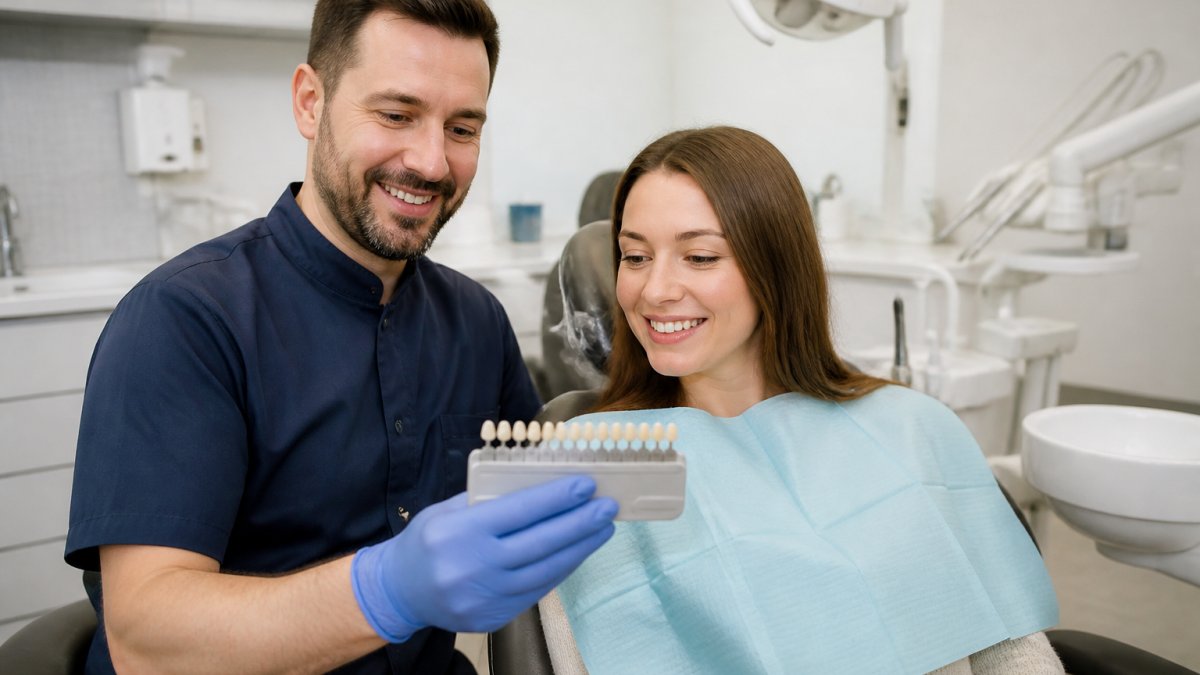
Ask any clinic two questions before agreeing to treatment: what happens if I do nothing, and what is the least invasive option that would still get me a result I am happy with? A clinic that cannot answer both clearly is rushing you.
If gum disease or decay is active, that gets treated first, cosmetic work on an unhealthy foundation fails early and can hide problems that worsen underneath.
A Practical Decision Guide: Match the Concern to the Treatment
Most pages list procedures; fewer help you work out which one fits your situation. Use the table below as a starting point for your consultation, not a substitute for it.
| Your main concern | Usually first-line option | Reasonable alternative | Candidacy notes |
|---|---|---|---|
| Yellowing or staining | Professional whitening | Composite bonding on individual teeth | Not suitable for crowns, veneers or existing composite; grey trauma staining often does not respond |
| Chipped front edge | Composite bonding | Porcelain veneer | Bonding suits small chips; larger fractures may need a veneer or crown |
| Small gap between front teeth | Composite bonding or orthodontics | Porcelain veneers | If the bite is misaligned, straightening first usually gives a better long-term result |
| Worn or shortened teeth | Composite build-up | Crowns or veneers | Grinding must be controlled first, often with a night guard |
| One dark, heavily filled tooth | Crown | Veneer (if enough sound tooth remains) | Whitening will not lighten the existing filling or crown |
| Several crooked front teeth | Orthodontics (fixed or clear aligners) | Veneers | Veneers can mask mild crowding but do not correct the bite |
| A single missing tooth | Implant | Resin-bonded bridge or conventional bridge | Bone volume and adjacent tooth health decide which is viable |
| Multiple missing teeth | Implant-supported bridge or denture | Conventional bridge or partial denture | A full assessment, sometimes with a CT scan, is needed |
| Generalised wear, staining and spacing | Staged plan: hygiene, then whitening, then bonding or veneers | Full smile makeover | Sequence matters more than any single procedure |
Candidacy: Who Should Pause Before Cosmetic Work
Aesthetic treatment is elective, so it can almost always wait until the mouth is ready. Most practitioners advise delaying cosmetic work when:
- Active decay or gum disease. Both need treating first. Bonding or a veneer placed over active decay traps the problem underneath.
- Heavy, uncontrolled grinding. Enamel and restorations wear fast. A night guard and, in some cases, bite assessment come first.
- Pregnancy. Elective treatment is usually deferred; routine care and urgent problems are handled differently.
Sequence and Timelines: What Actually Happens, and When
The order of treatment matters as much as the choice. A typical pathway:
- Consultation and examination, usually 30-45 minutes, including X-rays or photographs where needed.
- Stabilisation, hygiene treatment, fillings or gum therapy. This can take days to several weeks depending on the problem.
- Planning, shade selection, photographs, and sometimes a wax-up or digital mock-up so you can see the proposed result before anything is made.
- Active treatment, whitening typically runs over two to four weeks at home, or a single in-surgery session; bonding is usually completed in one visit; veneers and crowns normally need two or three visits across two to four weeks; implants involve surgery, a healing period of around three to six months, then the final crown.
- Review and maintenance, a check a few weeks after completion, then routine examinations.
Recovery is usually mild: bonding and whitening need no downtime, veneers and crowns may feel sensitive for a few days, and implant surgery typically means a few days of tenderness and a soft-food diet.
If a clinic quotes a treatment without first examining your teeth and gums, or without explaining what happens if you do nothing, that is a warning sign. The right starting point is a diagnosis, not a procedure.
Teeth Whitening: What It Can and Cannot Fix
Teeth whitening lightens the natural shade of teeth by breaking down staining within the tooth structure. It works well on age-related yellowing and staining from tea, coffee, red wine and tobacco.
It does not work on everything. Whitening will not change the colour of crowns, veneers, composite bonding or fillings, because those materials do not respond to bleaching agents, a single dark front crown next to whitened natural teeth will look more obvious afterwards, not less.
That distinction matters for a full smile makeover: often whitening handles part of the problem and something else handles the rest.
Whitening gels bought online without a dental assessment can cause prolonged sensitivity and, if trays do not fit properly, chemical burns to the gums. If you have untreated decay or exposed roots, whitening makes both worse.
Professional whitening is supervised: strength, tray fit and the condition of your teeth are checked beforehand. Results vary, and top-ups are usually needed over time.
Dental Veneers for Shape, Colour and Alignment
Dental veneers are thin custom-made shells, usually porcelain, bonded to the front surface of teeth to change their shape, colour or apparent alignment.
Porcelain veneers suit patients who want a durable change to the front teeth and will maintain them.
Where veneers fall short: they are not right for active gum disease, heavy grinding, or badly misaligned teeth better straightened first.
A useful way to compare the main options:
| Treatment | Best For | Reversible | Typical Maintenance |
|---|---|---|---|
| Teeth whitening | Staining and yellowing | Yes | Top-ups over time |
| Porcelain veneers | Shape, colour, alignment of front teeth | No | Careful hygiene, night guard if you grind |
| Composite bonding | Chips, small gaps, minor reshaping | Yes, in most cases | Polish and occasional repair |
| Crowns | Heavily worn, cracked or root-treated teeth | No | Standard hygiene, replacement eventually |
| Implants | Replacing missing teeth | Not applicable | Hygiene around the implant |
Composite Bonding: A Minimally Invasive Option
Composite bonding adds tooth-coloured resin to rebuild a chipped edge, close a small gap or reshape a worn corner.
The material is matched to your natural shade and sculpted directly onto the tooth in a single visit.
The honest limitations: composite stains more readily than porcelain, especially with coffee, tea and tobacco, and can chip under heavy biting forces. Most bonding needs occasional polishing and will not last as long as well-made porcelain.
Crowns, Implants and Replacing Missing Teeth
Crowns and implants are where cosmetic dentistry and general dentistry stop being separable. A crown covers a cracked, heavily filled or root-treated tooth, restoring strength and appearance.
Missing teeth are not only an appearance issue: neighbouring teeth drift into the gap, the bite changes, and the bone beneath the socket shrinks over time.
When weighing a bridge against an implant, the deciding factors are usually the health of adjacent teeth, bone volume at the site, and how much treatment you will go through.
Risks, Maintenance and How Long Results Last
Every cosmetic treatment carries trade-offs, and any clinic presenting them as risk-free is not giving you the full picture. Enamel removed for veneers is gone permanently; whitening can trigger temporary sensitivity; bonding chips; crowns can need replacing; implants can fail if hygiene slips.
What follows is the honest version: what goes wrong, how long things last, what maintenance involves, and what drives the cost.
Longevity: Realistic Expectations by Treatment
Figures vary with the patient, material and clinician, but these ranges reflect everyday practice.
| Treatment | Typical lifespan | Main reason it fails or needs replacing |
|---|---|---|
| Professional whitening | 6-24 months before top-up | Re-staining from diet and smoking |
| Composite bonding | 3-7 years | Chipping, staining, edge wear |
| Porcelain veneers | 10-15 years, sometimes longer | Debonding, fracture, gum recession at the margin |
| Crowns | 10-15 years | Wear, decay at the margin, root problems underneath |
| Implants | 15 years plus with good hygiene | Peri-implantitis, smoking, uncontrolled diabetes |
Longevity depends far more on the patient than the material. Those who reach the upper end of these ranges usually:
- Keep up regular examinations and hygiene appointments
- Wear a night guard if they grind
- Limit staining food and drink, or rinse after them
Maintenance: What Each Treatment Actually Requires
- Whitening. Avoid heavy staining for the first 48 hours. Top-ups every 6-18 months are common. Sensitivity usually settles within a few days.
- Composite bonding. Avoid biting nails, pens and ice. Polishing at routine visits keeps the surface smooth and reduces staining. Chips can usually be repaired in a single visit.
- Porcelain veneers. Normal brushing and interdental cleaning. A night guard is strongly advised if you grind. Avoid using front teeth to open packaging.
Risks and Limitations Worth Knowing Before You Commit
- Irreversibility. Enamel removed for a veneer or crown does not grow back. This is the single biggest reason to be sure before proceeding.
- Sensitivity. Common after whitening and for a few days after veneer or crown preparation. Usually temporary.
- Colour mismatch over time. Natural teeth darken with age; restorations do not. A veneer matched today may look slightly light in ten years.
Cost Drivers: What Affects the Price
Prices vary widely by practice, location and complexity, so treat any figure as a starting point for a quote. The main factors:
- Number of teeth involved. A single bonded tooth is a fraction of the cost of a full smile makeover.
- Material. Composite is generally the least expensive; porcelain and ceramic cost more and last longer.
- Laboratory work. Veneers, crowns and implant crowns involve a dental technician, which adds cost and time.
Be cautious of any quote given without an examination. A genuine estimate follows a diagnosis, not a photograph or a phone call. Ask what is included, what is not, and what happens if a restoration needs remaking.
If you are unsure whether a symptom needs urgent attention, NHS guidance on dental care and when to seek help is a reasonable starting point, but pain, swelling or a knocked-out tooth needs a dentist, not a wait-and-see approach.
Frequently Asked Questions
What is the difference between aesthetic and cosmetic dentistry?
The terms overlap and are often used interchangeably. Cosmetic dentistry focuses on improving the appearance of your teeth, gums and smile, while aesthetic dentistry considers how those changes sit within your wider facial features, including lip line and facial proportions. In practice, most treatments, such as teeth whitening, veneers or composite bonding, fall under both labels. A consultation with a qualified dentist is the best way to understand which approach suits your goals.
Which cosmetic dentistry procedures are suitable for beginners?
If you have never had cosmetic work done, teeth whitening and composite bonding are often the most straightforward starting points. Whitening is non-invasive and reversible, while bonding can correct small chips or gaps in a single visit with minimal tooth preparation. Dental veneers and crowns involve more planning because they alter the tooth surface. Your dentist can talk you through the trade-offs at a consultation.
How long do cosmetic dental treatments last?
Longevity varies by treatment and how well you maintain your teeth. Composite bonding typically needs replacing or refreshing after a few years, while porcelain veneers and crowns can last considerably longer with good oral hygiene and regular check-ups. Whitening results fade over time, especially with coffee, tea or tobacco use. Your dentist can give you a realistic idea based on your individual situation.
Can cosmetic dentistry improve both the appearance and function of teeth?
Yes, in many cases. Crowns and implants restore chewing function as well as appearance, and straightening teeth can improve your bite alongside their look. Bonding and veneers are mainly aesthetic but can also protect a chipped or worn tooth. If function is the main concern, your dentist will usually address that first, since healthy teeth and gums are the foundation for any cosmetic work.