
Table of Contents
- Are Evening Dental Appointments Available?
- How to Register with a Local Dentist for Evening Slots
- Understanding Private Dentist Opening Hours
- Emergency Dental Care Out of Hours: What to Do
- Urgent vs. Emergency: Which Appointment Do You Need?
- How to Book an Evening Appointment: A Step-by-Step Guide
- What to Expect at an Evening Dental Visit
- Conclusion
- Frequently Asked Questions
Last Updated: September 8, 2026
Are Evening Dental Appointments Available?
Yes, evening dental appointments are available at many practices across the UK, though availability varies significantly between providers. It depends on the practice’s opening hours, whether you are registered as an NHS or private patient, and the urgency of your condition. Evening slots are typically offered by private practices or those with extended hours.
At Orangefield Dental Care, we understand that fitting dental care around work and family life is a genuine challenge. Our practice prioritises flexible opening times, including evening slots, so you do not have to choose between your oral health and your commitments. Evening dental appointments are not a myth, but they do require planning.
Before you search for an evening slot, it helps to know what type of appointment you need, whether you are registered with the practice, and how urgent your situation is.
How to Register with a Local Dentist for Evening Slots
Registration is the essential first step to accessing evening dental appointments, as most practices reserve their extended-hours slots for established patients. If you are not already registered with a local practice, you will need to join their patient list before you can book an evening appointment for routine care.
Contact the practice directly by phone or through their website to request registration. You will typically be asked for your name, address, and date of birth, along with a brief outline of your dental history. Some practices offer an online registration form.
A common mistake is assuming you can simply walk into any practice for an evening appointment without prior registration. While many practices welcome new patients, they still need to complete your registration and initial assessment before offering routine treatments. Contact practices in your area and ask about their evening surgery hours.
Understanding Private Dentist Opening Hours
Private dentist opening hours are often more flexible than NHS practices, which is why many working professionals turn to private care for evening dental appointments. Private practices have greater freedom to set their own schedules, and many offer extended hours in the evenings and at weekends.
Opening hours vary considerably. Some private dentists operate on a standard 9am to 5pm schedule, while others offer evening surgery hours two or three times per week. Ask directly about the specific days and times available.
For patients considering private care, the trade-off is often between cost and convenience. Private treatment typically involves a consultation fee and per-treatment charges, but it provides greater flexibility in booking and often shorter waiting times.
Emergency Dental Care Out of Hours: What to Do
Emergency dental care out of hours follows a distinct pathway from routine evening appointments. The most common point of confusion is the assumption that your registered practice is your only route. In reality, the out-of-hours system is a regional patchwork, and your first action depends on whether your practice is an NHS provider or a private clinic.
If You Are an NHS Patient
When your registered NHS practice is closed, the operational route is through NHS 111, which acts as the single point of triage for all urgent and emergency dental needs outside of standard working hours. The call handler will ask a structured set of questions to assess your symptoms and determine whether you need:
- Immediate referral to a hospital A&E – for facial swelling affecting your airway, uncontrolled bleeding, or trauma involving loss of consciousness.
- An appointment at a local urgent dental care centre – for conditions like severe toothache, a dental abscess that is localised, or a broken tooth causing significant pain.
- Self-care advice with a delayed appointment – for symptoms that can be managed with over-the-counter analgesia until your own practice reopens.
NHS 111 does not book you into your own practice’s evening emergency slot. Instead, it directs you to a designated out-of-hours provider, often a separate clinic or a rota of local practices. You may be seen by a dentist without access to your dental records, so be prepared to describe your full medical history and current medication list.
If You Are a Private Patient
Private patients have a different set of options. Many private practices, including Orangefield Dental Care, offer their own emergency slots within extended hours, and your first call should always be to your practice’s main line. If closed, the answerphone message will typically provide a dedicated emergency contact number.
For private patients without a practice that offers out-of-hours cover, the options are more limited. NHS 111 will still provide advice and can direct you to an NHS urgent dental service, but you will be treated as an NHS patient for that episode, which means you may be charged the standard NHS band rate rather than your private fee schedule. Some private dental hospitals and specialist emergency clinics operate in major cities and offer walk-in evening services, but these are rare and carry a premium consultation fee.
The Triage Mechanism You Will Experience
Regardless of your registration status, the out-of-hours system is built on telephone triage. You will not be given an appointment time without first speaking to a clinician or a trained call handler. The questions are designed to establish clinical urgency, not convenience. Patients often describe a ‘dental emergency’ when they actually have an urgent but manageable condition, such as a lost filling or a cracked molar with no swelling; the triage system may advise you to wait until your own practice opens.
If you have swelling that is spreading to your eye or neck, difficulty swallowing, or bleeding that will not stop with pressure, do not wait for a dental triage call (nidcr.nih.gov). Go directly to A&E or call 999. These are medical emergencies, not dental ones.
What to Prepare Before You Call
To make the triage call efficient, have the following information ready before you dial:
- Your NHS number (found on any previous NHS correspondence) or your private patient reference.
- A list of current medications, including dosages.
- Any known drug allergies.
- The date of your last dental visit and the name of your regular dentist.
- A clear description of when the pain started, what makes it worse, and any swelling or bleeding.
This preparation is not bureaucratic box-ticking. The out-of-hours dentist who sees you will not have your records, and every piece of information you provide reduces the risk of an adverse drug interaction or an inappropriate treatment decision. A typical out-of-hours emergency appointment lasts no more than 15 minutes and focuses on stabilisation, not definitive treatment (gov.uk).
Urgent vs. Emergency: Which Appointment Do You Need?
The distinction between urgent and emergency dental care determines which service you contact, how quickly you are seen, and whether you are charged. The clinical threshold used by NHS triage systems and private practices is based on the risk of systemic infection and uncontrolled bleeding, not on pain intensity alone.
What Counts as a True Dental Emergency
A true dental emergency poses an immediate risk to your life or to a vital function. In practice, this is limited to a small set of presentations:
- Uncontrolled bleeding – bleeding from the mouth that does not stop after 20 minutes of continuous pressure with a clean gauze or cloth.
- Facial swelling that is spreading – swelling that extends beyond the jawline, reaches the eye, or makes it difficult to open your mouth fully or swallow.
- Trauma with loss of consciousness – any blow to the face or head that resulted in a period of unconsciousness, regardless of whether the teeth appear damaged.
- Difficulty breathing or swallowing – this is a medical emergency, and you should call 999, not a dental practice.
If you experience any of these, you are not seeking a dental appointment. You are seeking emergency medical care, and the appropriate route is A&E or 999. A dentist cannot manage an airway compromise in a community clinic setting.
What Counts as Urgent Dental Care
Urgent dental care covers a much broader range of presentations that require prompt attention but do not pose an immediate systemic risk. The NHS defines urgent dental treatment as care needed within 24 to 48 hours to relieve severe pain or prevent deterioration (the NHS). Common urgent presentations include:
- Severe toothache that has persisted for more than 24 hours and is not relieved by standard doses of ibuprofen or paracetamol.
- A localised dental abscess – swelling confined to the gum or cheek that is painful but not spreading.
- A broken tooth or lost filling that is causing sharp pain or damaging the inside of your cheek.
- A knocked-out tooth (avulsed) – if you can reinsert it or keep it in milk, this is urgent, not an emergency, provided there is no head injury.
- Loose or broken orthodontic appliances that are causing soft tissue trauma.
The Clinical Threshold That Matters
The single most useful question to ask yourself is: Can I manage this with over-the-counter pain relief, and is the swelling localised? If the answer to both is yes, you have an urgent problem, and an evening dental appointment within 24 to 48 hours is appropriate. If you cannot control the pain with standard analgesia, or the swelling is spreading, you need same-day care.
Patients often call an emergency number for a lost crown or a mild toothache that has been present for a week; this will result in a triage assessment that directs you back to routine or urgent care. Conversely, some patients with a spreading infection delay calling because they are unsure whether their symptoms are ‘bad enough’. The rule of thumb is simple:
If the pain wakes you at night or prevents you from sleeping, it is urgent. If you have visible facial swelling that is getting worse hour by hour, it is an emergency.
Why the Distinction Affects Your Evening Appointment
For evening appointments specifically, the distinction matters because most practices, including Orangefield Dental Care, allocate a limited number of emergency slots each day alongside routine evening appointments. If you book a routine evening check-up but describe symptoms that sound urgent, the reception team will likely reclassify your appointment or advise you to seek earlier care. Being precise about your symptoms during the booking call ensures you are allocated the correct type of slot.
If you are genuinely unsure which category your symptoms fall into, the safest course is to call your practice during opening hours or NHS 111 outside of them. The telephone assessment will take less than five minutes.
How to Book an Evening Appointment: A Step-by-Step Guide
Booking an evening dental appointment is simple once you know which practice you wish to contact.
- Check the practice’s opening hours. Visit the website or call to confirm which evenings offer appointment slots.
- Contact the practice. Phone, email, or use the online booking form to request an evening appointment.
- State your needs clearly. Explain whether you are seeking a routine check-up, a specific treatment, or urgent care so the team can allocate the right amount of time.
- Confirm your registration status. If you are a new patient, you may need to complete registration before booking.
- Receive a confirmation. The practice will confirm your date and time, often by text or email.
- Prepare for your visit. Arrive a few minutes early to complete any paperwork and discuss your dental history.
For patients seeking evening dental appointments at Orangefield Dental Care, the booking process is designed to be quick and straightforward. Our team will ask about your symptoms and preferences to match you with the most suitable appointment slot.
What to Expect at an Evening Dental Visit
An evening dental visit follows the same structure as a daytime appointment, with the added benefit of fitting around your working day. You should expect a thorough examination, a discussion of your dental health, and a clear treatment plan if any work is needed. A routine check-up typically takes 20 to 30 minutes.
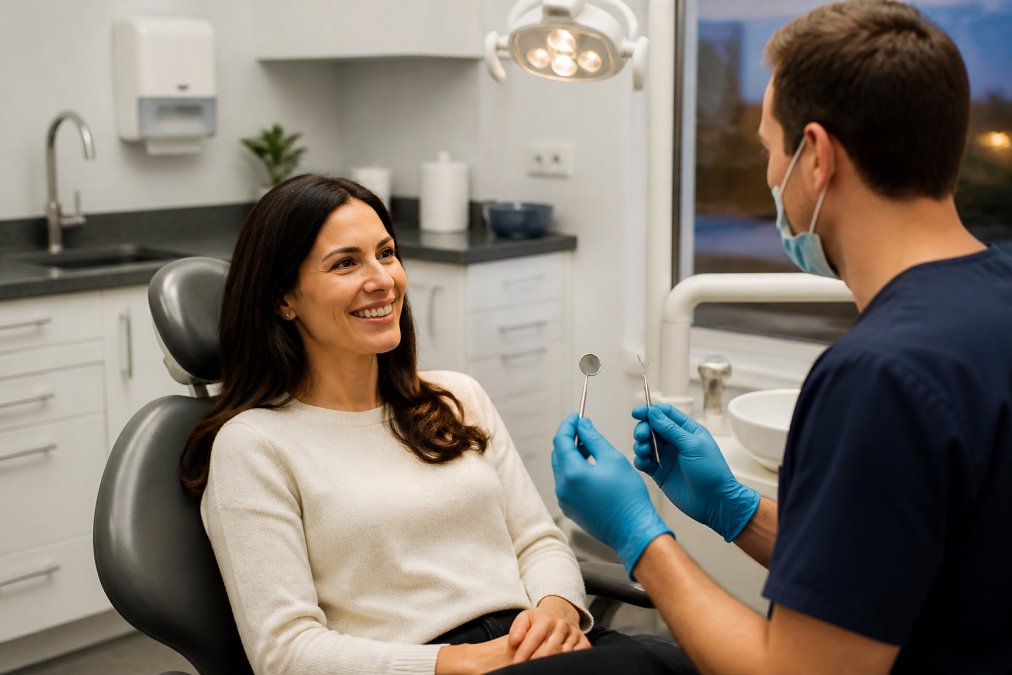
If you are visiting for a specific concern, such as tooth pain or a damaged tooth, the dentist will examine the affected area, possibly take an X-ray, and explain your options. You will leave with a clear understanding of any recommended treatment, the associated costs, and the next steps.
After an evening appointment, you can expect to receive a follow-up plan, whether that means booking a future treatment session or scheduling your next routine check-up. The goal is to provide the same high standard of care as any other appointment, just at a time that suits your schedule.
Conclusion
Securing evening dental appointments requires a little planning, but the flexibility is available for those who seek it. The key is to register with a practice that offers extended hours, understand the difference between urgent and emergency care, and book in advance.
At Orangefield Dental Care, we offer flexible opening times, including evenings, to ensure expert dental support fits around your life. Our pain-free approach reduces anxiety for nervous patients, while our comprehensive services cover general and family dentistry, cosmetic treatments, and emergency care. Book your evening appointment with Orangefield Dental Care and experience dental care that works around you.
Frequently Asked Questions
Will a dentist see me at night for a toothache?
For a severe toothache or dental trauma outside normal hours, call your regular practice first. Their answerphone message will give you the emergency dental care out of hours number. Many practices, including Orangefield Dental Care, offer evening appointments for urgent problems. If you are in severe pain, contact NHS 111 for guidance on accessing urgent dental treatment in your area.
Are evening appointments available for routine check-ups?
Yes, many practices now offer evening dental appointments for routine check-ups, not just emergencies. This is often part of flexible opening hours designed for working professionals. When you contact a practice, ask about their evening surgery hours for standard examinations and hygiene appointments. You may need to book these slots in advance as they tend to fill up quickly.
Do private dentist opening hours differ from NHS clinics?
Private dentist opening hours are often more flexible than NHS clinics. Private practices may offer extended hours on weekdays and weekend appointments to attract working patients. However, this is not a strict rule. Some NHS practices also provide evening slots. The best approach is to ask each practice directly about their specific schedule and whether they have availability for new patients.
How quickly can I get an evening appointment?
The wait time for an evening appointment depends on the practice and the nature of your problem. For urgent issues, many practices aim to offer a same-day or next-day service. For routine check-ups, you might wait a few weeks. It is best to call and ask about the earliest available evening slot so you can plan your schedule accordingly.