
Table of Contents
- What Makes a Veneer Look Natural?
- Porcelain vs Composite Veneers Cost and Appearance
- The Dental Veneer Procedure Steps: From Consultation to Bonding
- How Long Do Dental Veneers Last?
- Maintaining Dental Veneers for a Lasting Smile
- Are Natural Looking Veneers Right for You?
- Final Thoughts on Choosing Your Veneers
- Frequently Asked Questions
Last Updated: September 5, 2026
What Makes a Veneer Look Natural?
The best natural looking veneers for front teeth are the ones nobody notices. A truly natural result is not about perfection; it is about matching the subtle complexity of your surrounding teeth. This guide from Orangefield Dental Care explains how to choose veneers that blend seamlessly with your smile, covering materials, the fitting process, and long-term care.
A natural-looking veneer mimics the optical properties of real enamel. This means it needs the right degree of translucency at the biting edge, subtle colour variation across the surface, and a texture that reflects light the way your other teeth do. A flat, opaque, overly white veneer is the most common sign of a poor cosmetic result.
The artistry of a smile makeover lies in the details. A skilled dentist considers your facial features, gum line, and the alignment of your existing teeth before any work begins. Shade matching is the foundation, but shape, surface texture, and how the veneer meets the gum tissue all determine whether the final result looks authentic or artificial.
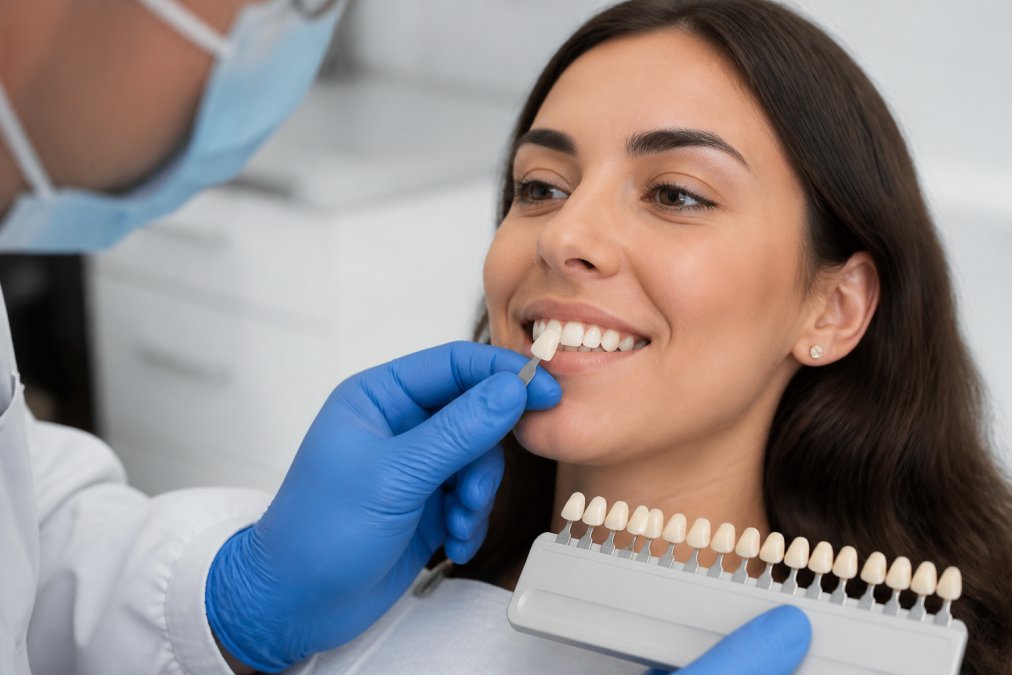
Porcelain vs Composite Veneers Cost and Appearance
The choice between porcelain and composite is the most consequential decision you will make. Both materials can produce a natural-looking result, but they achieve it through different mechanisms and come with distinct trade-offs in cost, longevity, and how they interact with your natural tooth structure.
Porcelain Veneers: The Gold Standard for Natural Depth
Porcelain veneers are fabricated in a dental laboratory from feldspathic ceramic or lithium disilicate (e.g., e.max). Their primary advantage is optical: porcelain can be layered to mimic the translucency of natural enamel and the deeper opacity of dentin. This creates a lifelike depth that is difficult to achieve with composite. Porcelain is also highly stain-resistant; its glazed surface does not absorb pigments from coffee, tea, or red wine.
The clinical process is more involved. Your dentist must remove approximately 0.3 to 0.5 mm of enamel from the front surface of the tooth to accommodate the veneer’s thickness (peer-reviewed research). This preparation is irreversible. After taking an impression, you will wear temporary veneers for one to two weeks while the laboratory crafts your permanent restorations. The final bonding step uses a resin cement that is light-cured to create a mechanical and chemical bond to the tooth.
Cost and lifespan: With proper care, they can last 10 to 15 years, though the bond may weaken and margins may become visible over time (PubMed).
Composite Veneers: A Conservative, Budget-Friendly Alternative
Composite veneers are applied directly by your dentist in a single visit. The resin is layered onto the tooth, sculpted, and hardened with a curing light. The main advantage is conservation of tooth structure, in many cases, minimal to no enamel removal is required, making the procedure reversible. This is particularly appealing for younger patients or those with healthy, intact teeth.
However, composite has significant limitations. It lacks the depth and light-reflecting properties of porcelain; over time, it can appear flat or dull. Composite is also more porous, making it prone to staining and requiring repolishing every six to twelve months to maintain its sheen. The material is less durable than porcelain and can chip or wear at the edges, especially if you grind your teeth.
Cost and lifespan: Their lifespan is shorter, generally 5 to 7 years, and they may need more frequent repairs. Over a 15-year period, composite veneers may require two or three replacements, potentially making them more expensive in the long run than a single set of porcelain veneers.
A Direct Comparison of Mechanisms
| Feature | Porcelain | Composite Resin |
|---|---|---|
| Optical depth | High, mimics enamel and dentin layers | Moderate, lacks true depth |
| Stain resistance | High, glazed surface | Low to moderate, porous surface |
| Tooth preparation | Irreversible (0.3-0.5 mm enamel removal) | Minimal or none, reversible |
| Procedure time | Two to three visits over 2-3 weeks | Single visit |
| Repair | Difficult, often requires full replacement | Easy, can be added to or polished |
| Typical cost per tooth | Pricing depends on quantity, dates, and delivery | Pricing depends on quantity, dates, and delivery |
| Lifespan | 10-15 years | 5-7 years |
The Hidden Cost of Composite
A common pattern is that patients choose composite for its lower upfront cost but underestimate the maintenance burden. Composite veneers on front teeth are subject to significant biting forces. Over time, micro-cracks develop at the incisal edge, and the resin can absorb stains from everyday foods. Most practitioners find that composite veneers require professional polishing or repair within three to five years. If you are seeking a long-term solution and can accommodate the higher initial investment, porcelain is generally the more cost-effective choice over a decade.
Ask your dentist to show you a try-in of a porcelain veneer before bonding. This allows you to see the shade and shape on your own teeth and confirm the translucency matches your natural enamel.
The Dental Veneer Procedure Steps: From Consultation to Bonding
Understanding the dental veneer procedure steps can ease any anxiety you might have. The process is typically spread over two or three visits, and your dentist will ensure you are comfortable at every stage.
- Consultation and Smile Design: Your dentist assesses your teeth, discusses your goals, and checks patient candidacy.
- Tooth Preparation: A thin layer of enamel is removed to make room for the veneer. This is sometimes called a minimal-prep approach.
- Dental Impression: An accurate mould of your teeth is taken and sent to the laboratory.
- Temporary Veneers: You may wear temporary veneers while the permanent ones are being crafted.
- Bonding: Once ready, the veneer is checked for fit and colour, then permanently bonded to the tooth.
The whole journey is a form of dental restoration that requires skill and precision. A well-executed procedure protects your gingival health and ensures a proper bite. For nervous patients, many practices, including Orangefield Dental Care, offer flexible appointment times to make the process as stress-free as possible.
How Long Do Dental Veneers Last?
The lifespan of your veneers is not a fixed number; it is a function of material, your bite, and your maintenance habits. While porcelain veneers are commonly quoted as lasting 10 to 15 years, the reality is more nuanced. Understanding the failure mechanisms and the replacement cycle will help you plan financially and avoid surprises.
What Actually Causes Veneers to Fail?
Veneers do not simply “wear out.” They fail through specific, predictable mechanisms:
- Margin breakdown: The junction where the veneer meets the natural tooth at the gum line is the weakest point. Over time, micro-leakage can occur, allowing saliva and bacteria to seep beneath the veneer. This can lead to staining at the margin, secondary decay, or a dark line becoming visible.
- Bond failure: The resin cement that bonds the veneer to the tooth can degrade over time, especially under heavy biting forces. This may cause the veneer to debond or feel slightly loose.
- Fracture and chipping: Porcelain is strong but brittle. A sudden impact, biting into a hard object or a fall, can cause a crack. Parafunctional habits like bruxism (teeth grinding) place excessive stress on the veneers, leading to fractures at the incisal edge.
- Gum recession: As you age, your gum tissue may recede, exposing the margin of the veneer. This not only looks unsightly but also compromises the seal.
The Veneer Replacement Cycle: What to Expect
Most patients do not realise that veneers are not a one-time investment. After 10 to 15 years, you will likely need to replace them. This is a significant financial consideration that is rarely discussed in initial consultations.
When replacing veneers, your dentist must carefully remove the old restoration without damaging the underlying tooth. In some cases, additional tooth structure may need to be removed to create a new bond. The process is similar to the initial placement: impressions, temporaries, and laboratory fabrication. The cost of replacement is comparable to the original procedure.
A common pattern is that patients who choose composite veneers for cost reasons end up replacing them two or three times over the same period a single set of porcelain veneers would last. Factoring in the replacement cycle, porcelain often becomes the more economical choice over a 15-year horizon.
Managing Long-Term Sensitivity
One aspect that most guides overlook is post-procedure sensitivity. After enamel is removed and a veneer is bonded, some patients experience heightened sensitivity to cold or hot stimuli. This is usually temporary, but for a minority, it can persist for months.
To manage this:
- Use a desensitising toothpaste containing potassium nitrate or stannous fluoride for the first few weeks after bonding (the American Dental Association).
- Avoid extreme temperature changes in your diet immediately after the procedure.
- If sensitivity persists beyond three months, inform your dentist. It may indicate a poor bond, a micro-gap, or an underlying pulp issue that requires attention.
Extending the Life of Your Veneers
While you cannot prevent all wear, you can significantly extend the lifespan of your veneers:
- Wear a night guard if you grind your teeth. This is the single most effective way to protect porcelain from fracture.
- Avoid biting into hard foods like apples, nuts, or bones with your front teeth. Cut them into pieces instead.
- Attend regular check-ups every six months so your dentist can monitor the margins and polish the surface.
- Do not ignore changes, if a veneer feels rough, looks discoloured at the edge, or feels loose, seek advice early. Small repairs are far less costly than full replacements.
The veneer replacement cycle is a real financial commitment. Before proceeding, ask your dentist for a written estimate of the initial cost and an indication of the expected lifespan. Budget for a potential replacement in 10 to 15 years, and consider whether your long-term finances can accommodate this.
Maintaining Dental Veneers for a Lasting Smile
Caring for veneers is straightforward, but it requires consistency. The maintenance protocol is similar to caring for your natural teeth, with a few specific considerations.
- Brush twice a day with a non-abrasive toothpaste.
- Floss daily to keep the gum line healthy.
- Avoid using your teeth as tools.
- Wear a mouthguard if you grind your teeth at night.
- Limit intake of staining foods and drinks like coffee and red wine.
A common mistake is using a toothpaste designed for whitening, as these can be abrasive and wear down the surface of your veneers over time. Sticking to a standard fluoride toothpaste is usually the safest option. Regular professional cleaning by your dental team will help keep your veneers polished and your gums in top condition.
Are Natural Looking Veneers Right for You?
Veneers are a fantastic solution for a range of aesthetic imperfections, including chips, cracks, gaps, and severe discolouration that whitening cannot fix. However, they are not suitable for everyone.
Good candidates generally have healthy teeth and gums. If you have active gum disease or significant tooth decay, these issues must be treated first. The decision also depends on your personal goals. Are you looking to subtly enhance your smile, or do you want a complete transformation? Discussing your expectations honestly with your dentist is the most important step.
Choosing veneers to mask underlying pain or decay is a mistake. Veneers are a cosmetic treatment, not a cure for dental disease. Any underlying issues must be resolved first, or the veneer will fail prematurely.
Final Thoughts on Choosing Your Veneers
Selecting the best natural looking veneers for front teeth is a personal journey that balances aesthetics, budget, and clinical suitability. The most natural results require a partnership between you and a dentist who understands smile aesthetics and has an eye for detail.
At Orangefield Dental Care, we understand that the thought of cosmetic work can be daunting, especially if you have had uncomfortable experiences elsewhere. We prioritise a pain-free and relaxed environment, offering flexible evening appointments to fit around your working day. Our team is here to discuss your options, answer your questions about porcelain vs composite veneers cost, and help you achieve a smile you are proud to share.
=== FAQ ANSWERS (ARTICLE CONTENT, AUDIT EACH ONE SEPARATELY, SAME RULES) ===
[1] Q: Which veneers look the most natural?
A: Porcelain veneers are generally considered the most natural-looking option. Their key advantage is translucency, which mimics natural tooth enamel and allows light to pass through the material just like it does with a real tooth. Skilled dental technicians can also custom-match the shade to your surrounding teeth. While composite veneers can look good, they tend to be more opaque and can stain over time, which makes achieving and maintaining a natural appearance more challenging.
[2] Q: Can you get veneers that look like your original teeth?
A: Yes. Modern cosmetic dentistry focuses on conservative, custom-made restorations. During your consultation, your dentist will discuss your smile goals and examine your facial features, skin tone, and existing teeth. They will create a treatment plan using shade matching and contouring to ensure the new veneers blend seamlessly. You can even try a trial smile or mock-up before the final veneers are bonded to your teeth to confirm you are happy with the look.
[3] Q: Are veneers worth it for front teeth?
A: For many people, veneers are a worthwhile investment for front teeth because they address multiple aesthetic imperfections at once, such as discolouration, chips, gaps, and uneven shapes. They offer a durable and stain-resistant solution compared to whitening or bonding alone. The decision depends on your specific goals, the condition of your natural teeth, and your budget. A consultation with a dentist is the best way to determine if you are a good candidate and what results you can realistically expect.
Frequently Asked Questions
Which veneers look the most natural?
Porcelain veneers are generally considered the most natural-looking option. Their key advantage is translucency, which mimics natural tooth enamel and allows light to pass through the material just like it does with a real tooth. Skilled dental technicians can also custom-match the shade to your surrounding teeth. While composite veneers can look good, they tend to be more opaque and can stain over time, which makes achieving and maintaining a natural appearance more challenging.
Can you get veneers that look like your original teeth?
Yes. Modern cosmetic dentistry focuses on conservative, custom-made restorations. During your consultation, your dentist will discuss your smile goals and examine your facial features, skin tone, and existing teeth. They will create a treatment plan using shade matching and contouring to ensure the new veneers blend seamlessly. You can even try a trial smile or mock-up before the final veneers are bonded to your teeth to confirm you are happy with the look.
Are veneers worth it for front teeth?
For many people, veneers are a worthwhile investment for front teeth because they address multiple aesthetic imperfections at once, such as discolouration, chips, gaps, and uneven shapes. They offer a durable and stain-resistant solution compared to whitening or bonding alone. The decision depends on your specific goals, the condition of your natural teeth, and your budget. A consultation with a dentist is the best way to determine if you are a good candidate and what results you can realistically expect.
Choosing veneers is a significant decision, and knowing where to begin can be difficult. We recommend booking a consultation to discuss your goals and explore the options available to you. Get started with Orangefield Dental Care and take the first step towards a more confident smile.