
Table of Contents
- Why Regular Dental Checkups Matter for Oral Health
- How Often Should You Visit the Dentist
- Early Detection of Cavities and Dental Problems
- What Happens During a Dental Check-Up
- Early Signs of Gum Disease and Prevention
- Professional Cleaning and Removal of Plaque and Tartar
- Preventing Tooth Decay in Adults
- Oral Cancer Screening and Whole-Mouth Assessment
- Frequently Asked Questions
Last Updated: October 6, 2026
Why Regular Dental Checkups Matter for Oral Health
Regular dental checkups are essential for maintaining long-term oral health and preventing serious dental problems before they develop. At Orangefield Dental Care, we understand that many adults skip routine visits due to busy schedules or past negative experiences.
When you attend regular dental checkups, your dentist can identify early signs of tooth decay, gum disease, and other oral health issues while they’re still manageable. This early detection is far more effective, and less costly, than waiting until pain forces you to seek emergency treatment.
Beyond preventing disease, regular dental checkups contribute to your overall health. Emerging research has shown that oral health connects to systemic conditions including heart disease and diabetes. According to the British Dental Association’s guidance on preventive dental care, maintaining healthy teeth and gums is a key component of general wellness.
How Often Should You Visit the Dentist
There is no single correct interval for adult dental checkups. The often-quoted “every six months” is a useful default, not a clinical rule. Current guidance from the National Institute for Health and Care Excellence (NICE) is that recall intervals should be set by the clinician for each patient, based on disease risk and the likely benefit of a further checkup (NICE). For many healthy adults that means intervals of up to 12 months, whilst higher-risk patients may be recalled more often.
What shapes your recall interval
Your dentist weighs several factors when deciding when to see you again:
- Current oral health, existing decay, gum inflammation, or a history of repeated problems usually shortens the interval.
- Home care, how effectively you brush and clean between your teeth, and how consistently you do it.
- Diet and lifestyle, frequent sugary or acidic food and drink, smoking, and heavy alcohol use all raise risk.
- Medical history, diabetes, dry mouth (often medication-related), immune conditions, and pregnancy can affect oral health.
- Ageing, receding gums, exposed root surfaces, and more existing restorations increase the chance of new problems.
- Previous treatment, implants, crowns, bridges, and orthodontic appliances need closer monitoring.
A common pattern is a short interval (three to six months) for patients with active gum disease or recent decay, and a longer interval (nine to twelve months) for adults with stable oral health, good hygiene, and no risk factors. Your dentist should explain the reasoning behind your recall interval, and you can ask for it to be reviewed if your circumstances change.
Why consistency matters more than the exact number
The benefit of a checkup comes from catching problems early and reinforcing prevention, not from hitting a specific date. A patient seen every nine months who brushes and cleans between their teeth thoroughly is generally in a stronger position than one seen every six months who does neither. If unsure what interval suits you, ask your dentist to talk you through their risk assessment at your next visit.
If you have not been for a checkup in several years, you do not need to “catch up” on missed appointments. Book a single appointment, explain the gap, and let the clinician set a sensible recall interval from there.
Practical points for working adults
Appointment availability is a real barrier. Many practices offer early-morning, evening, and weekend slots so a checkup does not have to mean taking time off work. If you are managing a long-term condition, are pregnant, or take medication that causes dry mouth, mention this when booking so the practice can allow enough time and plan the right interval.
Early Detection of Cavities and Dental Problems
Early detection of cavities and other dental problems is one of the most important benefits of regular dental checkups for adults. Caught in their initial stages, cavities are simple and affordable to treat; once decay progresses deeper into the tooth, treatment becomes more complex and costly.
During a checkup, your dentist uses visual examination and often dental X-rays to spot cavities that may not yet cause symptoms. Small cavities caught early require only a simple filling. Left untreated, the same cavity can spread, eventually requiring a root canal or extraction.
Beyond cavities, early detection identifies other dental problems including cracked teeth, worn enamel, and bite issues. If missed, these can lead to more serious complications.
What Happens During a Dental Check-Up
A typical dental checkup involves several key steps to assess your oral health comprehensively. Understanding what to expect can help ease any anxiety about the appointment.
Your appointment begins with a visual examination of your teeth and gums. The dentist looks for signs of decay, discolouration, and gum inflammation, checks your bite alignment, and assesses the overall health of your oral tissues.
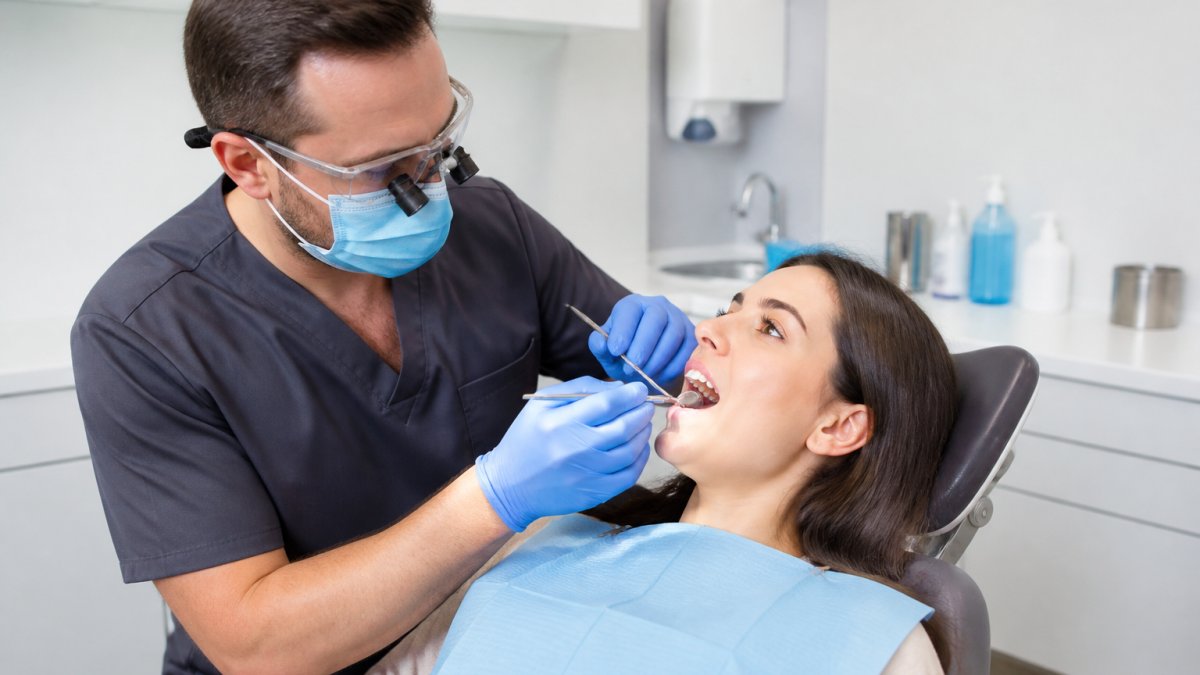
Next, your dentist typically takes X-rays to examine areas not visible during a visual exam.
Professional cleaning follows the examination. A dental hygienist removes plaque and tartar buildup that home brushing cannot eliminate, preventing gum disease and keeping your teeth looking their best.
Finally, your dentist discusses findings and recommends any necessary treatment.
Early Signs of Gum Disease and Prevention
Gum disease develops gradually, often without obvious symptoms early on. Regular dental checkups allow your dentist to catch gingivitis, the earliest form of gum disease, before it progresses to more serious periodontal disease.
Early signs of gum disease include gums that bleed easily during brushing or flossing, persistent bad breath, and gums that appear swollen or darker red than usual. Many people dismiss these warning signs, but they indicate inflammation that requires attention.
Prevention of gum disease relies on consistent home oral care combined with professional support.
Risk factors for gum disease include smoking, diabetes, hormonal changes, and genetic predisposition. If you have any of these, more frequent checkups help monitor your gum health closely.
Professional Cleaning and Removal of Plaque and Tartar
Professional cleaning during regular dental checkups removes plaque and tartar that accumulate despite your best home care. This is essential because tartar, calcified plaque, cannot be removed by brushing or flossing alone.
Plaque forms constantly as bacteria in your mouth feed on sugars and produce acids. Daily brushing and flossing disrupt this buildup, but some plaque always remains in hard-to-reach areas.
Your dental hygienist uses specialised instruments to remove tartar without damaging your tooth enamel or gums. This scaling eliminates the rough surfaces where bacteria thrive, reducing your risk of decay and gum disease. Many patients notice their teeth feel smoother and look brighter immediately afterwards.
Regular removal of plaque and tartar prevents the buildup that leads to serious oral health problems. Without professional cleaning, tartar accumulation accelerates gum disease and increases cavity risk.
Preventing Tooth Decay in Adults
Preventing tooth decay in adults requires a multi-faceted approach combining good home habits with professional support. Regular dental checkups provide the professional component that makes prevention effective.
Tooth decay develops when bacteria in your mouth produce acids that attack tooth enamel. This happens continuously, but your saliva naturally neutralises acids and begins repairing early damage.
At home, brush twice daily with fluoride toothpaste and floss daily to remove plaque from areas your toothbrush cannot reach, and limit sugary foods and drinks that feed decay-causing bacteria. These habits form the foundation of decay prevention.
Professional support during regular checkups strengthens this foundation.
For adults with high decay risk, your dentist might recommend more frequent checkups, additional fluoride applications, or dental sealants on vulnerable surfaces. This personalised approach is far more effective than generic advice, helping you maintain healthy teeth throughout adulthood.
Oral Cancer Screening and Whole-Mouth Assessment
A routine checkup is not only about teeth and gums. It is also an opportunity for a whole-mouth assessment, including a visual and tactile examination of the soft tissues where mouth cancer can develop. This is one of the clearest reasons adult checkups matter: mouth cancer is easier to treat when found early, and a dental appointment is often the only regular health contact where the inside of the mouth is examined closely.
What is actually examined
During the soft-tissue part of the checkup, the clinician typically looks at and feels:
- The lips, including the vermilion border and the skin around them
- The inside of the cheeks and the buccal mucosa
- The tongue, including the sides and the underside
- The floor of the mouth and the area under the tongue
- The hard and soft palate, tonsils, and back of the throat
- The gums, the inside of the lips, and the salivary gland openings
- The neck and under the jaw, checking for enlarged lymph nodes or asymmetry
You may be asked to stick out your tongue, say “ah”, and let the clinician gently move your tongue to one side so the floor of the mouth can be seen. The examination is quick and painless.
What screening can and cannot do
It is important to be honest about the evidence. There is no routine national screening programme for mouth cancer in the UK, and a visual examination cannot confirm or exclude cancer on its own (Oral cancer – UK National Screening Committee (UK NSC)). What a checkup can do is identify changes that need a closer look, a persistent ulcer, a red or white patch, a lump, or altered sensation, and refer you promptly if something is suspicious. If a lesion is found, you may be referred to a specialist under the urgent suspected cancer pathway for further assessment and, if needed, a biopsy.
Risk factors worth knowing
The main risk factors for mouth cancer in adults are:
- Tobacco use in any form, including smokeless tobacco and paan
- Heavy or frequent alcohol consumption, particularly when combined with smoking
- Infection with certain types of human papillomavirus (HPV)
- A previous diagnosis of mouth cancer or certain other cancers
- Long-standing oral conditions such as oral lichen planus
If any apply to you, mention it at your appointment so the clinician can factor it into your assessment and recall interval.
Whole-mouth assessment beyond cancer
The same appointment covers other aspects of oral health that are easy to miss:
- Bite and jaw, signs of tooth grinding (bruxism), jaw joint discomfort, and uneven wear.
- Soft tissues, changes in the gums, cheeks, and tongue that may relate to medication, vitamin deficiency, or systemic conditions.
- Existing restorations, the condition of fillings, crowns, bridges, and implants, and whether any margins are breaking down.
- Saliva and dry mouth, reduced saliva flow increases decay and gum risk, and is often linked to medication.
A checkup is not a substitute for seeking help between appointments. If you notice a mouth ulcer that has not healed within three weeks, a lump, a persistent red or white patch, or difficulty swallowing, contact your dentist or GP promptly rather than waiting for your next routine visit.
Shared decision-making
Not every checkup needs every element. Whether X-rays are taken, how often they are repeated, and whether a soft-tissue examination is supplemented by additional tests should be discussed with you, taking into account your risk factors, preferences, and the clinician’s judgement. Ask what is being checked and why, a good checkup is a conversation, not a one-way inspection.
Frequently Asked Questions
Why is it important to have regular dental checkups?
Regular dental checkups allow your dentist to detect oral health issues early, often before you notice symptoms. Early detection of cavities, gum disease, and other dental problems means simpler, less costly treatment. Checkups also include professional cleaning to remove plaque and tartar that brushing and flossing cannot reach, helping protect your long-term oral health and reducing the risk of tooth loss.
How often should adults have a dental check-up?
Most adults benefit from routine dental visits every six months. However, your ideal visit frequency depends on your individual risk factors, age, and oral health status. Adults with gum disease, a history of cavities, or other risk factors may need more frequent appointments. Your dentist can recommend a personalised schedule based on your specific needs.
What are the early signs of gum disease?
Early signs of gum disease include red, swollen, or tender gums, bleeding when you brush or floss, and persistent bad breath. Gingivitis, the earliest stage of gum disease, is often painless, which is why regular dental checkups are essential for early detection. If left untreated, gum disease can progress to more serious periodontal disease and lead to tooth loss, making prevention through routine visits crucial.
Can regular dental check-ups prevent tooth decay and gum disease?
Regular checkups combined with good home oral care significantly reduce your risk of tooth decay and gum disease. Your dentist removes calculus and plaque that contribute to decay, and professional cleaning supports gum health. During checkups, your dental hygienist or dentist can identify early signs of decay and disease, allowing for prompt treatment. However, prevention also requires consistent brushing, flossing, and a healthy diet between visits.