
Table of Contents
- What Are Snap On Veneers and How Do They Work?
- Clip On Veneers Pros and Cons: An Honest Breakdown
- Porcelain Veneers vs Snap On Veneers Cost: What You Actually Pay For
- Dental Health Implications of Removable Veneers
- Are Snap On Veneers Regulated in the UK?
- The Psychological Impact of a Temporary Smile
- Conclusion: Are Snap On Veneers Worth It for You?
- Frequently Asked Questions
Last Updated: September 26, 2026
What Are Snap On Veneers and How Do They Work?
Snap on veneers are removable dental appliances that fit over your existing teeth to change their appearance without any drilling or permanent alteration. Many people searching for are snap on veneers worth it in the UK want a quick, non-invasive route to a straighter-looking smile, and this guide from Orangefield Dental Care explains exactly what you get for your money.
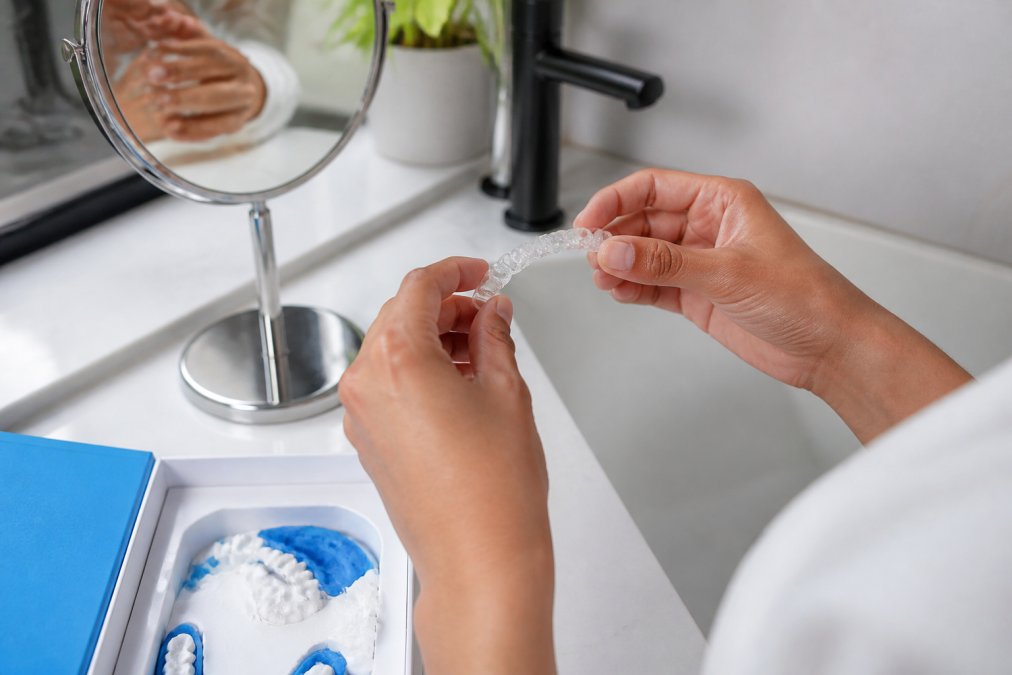
These clip-on shells are typically made from resin or a thin composite material.
The Step-by-Step Fitting Process at Home
The process is straightforward, which is exactly why it appeals to so many people:
- Order a DIY dental kit or attend a clinic for dental impressions
- Take an impression of your upper and lower teeth using the supplied trays
- Post the mould to the lab for fabrication
- Wait for your custom-fitted shells to arrive
- Practise clipping them into place, starting at the front teeth
- Check the fit and bite alignment before wearing them for longer periods
Clip On Veneers Pros and Cons: An Honest Breakdown
The main advantage of clip on veneers is that they are non-invasive and cost-effective compared with permanent work. You get an instant aesthetic improvement, gap closure, and a brighter smile without touching your natural teeth.
The drawbacks matter just as much:
- They are a temporary solution, not a permanent fix
- Poorly fitted shells trap food and encourage plaque buildup
- They can affect your bite alignment if worn constantly
- Durability is limited, and resin material can stain or crack
- They do nothing to correct the underlying dental problems
Porcelain Veneers vs Snap On Veneers Cost: What You Actually Pay For
Cost is where the two options diverge sharply, and it is the single biggest reason people search for snap on veneers in the first place. Porcelain veneers are lab-fabricated, custom-fitted restorations bonded permanently to your teeth by a dentist. Snap on veneers are removable dental appliances you take out whenever you like, and the price gap reflects that difference in clinical input, not just materials.
What drives the price of porcelain veneers
When you pay for porcelain veneers, you are paying for a chain of clinical work, not a single product:
- Consultation and assessment, bite analysis, X-rays where needed, and a discussion of whether veneers are even the right treatment for your enamel and gum health
- Tooth preparation, in most cases a thin layer of enamel is removed, which is irreversible
- Impression and temporary veneers, you wear temporaries while the lab works
- Skilled laboratory fabrication, a technician hand-builds each porcelain shell to match neighbouring teeth
- Bonding appointment, the veneers are etched, cemented and cured individually
- Aftercare and review, follow-up appointments and, if a veneer chips, replacement work
What drives the price of snap on veneers
Removable clip-on appliances strip out almost all of that clinical chain. The cost is essentially:
- The impression kit (or a private impression appointment)
- Laboratory fabrication of the resin or composite shells
- Postage and packaging
- Any replacement sets if the first fit fails
The hidden costs people forget
- Replacement cycles. Resin shells stain, warp and crack, so you may be reordering within a year or two, a cheap kit bought twice is no longer cheap.
- Remedial dental work. An ill-fitting appliance can cause gum inflammation or bite problems that need a private hygienist or dentist to resolve.
- The cost of the ‘real’ treatment later. If you eventually want a permanent result, you pay for porcelain or orthodontics on top of what you already spent on the temporary option.
The cheapest online kits often skip proper dental impressions. An ill-fitting appliance can cause gum irritation and bite problems that cost more to fix than the kit itself, and those remedial costs are rarely mentioned in the listing.
How to compare quotes fairly
When you weigh up a removable appliance against porcelain veneers, compare like for like:
- Per tooth or per arch? A kit price may cover only the upper arch.
- Who takes the impression? A dentist-led impression is more accurate than a postal tray.
- What is included if the fit is wrong? Ask about remakes and refunds in writing.
- What is the realistic lifespan? Divide the total cost by the expected number of months of wear to get a true monthly figure.
Dental Health Implications of Removable Veneers
Wearing a removable appliance over your teeth has real oral health implications. Because the shell covers your natural teeth, saliva cannot clean them as effectively, and food particles can become trapped.
The risks to watch for include:
- Plaque buildup along the gum line
- Gum irritation and inflammation
- Bacterial growth if the appliance is not cleaned daily
- Tooth discoloration underneath the shell over time
Are Snap On Veneers Regulated in the UK?
Regulation is the question most buyers forget to ask, and it is the one that matters most. The reason is simple: the same object, a removable shell that sits over your teeth, can be sold under two completely different legal categories, and the protections you get depend entirely on which one applies.
The distinction that decides everything
In the UK, a product placed on the market as a medical device must meet the requirements of the Medical Devices Regulations and carry UKCA marking (or, in some cases, CE marking accepted for a transitional period). A product sold purely as a cosmetic accessory is not a medical device and is not subject to that regime.
That single classification drives:
- Whether the manufacturer must operate a quality management system
- Whether the materials must be biocompatible and traceable
- Whether there is a formal route for reporting adverse incidents
- Who is legally responsible if the appliance damages your gums or bite
What ‘unregulated’ actually looks like in practice
The gap competitors rarely spell out is that some cheap kits are effectively unclassified plastic. You may see:
- No named manufacturer or UK responsible person on the packaging
- No UKCA or CE mark
- No material safety data sheet on request
- No batch or lot number, so a faulty set cannot be traced
- No complaints or incident-reporting route
Who regulates what
- The General Dental Council regulates individual dental professionals, dentists, hygienists and clinical dental technicians. If a registered professional is involved in your fitting, you can check their registration and raise a concern through the GDC. The General Dental Council standards for dental professionals sets out what you should expect.
- The Medicines and Healthcare products Regulatory Agency oversees medical devices placed on the UK market, including how they are classified and how adverse incidents are reported. The Medicines and Healthcare products Regulatory Agency publishes guidance on device classification and safety reporting.
- Local authority trading standards can act on misleading claims made by sellers, including cosmetic accessory listings that imply a clinical benefit they cannot substantiate.
Questions to ask before you buy
- Is this being sold as a medical device or a cosmetic accessory?
- Who is the UK responsible person or manufacturer named on the packaging?
- Can the seller provide material safety information on request?
- Is a registered dental professional involved in taking the impression or checking the fit?
- What is the process if the appliance causes gum irritation or a bite problem?
Before buying any removable dental appliance, check who made it, what materials were used, and whether a registered dental professional was involved in the fitting. If the seller cannot answer those three questions clearly, walk away, the saving is not worth the risk to your gums and bite.
This is the angle most guides skip: the real question is not whether snap on veneers are ‘regulated’ in the abstract, but whether the specific product you are about to buy sits inside the medical device regime or outside it. That classification, not the marketing copy, determines how much protection you actually have.
The Psychological Impact of a Temporary Smile
The confidence boost from a better-looking smile is genuine, and that is a large part of why people buy these appliances in the first place. Patient satisfaction with the immediate aesthetic improvement is often high.
Conclusion: Are Snap On Veneers Worth It for You?
The honest answer is that it depends on what you want. If you need a short-term cosmetic fix for an event and understand the limitations, a removable appliance can work. If you want a durable, natural-looking result, they will likely disappoint you.
Frequently Asked Questions
Do dentists recommend snap on veneers in the UK?
Most UK dentists treat snap on veneers as a temporary cosmetic option rather than a substitute for clinical treatment. Because they are removable dental appliances that sit over your teeth, they can trap plaque and food if not cleaned thoroughly. A dentist can assess your bite alignment, gum health and tooth discolouration, then explain whether a removable appliance suits your situation or whether custom-fitted porcelain veneers would be safer long term.
What are the risks of wearing snap on veneers long-term?
Wearing any removable veneer for extended periods can lead to plaque buildup, gum irritation and bacterial growth underneath the appliance. If the fit is poor, it may also affect bite alignment over time. These are not emergency risks, but they are reasons to limit wear, follow a strict maintenance routine, and have a clinical assessment before committing to daily use. Persistent gum irritation or bad taste should prompt a dental appointment.
How do snap on veneers compare to porcelain veneers in durability?
Porcelain veneers are bonded to the tooth surface and typically last many years with proper care. Snap on veneers are made from a resin material and are designed to be removable, so they are less durable and may need replacing sooner. They offer a non-invasive, cost-effective aesthetic improvement for a temporary solution, but they cannot match the longevity or stain resistance of lab-fabricated porcelain.
Can I get snap on veneers on the NHS?
Snap on veneers are a cosmetic treatment, and cosmetic dentistry is not routinely available on the NHS. Some clinical treatments, such as veneers fitted for specific dental health reasons, may be considered in certain cases, but you would need a professional consultation to discuss eligibility. For a smile makeover with clip on veneers, you would generally arrange this privately. Ask your dental practice for a full breakdown of options.