
Table of Contents
- What Is the Cost of Adult Braces UK? Private Price Ranges
- NHS Orthodontic Treatment Eligibility for Adults
- Invisalign vs Fixed Braces Cost: What You Actually Pay For
- Dental Finance Plans for Braces: Spreading the Cost
- How Long Does Adult Orthodontic Treatment Take?
- Hidden Costs: Retainers, Aftercare and the Consultation Fee Trap
- Frequently Asked Questions
Last Updated: September 16, 2026
What Is the Cost of Adult Braces UK? Private Price Ranges
The adult braces cost in the UK depends almost entirely on the type of appliance you choose and whether you go through the NHS or pay privately. Private orthodontic treatment for adults typically starts in the low thousands of pounds and rises steeply for discreet systems. The exact figure is set by each practice after a clinical assessment, so any single number you see online is a starting point, not a quote. This guide breaks down what actually drives the price, what the NHS will and won’t cover, and the aftercare costs most people forget to budget for.
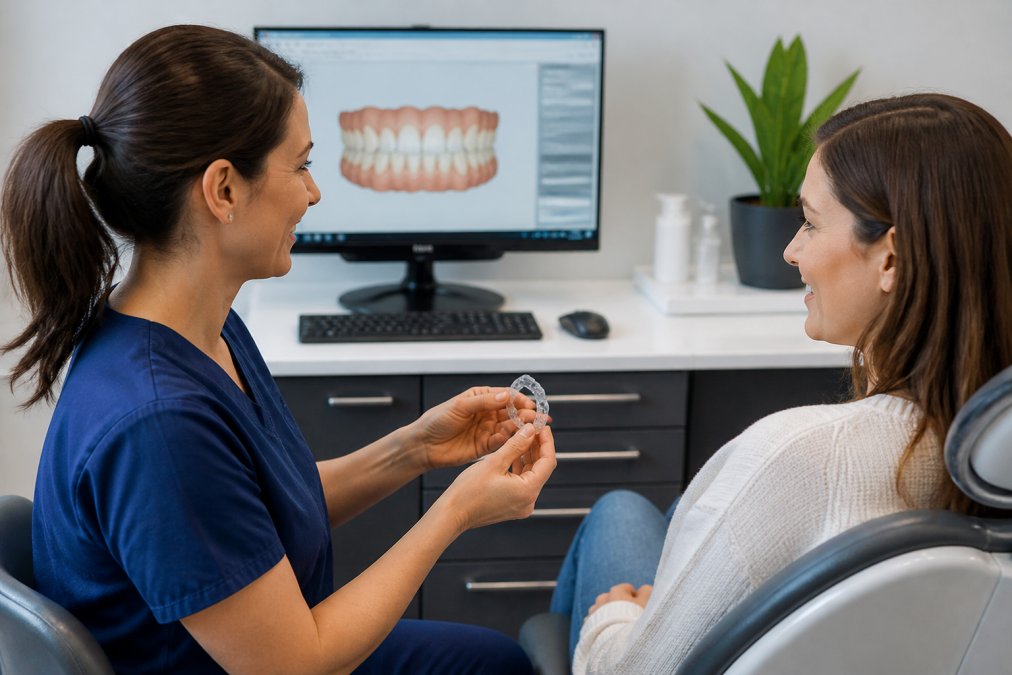
Private fees vary by practice, by region, and by the complexity of your case. A straightforward case of mild crowding costs far less to correct than a significant malocclusion needing bite alignment and jaw coordination.
Metal, Ceramic and Lingual Braces: How Prices Differ
Fixed braces use brackets bonded to the teeth and a wire to guide movement. The material and visibility of those brackets drive the price gap.
- Metal braces: the most affordable fixed option, using stainless steel brackets. Strong and effective for complex cases.
- Ceramic braces: tooth-coloured brackets that blend in better. They cost more than metal, and the brackets can stain if you drink a lot of coffee or red wine.
- Lingual braces: fitted behind the teeth so they’re invisible from the front. These are custom-made and the most expensive fixed option, and not every orthodontist offers them.
- Clear aligners: removable trays, often associated with Invisalign. Pricing sits between ceramic and lingual for many cases, and simple cases can cost less.
| Brace Type | Visibility | Relative Cost | Best For |
|---|---|---|---|
| Metal fixed | High | Lowest | Complex cases, tight budgets |
| Ceramic fixed | Medium | Mid | Adults wanting a subtler fixed brace |
| Lingual fixed | None (front) | Highest | Discreet fixed treatment |
| Clear aligners | Low | Mid to high | Mild to moderate crowding |
Ask whether the quoted fee covers retainers and the full course of follow-up appointments. A lower headline price that excludes aftercare often works out more expensive than a higher all-in quote.
NHS Orthodontic Treatment Eligibility for Adults
NHS orthodontic treatment is free for under-18s who meet the clinical criteria, but adults are rarely eligible. NHS eligibility for adults is limited to cases where the need is severe enough to justify treatment on health grounds, and even then, availability depends on local commissioning. Most adults who want teeth straightening for cosmetic reasons pay privately. If you think you might qualify, ask your dentist for a referral and a clinical assessment rather than assuming either way.
The IOTN Scoring System and Who Qualifies
The Index of Orthodontic Treatment Need (IOTN) is the assessment tool used to decide whether a patient qualifies for NHS orthodontics. It scores two things: the dental health need (DHC) and the aesthetic need (AC). The DHC runs from grade 1 (no need) to grade 5 (very great need), and the AC uses a 10-point scale based on a standardised photograph. In England and Wales, the usual threshold for NHS funding is a DHC of grade 4 or 5, or an AC of 6 or above.
How the Referral Pathway Actually Works
Adults cannot self-refer for NHS orthodontics. The route is: see your general dental practitioner, who assesses whether you meet the local referral criteria, then refers you to a hospital orthodontic department or a specialist practitioner with an NHS contract. Waiting lists for adult NHS orthodontics can run from several months to over a year, and some areas do not commission adult treatment at all.
If you are an adult with mild to moderate crowding, the realistic route is private treatment. NHS funding is reserved for cases where the clinical need is severe, and even then it depends on what your local integrated care board commissions.
Invisalign vs Fixed Braces Cost: What You Actually Pay For
The Invisalign vs fixed braces cost question comes down to what’s included, not just the appliance. Clear aligners are custom-made and often priced as a package that includes digital scanning, the trays themselves, and a set of retainers. Fixed braces involve fitting appointments, periodic adjustments, and repair costs if a bracket comes loose. For complex cases, fixed braces may achieve a better result.
Dental Finance Plans for Braces: Spreading the Cost
Dental finance plans let you spread orthodontic treatment over monthly installments rather than paying upfront. Many practices offer interest-free finance over a set term, with a deposit paid at the start. This makes treatment more manageable, but read the terms: interest-free periods are finite, and longer terms may carry interest. Ask what the deposit is, how many monthly installments you’ll pay, and whether there are admin fees.
A finance plan spreads the cost; it doesn’t reduce it. If you miss installments, you can lose access to ongoing treatment and still owe the balance. Check the terms before signing.
How Long Does Adult Orthodontic Treatment Take?
Adult orthodontic treatment typically takes longer than treatment in teenagers because the jaw has stopped growing. Mild cases may finish within a year; complex cases can run well beyond two years. Treatment duration depends on how far teeth need to move, the appliance used, and how consistently you wear removable aligners or attend adjustment appointments. Adults also heal more slowly and may need longer retention afterward.
Hidden Costs: Retainers, Aftercare and the Consultation Fee Trap
The headline price is rarely the whole bill. Retainers, aftercare, and consultation fees are the costs that catch people out. Retainers hold your teeth in their new position after treatment and are usually needed long-term, often permanently at night. Some practices include a first set in the treatment fee; others charge separately, and replacements cost more. Follow-up appointments and emergency care for a broken bracket may or may not be covered.
The Consultation Fee Trap
Some practices charge for the initial assessment, and that fee may or may not come off the treatment price if you proceed. A common pattern is a free initial chat followed by a paid diagnostic assessment, X-rays, photographs, and a treatment plan, which can run into the low hundreds of pounds. Always ask, before you book, whether the consultation is free, what the diagnostic fee covers, and whether it is credited against treatment if you go ahead.
Regional Price Variance
Where you live materially changes the adult braces cost you pay. Practices in London and the South East typically sit at the top of the national range, driven by higher rents, staffing costs, and demand.
What a Quote Should Include
A properly itemised quote should state: the appliance type and brand, the number of adjustment appointments included, whether retainers (and how many sets) are covered, what happens if a bracket breaks or an aligner is lost, and whether the fee is fixed or can rise mid-treatment. Ask for this in writing. A quote that only names a total figure leaves you exposed to add-ons later.
Aftercare Costs to Budget For
- Retainers: a first set is sometimes included; replacements are typically charged per set, and you may need a new one every few years.
- Retainer checks: some practices include these, others charge per visit.
- Emergency repairs: a loose bracket or lost aligner can incur a fee if not covered.
- Whitening: often offered after braces come off, rarely included in the orthodontic fee.
- Composite bonding or edge contouring: sometimes needed to refine the finished result, usually quoted separately.
According to NHS guidance on orthodontic treatment, orthodontic treatment is generally only available on the NHS for patients under 18, with limited exceptions for adults. The General Dental Council sets the standards dental professionals must meet, including giving you a clear treatment plan and cost breakdown before you commit.
A finance plan spreads the cost; it doesn’t reduce it. If you miss installments, you can lose access to ongoing treatment and still owe the balance. Check the terms before signing.
Frequently Asked Questions
Can an adult get free braces on the NHS?
Only in specific cases. NHS orthodontic treatment eligibility for adults is usually limited to severe cases where the Index of Orthodontic Treatment Need (IOTN) score is high enough, typically 4 or 5. This can include significant bite problems that affect function or cause health issues. Most adults seeking cosmetic straightening will need private treatment. If you think you might qualify, ask your dentist for a referral and assessment.
How much do private braces cost for adults?
Private adult braces cost varies widely depending on the type of brace, the complexity of your case, and the provider. Metal fixed braces are generally the most affordable, ceramic and lingual braces cost more, and clear aligners like Invisalign sit in the mid-to-upper range. Always request a written treatment plan that sets out the total cost, including retainers and aftercare, before you commit.
Are there finance options available for adult teeth straightening?
Yes. Many practices offer dental finance plans for braces, including interest-free monthly instalments over 6 to 12 months or longer-term options with interest. These plans usually require a deposit and a credit check. Ask the practice for a full breakdown of the total repayable amount, not just the monthly figure, so you can compare deals accurately.
How long does adult orthodontic treatment take?
Most adult orthodontic treatment takes between 12 and 24 months, though mild cases can finish in 6 to 9 months and complex cases may run longer. Clear aligners are sometimes faster for simple crowding, while fixed braces may be recommended for more difficult bite corrections. Your orthodontist will give you a realistic estimate after a clinical assessment and scans.
Working out the true cost of adult braces means looking past the headline fee to retainers, aftercare, and the fine print on finance. At Orangefield Dental Care, we offer teeth straightening and cosmetic dentistry with flexible opening times, including evenings, and emergency dental support, so treatment fits around work and family life. Our team prioritises a comfortable, pain-free experience for nervous patients. Book an appointment to discuss your options and get a clear, personalised plan.