
Table of Contents
- Why Teeth Lose Their Whiteness (and What Home Remedies Can Fix)
- 1. Baking Soda: Does Baking Soda Whiten Teeth?
- 2. Hydrogen Peroxide: Safe Teeth Whitening at Home Depends on Dilution
- 3. Coconut Oil Pulling: What It Can and Cannot Do
- 4. Crunchy Fruits and Vegetables That Help Remove Surface Stains
- 5. Acidic Fruits Like Lemon and Strawberries: Why Dentists Urge Caution
- 6. Activated Charcoal and Abrasive Whitening Toothpastes
- How Long Does Teeth Whitening Take? A Realistic 7-Day Routine
- Frequently Asked Questions
Last Updated: October 9, 2026
Why Teeth Lose Their Whiteness (and What Home Remedies Can Fix)
Most tooth discoloration sits on the surface, and that is the only kind home remedies can touch. According to the [Oral Health Foundation](https://www.dentalhealth.org/pages/category/all-oral-health-information), everyday habits like tea, coffee, red wine and smoking build up a film on tooth enamel over time.
Two types of staining exist. Surface stains sit on the outside of the enamel and respond well to gentle at-home care. Deeper stains sit inside the tooth and need a dental professional to shift them.
This guide from Orangefield Dental Care covers seven natural ways to whiten teeth at home, plus what each method can realistically achieve. We will also show you a simple seven-day routine and flag the methods that can quietly damage enamel.
Home remedies can brighten a smile by lifting surface stains. They cannot change the natural colour of your teeth or reach stains inside the tooth.
1. Baking Soda: Does Baking Soda Whiten Teeth?
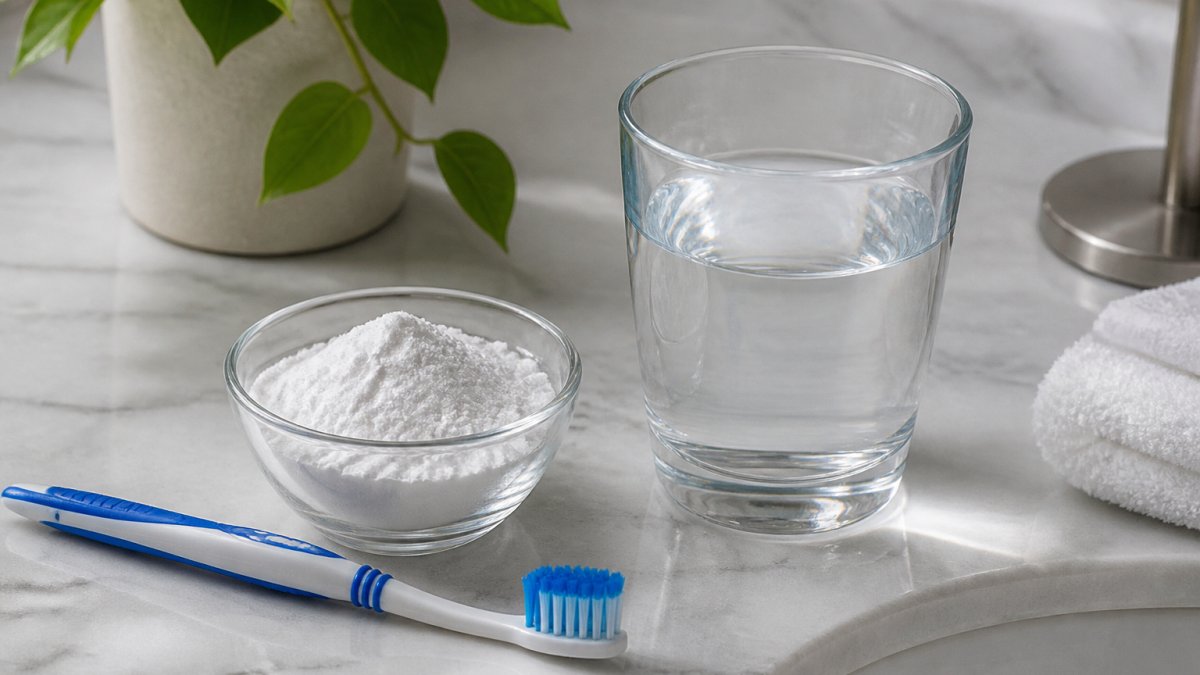
Yes, baking soda can lift surface stains, but only with gentle, occasional use. Baking soda, or sodium bicarbonate, is a mild abrasive. It scrubs away the film that holds surface stains in place.
The catch is overuse. Scrubbing hard with baking soda wears down tooth enamel, and enamel does not grow back.
How to Use It Without Scrubbing Away Enamel
A safe teeth whitening at home routine uses baking soda sparingly:
- Mix a small amount with water into a paste
- Brush gently for no more than two minutes
- Limit it to a few times a week, not every day
- Stop if your teeth feel sensitive
Many people find that a light touch works just as well as a hard scrub. The abrasive does the work, not the pressure.
2. Hydrogen Peroxide: Safe Teeth Whitening at Home Depends on Dilution
Dilution is everything with hydrogen peroxide. Used neat, it can irritate gums and damage enamel. Diluted and used briefly, it can help break down surface stains.
A common approach is a weak rinse swished for under a minute, then spat out. Never swallow it. Some people pair it with baking soda as a whitening paste, but this doubles the risk to enamel.
Gum irritation is the main warning sign. If your gums sting or turn white, stop and rinse with water.
If you have sensitive teeth or receding gums, skip peroxide and ask a dentist first.
3. Coconut Oil Pulling: What It Can and Cannot Do
Oil pulling is an ancient Ayurvedic practice, and it has become one of the most searched home remedies for whiter teeth. The honest answer is that it supports oral hygiene but does not whiten teeth in any meaningful way.
The method is simple: put a spoonful of coconut oil in your mouth and swish it around for 10 to 15 minutes, then spit it out. Proponents claim the oil “pulls” bacteria and stains from the teeth.
What the Evidence Actually Shows
There is no strong evidence that oil pulling changes tooth colour. Studies on oil pulling have focused mainly on plaque, gingivitis and oral bacteria, not on shade change. Even where benefits are reported, they tend to be modest and are usually measured against doing nothing, not against brushing or professional whitening.
A useful way to think about it: oil pulling sits in the same category as mouthwash. It can be a pleasant addition to a routine, but it will not lift stains that are bound into the enamel surface, and it certainly will not touch deeper discolouration.
How to Do It Without Causing Problems
If you want to try it, keep these practical points in mind:
- Use a teaspoon, not a mouthful. Too much oil makes swishing uncomfortable and raises the risk of swallowing.
- Spit the oil into a bin, not the sink. Coconut oil solidifies at room temperature and can block drains.
- Do not swallow it. Swallowing oil that has been swished for 15 minutes can cause nausea or stomach upset.
- Do not replace brushing. Oil pulling is an add-on, not a substitute for fluoride toothpaste and a soft-bristled brush.
- Stop if you notice jaw ache. Holding the mouth in a swishing position for 15 minutes can aggravate jaw joint problems.
Where It Fits in a Whitening Routine
If you enjoy oil pulling, treat it as a breath-freshening and hygiene habit, not a whitening step. It will not compete with baking soda for surface-stain removal, and it will not come close to professional whitening. If your goal is a visibly brighter smile, spend your effort on the methods with actual evidence behind them and keep oil pulling as an optional extra.
Oil pulling may support oral hygiene and freshen breath, but there is no strong evidence it whitens teeth. Use it as an add-on, never as a replacement for brushing or as a whitening treatment.
4. Crunchy Fruits and Vegetables That Help Remove Surface Stains
Crunchy produce acts like a natural toothbrush, and it is one of the few home remedies that is genuinely good for you whether or not it whitens. Apples, carrots, celery, cucumbers and pears need plenty of chewing, and that chewing scrapes light surface stains as you eat. The effect is small and gradual, but it is real, and it comes with no risk to enamel.
The Mechanism: Chewing, Saliva and Stain Prevention
Two things happen when you chew crunchy fruits and vegetables. First, the fibrous texture physically scrubs the flat surfaces of the teeth, lifting the soft film that holds surface stains. Second, the chewing stimulates saliva flow.
That second effect is where the real value lies. Most everyday staining comes from tea, coffee, red wine and smoking, and those stains build up over years. A diet that keeps saliva flowing and reduces the time acids sit on your teeth slows that build-up.
Which Foods Help Most
- Apples and pears, firm, fibrous and high in water, so they scrub and rinse at the same time.
- Carrots and celery, very crunchy, which means more chewing and more saliva.
- Cucumber, high water content helps dilute acids and sugars from other foods.
- Broccoli and cauliflower, the florets have a slightly abrasive texture that can help on the chewing surfaces.
High-fibre foods and whole grains support the same process by encouraging chewing and saliva production. None of these will change the natural shade of your teeth, but they help keep surface stains from settling in the first place.
How to Use Them Without Causing Harm
Timing matters more than quantity. Add these foods to meals rather than grazing on them all day. Constant snacking keeps teeth under repeated acid attack, even when the snack is healthy. If you eat something acidic, such as citrus or tomatoes, wait at least 30 minutes before brushing so you do not brush softened enamel.
A simple pattern that works well:
- Eat crunchy produce as part of a main meal, not as a between-meal snack.
- Drink water after meals to rinse away acids and food bits.
- Chew sugar-free gum after meals when you cannot brush, to keep saliva flowing.
- Keep the rest of your routine gentle: do not combine crunchy-food scrubbing with abrasive pastes or acidic rinses on the same day.
The Prevention Angle Most Guides Miss
Most articles list crunchy foods as a whitening trick and stop there. The more useful framing is that they are a maintenance tool. If you already have surface stains, crunchy produce will not remove them on its own. But if you want to slow new stains from forming after a whitening routine, a diet built around fibrous fruits and vegetables, plenty of water and limited tea, coffee and red wine is one of the most reliable habits you can build.
Pair crunchy produce with a glass of water at the end of a meal. The water rinses away the acids and pigments from the rest of the meal, and the chewing stimulates saliva. Together they do more for stain prevention than either habit alone.
5. Acidic Fruits Like Lemon and Strawberries: Why Dentists Urge Caution
Lemon and strawberries are the two remedies we would tell you to avoid. Both are acidic fruits, and acid erodes tooth enamel.
Strawberries contain a mild acid too. Some people mash them with baking soda, which combines an acid attack with an abrasive scrub. That is a rough combination for enamel.
Acid erosion is permanent. It also makes teeth more sensitive and more prone to staining later, which is the opposite of what you want.
Never brush straight after eating or drinking something acidic. Wait at least 30 minutes, because brushing softened enamel can wear it away faster.
6. Activated Charcoal and Abrasive Whitening Toothpastes
Activated charcoal is abrasive, and that is the whole problem. It may lift some surface stains, but it does the same to enamel over time. We do not recommend it for regular use.
Whitening toothpaste is the safer option. Most contain mild abrasives and ingredients like hydrated silica that help with surface-stain removal. Look for a toothpaste with a recognised oral health seal.
Two things to keep in mind:
- Whitening toothpaste removes surface stains, not deep ones
- Results build slowly over weeks, not days
If a product promises dramatic whitening in days, treat that claim with suspicion.
How Long Does Teeth Whitening Take? A Realistic 7-Day Routine
How long does teeth whitening take? With home methods, expect gradual change over two to four weeks, not overnight. A steady routine beats an intense one-off.
Here is a plan you can follow:
| Day | Action | Why It Helps |
|---|---|---|
| 1 | Brush twice with whitening toothpaste | Lifts light surface stains |
| 2 | Add crunchy fruit or veg to meals | Boosts saliva, scrubs gently |
| 3 | Baking soda paste, gentle, 2 minutes | Removes surface film |
| 4 | Rinse with diluted peroxide, if tolerated | Breaks down light stains |
| 5 | Rest day, normal brushing only | Protects enamel |
| 6 | Coconut oil pulling, 10 minutes | Supports oral hygiene |
| 7 | Review sensitivity and progress | Decide if you continue |
What to Expect Day by Day
Early days bring small changes. By day three or four you may notice a slightly brighter look.
If you see no change, that usually means your staining is deeper than home care can reach. That is not a failure. It is a sign to book a check-up.
Professional teeth whitening uses stronger agents applied under supervision, and it reaches results home remedies cannot. A dentist can also confirm your enamel and gums are healthy first.
Keep a photo of your teeth from day one in the same lighting. Progress is slow enough that your eyes miss it, but side-by-side photos show the real change.
Home whitening has limits, and pushing past them risks the enamel you are trying to protect.
Frequently Asked Questions
Can you naturally whiten your teeth at home?
You can reduce surface stains with home remedies, but results are gradual and limited to the outer layer of enamel. Baking soda, hydrogen peroxide, and oil pulling may help brighten your smile over weeks. They will not change the natural colour of your teeth or remove deep stains. For noticeable whitening, a dental professional can assess your teeth and recommend suitable options.
What is the safest way to whiten teeth at home?
The safest approach is to use gentle methods and avoid abrasive or acidic ingredients that can wear down enamel. Baking soda used sparingly, diluted hydrogen peroxide rinses, and oil pulling are generally considered lower risk. Always follow a dentist’s advice, especially if you have sensitive teeth, gum issues, or existing dental work. Over-the-counter whitening toothpaste with hydrated silica is another mild option.
How long does it take to see a difference from at-home teeth whitening?
Visible changes from natural methods usually take one to two weeks of consistent use. Baking soda may show slight improvement in surface stains after a few days, while oil pulling can take longer. Professional whitening can produce results in a single visit. If you see no change after a month, or if your teeth are sensitive, speak to a dentist about other options.
When should I ask a dentist about tooth discolouration?
See a dentist if you notice sudden discolouration, pain, or changes in a single tooth, as these can signal decay, infection, or trauma. Persistent stains that do not respond to home care also warrant a check-up. A dentist can determine the cause and discuss professional teeth whitening or other treatments. Regular check-ups help catch problems early.